Immersive TrainingRosemary Scent May Help Transfer Virtual Skills to the Real World
Source:
Università di Bologna
4 min Reading Time
A familiar scent could help people apply skills learned in mixed reality to real-world tasks. In a study involving 48 participants, researchers at the University of Bologna found that rosemary scent improved performance accuracy and reduced mental workload when used during both training and testing.
Researchers at the University of Bologna investigated how rosemary scent can improve the transfer of skills learned in mixed reality to real-world tasks using a Rubik’s Cube experiment.
Recognising the same scent can make the difference when it comes to repeating, in the physical world, a sequence of movements learnt in mixed reality. This is shown by a new study born at the University of Bologna, which challenged 48 participants with a task based on the Rubik’s Cube: first using a digital replica and then with a test using the physical cube.
In the experiment, the presence of rosemary scent during the learning phase based on the digital replica increased the participants’ spatial awareness and motivation. Bringing back the same scent on the next day also facilitated the ability to replicate, in the physical world, what was learnt in mixed reality.
“The results of this study provide first experimental evidence of how contextual olfactory stimuli may facilitate the transfer of visuospatial and procedural skills from digital, mixed-reality environments to real-world performances”, explains Gustavo Marfia, professor of Computer Science at the Department of the Arts - University of Bologna, who coordinated the study together with researcher Pasquale Cascarano. “It’s a guideline that could be useful for those designing immersive training systems, ranging from surgical procedures to the use of industrial machinery”.
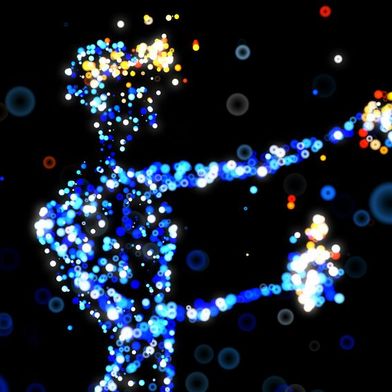
The learning systems based on mixed reality — which combine the physical and digital world in one interactive environment — are increasingly being used in the field of training to facilitate the acquisition of new skills and manual abilities. A key feature of these systems is the “digital replica” technology which, using a headset, synchronises the manipulation of a physical object with its virtual counterpart. In this way, the learner receives guidance and dynamic visual cues on how to carry out the task at hand.
However, a key problem remains: when you find yourself carrying out the learnt task without the headset, you inevitably lose a part of the cues that were present during the learning process. The guidance provided by the system may no longer apply, and the characteristics of the environment in which the training took place may also change. This discontinuity can hinder the transfer of skills.
To overcome these obstacles, researchers decided to introduce an element of continuity between the learning phase and the assessment phase: a recognisable scent of rosemary.
“A scent released into the environment can be replicated even without the headset, creating a sense of continuity between training and trial”, explains Marfia. “In our experiment, we used rosemary to investigate how the association with an olfactory context can support the retrieval of what has been learnt”.
The result was a two-day experiment involving 48 participants aged between 19 and 35, who were tasked with solving a Rubik’s Cube. During the training, a headset showed a digital replica of the cube, synchronised with the physical one, as well as animated demonstrations and feedback on the correctness of the movements. The aim was learning to interpret the symbols that indicated which faces to rotate and in which direction. The participants then went back to the lab the following day to carry out the same sequences on the physical cube, this time without the help of the headset.
However, in this context, some of the participants carried out both days with a rosemary scent released into the environment, while for other participants there were no noticeable odours. And in other cases, the scent was only present during the training part or only during the next day’s test.
“Even on the very first day, the presence of rosemary had boosted motivation and the sense of being immersed in the environment created by the headset”, says Pasquale Cascarano. “Furthermore, amongst those who learnt with rosemary, encountering the same scent the following day was associated with greater precision in performance, a lower mental workload, and less difficulty in recalling what they had learnt, compared with those who undertook the task without the scent”.
Date: 08.12.2025
Naturally, we always handle your personal data responsibly. Any personal data we receive from you is processed in accordance with applicable data protection legislation. For detailed information please see our privacy policy.
Consent to the use of data for promotional purposes
I hereby consent to Vogel Communications Group GmbH & Co. KG, Max-Planck-Str. 7-9, 97082 Würzburg including any affiliated companies according to §§ 15 et seq. AktG (hereafter: Vogel Communications Group) using my e-mail address to send editorial newsletters. A list of all affiliated companies can be found here
Newsletter content may include all products and services of any companies mentioned above, including for example specialist journals and books, events and fairs as well as event-related products and services, print and digital media offers and services such as additional (editorial) newsletters, raffles, lead campaigns, market research both online and offline, specialist webportals and e-learning offers. In case my personal telephone number has also been collected, it may be used for offers of aforementioned products, for services of the companies mentioned above, and market research purposes.
Additionally, my consent also includes the processing of my email address and telephone number for data matching for marketing purposes with select advertising partners such as LinkedIn, Google, and Meta. For this, Vogel Communications Group may transmit said data in hashed form to the advertising partners who then use said data to determine whether I am also a member of the mentioned advertising partner portals. Vogel Communications Group uses this feature for the purposes of re-targeting (up-selling, cross-selling, and customer loyalty), generating so-called look-alike audiences for acquisition of new customers, and as basis for exclusion for on-going advertising campaigns. Further information can be found in section “data matching for marketing purposes”.
In case I access protected data on Internet portals of Vogel Communications Group including any affiliated companies according to §§ 15 et seq. AktG, I need to provide further data in order to register for the access to such content. In return for this free access to editorial content, my data may be used in accordance with this consent for the purposes stated here. This does not apply to data matching for marketing purposes.
Right of revocation
I understand that I can revoke my consent at will. My revocation does not change the lawfulness of data processing that was conducted based on my consent leading up to my revocation. One option to declare my revocation is to use the contact form found at https://contact.vogel.de. In case I no longer wish to receive certain newsletters, I have subscribed to, I can also click on the unsubscribe link included at the end of a newsletter. Further information regarding my right of revocation and the implementation of it as well as the consequences of my revocation can be found in the data protection declaration, section editorial newsletter.
In short, olfactory stimuli can help bridge the gap between digital experience and physical activity. The consistency between the olfactory conditions during learning and those during testing improved accuracy and reduced the cognitive load compared with conditions where the same olfactory stimuli did not match. Furthermore, reintroducing the same scent that was present during training also reduced the difficulty in recalling what was learnt.
These findings — as the researchers point out — suggest that, in order to translate what is learnt through a headset into the real world, the continuity of the sensations accompanying the experience may also play a role. Designers of immersive training systems therefore now have a further option: to reproduce the characteristic odours of the environment in which the skills will be used, during training exercises.
References: The study was published on IEEE Transactions on Visualization and Computer Graphics with the title “Olfactory Context Cues for Procedural Skill Transfer from Digital Twin-Based Mixed Reality Learning to Real-World Execution”. The authors, all from the University of Bologna, are Mengting Lai, Xiaoxuan Zhao, Wen Li, Shirin Hajahmadi, Pasquale Cascarano, and Gustavo Marfia.