pH-responsive nanoparticles can deliver therapeutics precisely where they are needed, helping improve efficacy while reducing side effects. Discover why accurate pH measurement is essential to developing reliable, reproducible targeted drug delivery systems.
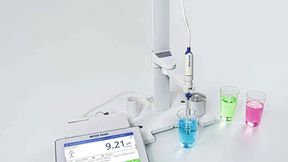
Fig.1: pH measurement of different nanoparticle formulations during synthesis to ensure formulation stability and performance.
(Source: METTLER TOLEDO)
The future of pharmaceutical innovation depends on therapies that are more precise, effective, and safe. Targeted Drug Delivery Systems (TDDS) represent a major advance by enabling drugs to reach specific tissues, cells, or disease sites while minimizing exposure to healthy organs. By improving drug localization and reducing systemic side effects, TDDS are transforming the treatment of cancer, inflammatory disorders, and infectious diseases. Among these technologies, pH-responsive nanoparticles have gained significant attention as smart delivery vehicles that release drugs in response to changes in the biological environment.
The successful development of these systems relies heavily on accurate pH control. From nanoparticle synthesis and formulation optimization to drug release studies and quality control, precise pH measurement is essential for ensuring consistent performance and reproducible results. Consequently, high-performance pH meters have become indispensable tools for pharmaceutical and nanomedicine researchers developing the next generation of targeted therapies.
Understanding Targeted Drug Delivery Systems
Traditional drug administration methods often distribute therapeutic agents throughout the body, affecting both diseased and healthy tissues. While effective in many cases, this non-specific distribution can lead to reduced treatment efficiency, increased toxicity, and undesirable side effects.
Targeted Drug Delivery Systems address these challenges by directing drugs specifically to the intended site of action. By concentrating therapeutic agents where they are needed most, TDDS can significantly enhance treatment outcomes while reducing damage to healthy tissues.
There are key benefits of targeted drug delivery, such as:
Enhanced therapeutic efficacy
Reduced systemic toxicity
Lower drug dosage requirements
Improved patient compliance
Controlled and sustained drug release
Greater treatment precision
To achieve targeted delivery, researchers employ a variety of advanced carrier systems, such as liposomes, polymeric micelles, dendrimers. These delivery platforms utilize biological and physicochemical characteristics of disease sites to selectively transport and release therapeutic compounds, offering unprecedented opportunities for precision medicine.
pH-Responsive Nanoparticles: Smart Carriers for Precision Medicine
Among the numerous stimulus-responsive drug delivery technologies under investigation, pH-responsive nanoparticles stand out as one of the most promising and versatile platforms. These nanoparticles are engineered to remain stable under normal physiological conditions while responding selectively to changes in pH. Once exposed to a specific acidic or alkaline environment, they undergo structural or chemical transformations that trigger drug release at the target site. This intelligent response mechanism helps maximize therapeutic efficiency while minimizing premature drug release and systemic side effects.
Discover how pH-responsive nanoparticles enable targeted drug delivery in this article.
Why pH Responsiveness Matters?
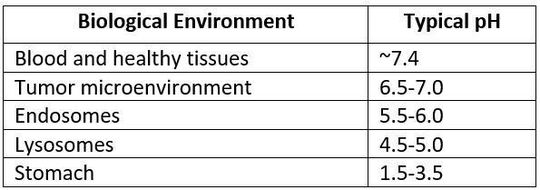
The human body contains multiple microenvironments, each characterized by distinct pH values.
Table 1: Some microenvironments in the human body with their pH values
(Source: METTLER TOLEDO)
The acidic nature of many disease environments, particularly solid tumors, creates an ideal trigger for pH-responsive drug delivery systems.
When these nanoparticles encounter acidic conditions, several physicochemical changes may occur:
Polymer swelling
Cleavage of pH-sensitive bonds
Surface charge reversal
Nanoparticle disassembly
Enhanced permeability of the carrier matrix
These transformations initiate the controlled release of encapsulated therapeutics precisely at the desired location, improving treatment specificity and effectiveness.
Applications of pH-Responsive Nanoparticles
Cancer therapy: Cancer remains one of the primary areas driving innovation in targeted drug delivery. Tumor tissues often exhibit a more acidic extracellular environment compared to healthy tissues.
pH-responsive nanoparticles exploit this difference to selectively release anticancer agents within tumor regions, thereby:
Date: 08.12.2025
Naturally, we always handle your personal data responsibly. Any personal data we receive from you is processed in accordance with applicable data protection legislation. For detailed information please see our privacy policy.
Consent to the use of data for promotional purposes
I hereby consent to Vogel Communications Group GmbH & Co. KG, Max-Planck-Str. 7-9, 97082 Würzburg including any affiliated companies according to §§ 15 et seq. AktG (hereafter: Vogel Communications Group) using my e-mail address to send editorial newsletters. A list of all affiliated companies can be found here
Newsletter content may include all products and services of any companies mentioned above, including for example specialist journals and books, events and fairs as well as event-related products and services, print and digital media offers and services such as additional (editorial) newsletters, raffles, lead campaigns, market research both online and offline, specialist webportals and e-learning offers. In case my personal telephone number has also been collected, it may be used for offers of aforementioned products, for services of the companies mentioned above, and market research purposes.
Additionally, my consent also includes the processing of my email address and telephone number for data matching for marketing purposes with select advertising partners such as LinkedIn, Google, and Meta. For this, Vogel Communications Group may transmit said data in hashed form to the advertising partners who then use said data to determine whether I am also a member of the mentioned advertising partner portals. Vogel Communications Group uses this feature for the purposes of re-targeting (up-selling, cross-selling, and customer loyalty), generating so-called look-alike audiences for acquisition of new customers, and as basis for exclusion for on-going advertising campaigns. Further information can be found in section “data matching for marketing purposes”.
In case I access protected data on Internet portals of Vogel Communications Group including any affiliated companies according to §§ 15 et seq. AktG, I need to provide further data in order to register for the access to such content. In return for this free access to editorial content, my data may be used in accordance with this consent for the purposes stated here. This does not apply to data matching for marketing purposes.
Right of revocation
I understand that I can revoke my consent at will. My revocation does not change the lawfulness of data processing that was conducted based on my consent leading up to my revocation. One option to declare my revocation is to use the contact form found at https://contact.vogel.de. In case I no longer wish to receive certain newsletters, I have subscribed to, I can also click on the unsubscribe link included at the end of a newsletter. Further information regarding my right of revocation and the implementation of it as well as the consequences of my revocation can be found in the data protection declaration, section editorial newsletter.
Increasing drug accumulation at the tumor site
Reducing exposure of healthy tissues
Enhancing therapeutic efficacy
Minimizing treatment-related toxicity
This targeted approach offers tremendous potential for improving patient outcomes and quality of life.
Gene delivery: The successful delivery of genetic material such as DNA, RNA, and siRNA remains a significant challenge in gene therapy.
Many pH-sensitive nanocarriers are specifically designed to facilitate endosomal escape by responding to acidic intracellular compartments. This capability improves the release of genetic payloads into cells, enhancing transfection efficiency and therapeutic effectiveness.
The Critical Role of pH Measurement in Nanoparticle Research
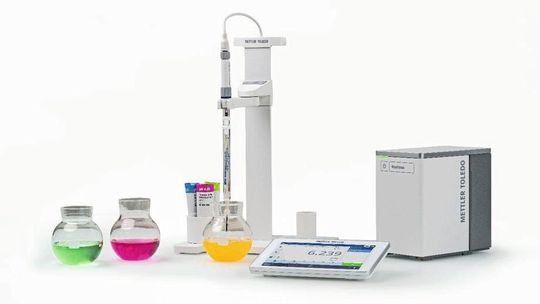
The success of pH-responsive nanoparticles depends on precise pH control throughout development and synthesis. Even small pH variations can influence nanoparticle properties, stability, and performance, making accurate pH measurement essential for reliable and reproducible pharmaceutical research. For these demanding applications, the METTLER TOLEDO NineFocus pH meter provides accurate and reliable pH analysis, while pH sensors deliver precise measurements across a wide range of sample types and conditions. Together, they help researchers maintain robust process control and generate consistent, high-quality data throughout nanoparticle development.
Formulation Development and Nanoparticle Synthesis
pH plays a crucial role during polymer synthesis, nanoparticle self-assembly, and drug encapsulation. Minor pH changes can affect particle size, surface charge (zeta potential), drug loading efficiency, encapsulation stability, and nanoparticle morphology. Accurate pH monitoring helps maintain optimal formulation conditions, ensuring reproducibility, consistent product quality, and smoother scale-up.
Drug Release Studies: A key advantage of pH-responsive delivery systems is their ability to release drugs under specific physiological conditions. Researchers typically evaluate release profiles at pH 7.4 (physiological conditions), pH 6.8 (tumor microenvironment), and pH 5.5 (endosomal environment). Precise pH measurement ensures reliable release data and a more accurate prediction of in-vivo performance.
Quality Control and Regulatory Compliance: As nanoparticle formulations move toward commercial manufacturing, consistent quality becomes critical. Regulatory agencies require robust analytical methods to demonstrate product safety, efficacy, and reproducibility. Accurate pH measurement supports process validation, batch-to-batch consistency, quality control, and regulatory compliance, facilitating successful scale-up and commercialization.