A red wine’s colour may shape expectations, but it reveals little about how much drinkers will enjoy it. A Cornell study found no consistent colour bias against hybrid wines, challenging concerns about their consumer appeal.
Consumers in a Cornell study showed no consistent bias against the colour of hybrid red wines, with several ranking among the most visually appealing.
When a glass of red wine arrives at the table, most drinkers make a snap judgment before taking a sip. Is the color deep enough? Does the hue suggest quality, or raise a red flag? For years, that visual scrutiny has posed a challenge to an emerging category of wine grapes. Interspecific hybrid varieties — cultivars bred by crossing multiple Vitis vinifera species to withstand disease, cold and the mounting pressures of climate change — have been viewed with skepticism by winemakers and sommeliers who worried that the wines they produce simply don't look the part.
New research from Cornell University suggests those concerns may be overblown. The research, published in the American Journal of Enology and Viticulture, found that consumers showed no consistent bias against the color of wines made from hybrid grape varieties. When evaluated alongside pinot noirs from Burgundy, Oregon and the Finger Lakes, several hybrid wines ranked among the most visually appealing in the study — and color, regardless of variety, turned out to be a weak predictor of whether drinkers actually enjoyed what was in the glass.
Gallery
“This has been something bugging me for a long time,” said Anna Katharine Mansfield, associate professor of enology at Cornell Agritech. “Prior to coming to Cornell I worked with breeders at the University of Minnesota and often there was this idea that consumers would reject a wine if its color didn’t look very Vitis vinifera-like. But no one had ever studied that question.”
Additionally, the research was motivated by chemistry, according to co-author and food science doctoral student Catherine Dadmun.
“Especially in Europe, there are historic restrictions on the chemical color compounds that appear uniquely in hybrid grapes,” Dadmun said. “This has led to the assumption that these compounds must result in low-quality color. We were trying to clarify what is and isn’t important for consumer perception of color quality from a chemical composition standpoint.”
As winemaking regions across North America and Europe grapple with more erratic weather, late frosts and increasing fungal disease pressure, hybrid cultivars offer a compelling alternative to the European grapes that have dominated fine wine for centuries. Varieties like marquette, Maréchal Foch and St. Croix can be grown with far fewer pesticide applications and survive winters that would devastate conventional vineyards. But commercial adoption has been slowed by persistent doubts about whether consumers will accept the resulting wines.
To test one of those doubts directly, the research team recruited 82 regular red wine drinkers through the Cornell Sensory Evaluation Center and asked them to evaluate eight commercial red wines, five made from hybrid cultivars sourced from New York, Wisconsin, Tennessee and Iowa, plus pinot noirs from three regions, without knowing which was which. Panelists rated how much they liked each wine's appearance, how much they expected to enjoy it based on color alone, and then, after tasting, how much they actually liked it.
The results cut in two directions at once. Color did matter, but mostly as a prelude. Wines that appeared lighter or showed more yellow and brown tones scored lower for visual appeal and generated weaker expectations. Three wines clustered at the bottom of the visual rankings: a Finger Lakes pinot noir, Norton from Tennessee and corot noir from near Albany, New York. But when panelists tasted all eight wines, color’s predictive power largely evaporated. The statistical relationship between appearance liking and actual liking explained only about 8% of the variation in drinkers’ responses.
“The fact is, taste and aroma are so much more important than color in overall quality perception,” Dadmun said. “When we evaluated hue-liking and overall appearance-liking, the pinot noirs and hybrid grapes were largely in the same pool.”
The finding holds an implicit challenge to wine industry assumptions. Darker wines have long been associated with higher quality, a bias that has made some winemakers reluctant to promote hybrids. But the Cornell data showed no meaningful correlation between color intensity and actual liking. What seemed to drive the lower visual scores for the three least-liked wines wasn’t lightness per se, but a tendency toward brownish, yellow-tinged hues rather than the deep red-purple that consumers associate with a young, well-made red.
Date: 08.12.2025
Naturally, we always handle your personal data responsibly. Any personal data we receive from you is processed in accordance with applicable data protection legislation. For detailed information please see our privacy policy.
Consent to the use of data for promotional purposes
I hereby consent to Vogel Communications Group GmbH & Co. KG, Max-Planck-Str. 7-9, 97082 Würzburg including any affiliated companies according to §§ 15 et seq. AktG (hereafter: Vogel Communications Group) using my e-mail address to send editorial newsletters. A list of all affiliated companies can be found here
Newsletter content may include all products and services of any companies mentioned above, including for example specialist journals and books, events and fairs as well as event-related products and services, print and digital media offers and services such as additional (editorial) newsletters, raffles, lead campaigns, market research both online and offline, specialist webportals and e-learning offers. In case my personal telephone number has also been collected, it may be used for offers of aforementioned products, for services of the companies mentioned above, and market research purposes.
Additionally, my consent also includes the processing of my email address and telephone number for data matching for marketing purposes with select advertising partners such as LinkedIn, Google, and Meta. For this, Vogel Communications Group may transmit said data in hashed form to the advertising partners who then use said data to determine whether I am also a member of the mentioned advertising partner portals. Vogel Communications Group uses this feature for the purposes of re-targeting (up-selling, cross-selling, and customer loyalty), generating so-called look-alike audiences for acquisition of new customers, and as basis for exclusion for on-going advertising campaigns. Further information can be found in section “data matching for marketing purposes”.
In case I access protected data on Internet portals of Vogel Communications Group including any affiliated companies according to §§ 15 et seq. AktG, I need to provide further data in order to register for the access to such content. In return for this free access to editorial content, my data may be used in accordance with this consent for the purposes stated here. This does not apply to data matching for marketing purposes.
Right of revocation
I understand that I can revoke my consent at will. My revocation does not change the lawfulness of data processing that was conducted based on my consent leading up to my revocation. One option to declare my revocation is to use the contact form found at https://contact.vogel.de. In case I no longer wish to receive certain newsletters, I have subscribed to, I can also click on the unsubscribe link included at the end of a newsletter. Further information regarding my right of revocation and the implementation of it as well as the consequences of my revocation can be found in the data protection declaration, section editorial newsletter.
“Another thing to bear in mind with color evaluation is you’re frequently doing this in the glass, not the bottle,” Mansfield said. “You’re rarely buying wine in a clear glass bottle because green glass is more protective, so color is a non-issue in some ways. My hope is that people breeding hybrids can just worry less.”
Original Article: Quality Perception of Interspecific Hybrid Red Wine in Relation to Anthocyanin Profile and Color Parameters; American Journal of Enology and Viticulture; DOI:10.5344/ajev.2026.25042




:quality(80)/p7i.vogel.de/wcms/62/32/62327aaae1415beeed47db6201e79661/0133375912v2.jpeg "A cotton trailer outfitted with benches and a sunshade offers farmworkers a reprieve from the sun as they take a break from picking cantaloupe melons in Firebaugh, Calif.
(Source: Joe Proudman/ Regents of the University of California)")
:quality(80)/p7i.vogel.de/wcms/e6/c8/e6c8bd554776ee1ad2f1f0723fb243a7/0133369387v1.jpeg "Roman road (Source: Queen Mary University of London)")
:quality(80)/p7i.vogel.de/wcms/51/68/51687ac4cc19f2757c138498b877de57/0133167039v2.jpeg "CMFs are foams that consist of hollow spheres – made of materials such as stainless steel, nickel, or other metals and alloys – embedded in a metallic matrix. The resulting material is both lightweight and remarkably strong at absorbing compressive forces. (Source: Jie Sun/ NC State University)")
:quality(80)/p7i.vogel.de/wcms/cd/c0/cdc09efd1e5b3b8f83224e7729d66c10/0133105276v2.jpeg "From the data presented in this report, the authors show how TF3-MALS-RI is uniquely able to separate large polyacrylate molecules and provide precise molecular weight and Rg values. (Source: Postnova Analytics)")
:quality(80)/p7i.vogel.de/wcms/a8/6e/a86e9b1f1561a67038b6d8a9fe629117/0133465534v2.jpeg "Clean, calibrate, and store pH electrodes properly to ensure accurate, reliable measurements every time. (Source: METTLER TOLEDO)")
:quality(80)/p7i.vogel.de/wcms/86/01/86014d3d2a28cefc852f65c8d68317e4/0133104231v2.jpeg "Single-handed tube reading using a Handheld 2. (Source: Azenta Life Sciences)")
:quality(80)/p7i.vogel.de/wcms/0b/0f/0b0f8ed042dfc91f32582e10d54c2c7e/0133087444v2.jpeg "Offering advanced automation to increase your throughput, the Intellixcap provides secure sealing – eliminating the need for manual intervention, while preserving vital sample integrity. (Source: Azenta Life Sciences)")
:quality(80)/p7i.vogel.de/wcms/13/d3/13d35105f74a1c2e22b9c7a270e8e9b3/0132611155v2.jpeg "Circulating cell free DNA. (Source: Amsbio)")
:quality(80)/p7i.vogel.de/wcms/6f/ea/6feaf3edd34eb4a9f1df201dc2e6448d/0133548706v2.jpeg "The researchers studied people’s perceptions, beliefs and knowledge about climate change in two coastal regions, one low-lying island and the other a mainland coast. (Source: P Afna)")
:quality(80)/p7i.vogel.de/wcms/8d/5c/8d5c6c7f897f91d6784825eee20b5584/0133321225v1.jpeg "Empa researcher Christoph Hüglin collects samples of particles that are washed out of the air by rain and snow or settle due to gravity. (Source: Empa)")
:quality(80)/p7i.vogel.de/wcms/a1/af/a1afbc7c8a067bbe94749ec680b4bafd/0133163762v2.jpeg "The study found in murkier water, fish took longer to move towards the food than those in clear water, but individuals in larger groups responded more quickly overall. (Source: Christos Ioannou)")
:quality(80)/p7i.vogel.de/wcms/32/80/3280aa3d44708962943c96fe2d466744/0133088560v2.jpeg "A bumble bee in flight at the University of Bristol Botanic Garden. (Source: Phil Savoie)")
:quality(80)/p7i.vogel.de/wcms/95/3e/953e490f1819f6638bc08fe3d4d43e87/0133566684v1.jpeg "The soy protein isolate the researchers fed to the mice. (Source: KyotoU / Tomoko T. Asai)")
:quality(80)/p7i.vogel.de/wcms/ba/38/ba38179dbcd20fbc3887b2709193d0a8/0133566669v2.jpeg "Consumers in a Cornell study showed no consistent bias against the colour of hybrid red wines, with several ranking among the most visually appealing. (Source: free licensed)")
:quality(80)/p7i.vogel.de/wcms/ac/d1/acd1a8888f6e78206f11f2b4eb33926f/0133566582v1.jpeg "A claim on the front of a box of food products is a hint, not a verdict. The nutrition label on the back – added sugars, sodium, saturated fat, all of it together – still tells the fuller story. (Source: free licensed)")
:quality(80)/p7i.vogel.de/wcms/84/10/8410a026021778497197d21ef6987940/0133532147v2.jpeg "Fig. 1: Behind every sweet, tangy, or refreshing fruit lies a unique pH balance that shapes its flavor, freshness, and quality. (Source: METTLER TOLEDO)")
:quality(80)/p7i.vogel.de/wcms/f3/32/f332f826e9c6b84c66c63c6a79fd9e68/0133566559v2.jpeg "An analysis of 1.4 million adults in England found that 59% of participants with high blood pressure had not been diagnosed and were not taking blood pressure-lowering medication. (Source: free licensed)")
:quality(80)/p7i.vogel.de/wcms/5b/68/5b68667dfbf7bae351f864f0590cc985/0133566532v2.jpeg "Blood pressure normally falls during sleep. A modelling study suggests that a delay in the kidneys’ salt-processing rhythm could disrupt this overnight dip, a mechanism that still needs experimental and clinical testing. (Source: free licensed)")
:quality(80)/p7i.vogel.de/wcms/a9/11/a911e9abe761c9bcf5221cd218e14e80/0133560426v2.jpeg "With direct ties to the trade show, the Medica Labmed Forum bridges the gap between current scientific developments and practical healthcare issues. (Source: Constanze Tillmann/Messe Düsseldorf)")
:quality(80)/p7i.vogel.de/wcms/b2/3c/b23c5aedafa5afc1788f81e6f3b9f4fd/0133548748v2.jpeg "A team led by Prof. Dr. Bahtiyar Yilmaz from the Department for Visceral Surgery and Medicine at Inselspital, Bern University Hospital, and the DBMR at the University of Bern has now investigated what happens in the gut after a fecal microbiota transplant. (Source: Unsplash)")
:quality(80)/images.vogel.de/vogelonline/bdb/1710600/1710675/original.jpg "Discover how to set yourself up for success when performing balance-based density determination of solids such as jewelry and precious metals. (Mettler Toledo)")
:quality(80)/images.vogel.de/vogelonline/bdb/1682500/1682579/original.jpg "The new XPR Analytical balance redesigned to meet the needs of laboratory technicians of working fast and lean. (Mettler Toledo)")
:quality(80)/images.vogel.de/vogelonline/bdb/1677000/1677080/original.jpg "Enhance your weighing accuracy, comfort and productivity with the redesigned XPR Analytical balance. (Mettler Toledo)")
:fill(fff,0)/images.vogel.de/vogelonline/companyimg/107800/107832/65.jpg "logoDueperthal.jpg ()")
:fill(fff,0)/p7i.vogel.de/companies/69/b7/69b7f63f311d9/logo-bimos-tif--2-.jpeg "logo-bimos-tif--2- (https://www.bimos.com/de-de/)")
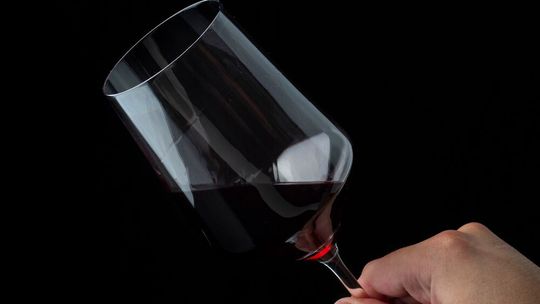
:quality(80)/p7i.vogel.de/wcms/8f/73/8f737b79ba742ec029dcaa7cf1fb23fc/0133566666v1.jpeg "Consumers in a Cornell study showed no consistent bias against the colour of hybrid red wines, with several ranking among the most visually appealing.(Source: free licensed / Pixabay)")
:quality(80)/p7i.vogel.de/wcms/1c/8c/1c8c41d8c7e5d399b38a08cd8111324b/0133566600v1.jpeg "Participants liked hybrid wines and pinot noir equally(Source: Laila Milevski/ Cornell University)")
:quality(80)/p7i.vogel.de/wcms/9a/1f/9a1f5de55ea30c996de74435aec8da4e/0133566602v1.jpeg "Looks matter: a palette of wines(Source: Laila Milevski/ Cornell University)")
:quality(80)/p7i.vogel.de/wcms/6f/ba/6fba92196d0cbb1467334f8a2ecc520a/0130203021v2.jpeg "Low to moderate wine consumption shows lower risk compared with spirits, beer and cider (Source: free licensed)")
:quality(80)/p7i.vogel.de/wcms/f6/a8/f6a8a2ac333baa08d168cc68ac2192c0/0131001826v2.jpeg "University of Oregon researchers find a way to measure the flavor profile of coffee. (Source: free licensed)")