Workers who fear artificial intelligence is threatening their occupation are more likely to slack off on the job, swipe a co-worker’s lunch or engage in other counterproductive workplace behavior, a new study finds. This is especially true in occupations where AI is likely to have the greatest impact.
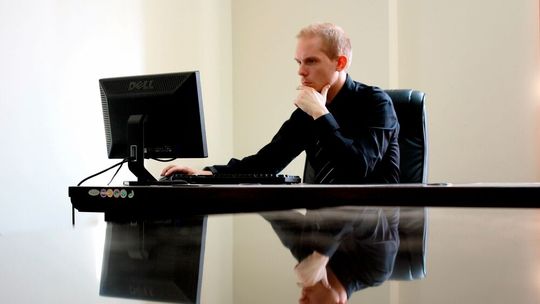
Workers who were worried about the future of their occupation were more likely to morally disengage at work.
A study, led by Washington State University researchers and published in the journal Occupational Health Science, evaluated the effects of looming AI adoption on worker attitudes and behaviors across 18 industries.
The findings suggest that concerns over AI can harm workers and businesses, and employers should pay attention to how they discuss and implement the technology in order to keep employees engaged and supported.
“Counterproductive workplace behaviors are harmful to the interpersonal relationships within an organization,” said Tahira M. Probst, a professor of psychology at WSU Vancouver and lead author of the study. “If you're not showing up, that puts more work on your co-workers. If you're doing things that impact your ability or your co-workers' ability to get their work done properly, or if you're wasting organizational resources, there’s a lot of potential harm to an organization, not just to the bottom line, but to the effective functioning of the organization.”
Research has shown that as the use of AI-based technologies such as intelligent robotics, automated systems and algorithmic management increases, workers may feel insecure about their jobs. The resulting stress can lead to burnout, reduced job satisfaction and engagement, and worse physical and mental health.
Probst and her co-authors wanted to examine a broader concern: what happens when AI-related concerns make workers worry that their entire occupation will become obsolete?
“If you're a bartender and the bar that you're working for goes under, you can get another job as a bartender somewhere else,” Probst said. “That profession is not going away. That's not necessarily the case with occupations that are affected by AI. If you're in a profession like medical transcriptionists, for example, where a lot of that coding and transcription can now be fully automated, that's not something where if you are let go, you can just go find work in another organization.”
The researchers examined the effects of that occupation insecurity and industry-level AI exposure — the potential that AI could displace tasks — on two outcomes: moral disengagement and counterproductive workplace behaviors. They used an existing, objective database of AI exposure, the AI Industry Exposure index, to identify which industries were facing the most potential disruption from AI, and surveyed workers across a variety of industries about their attitudes and behaviors. Workers in finance and insurance had some of the highest levels of exposure, while those in agriculture and forestry had the least.
Overall, workers who were worried about the future of their occupation were more likely to morally disengage at work, meaning they were more likely to justify behaviors they would normally consider inappropriate. In turn, those employees self-reported more counterproductive behaviors such as surfing the web or coming in late for a shift.
“Moral disengagement is basically a way of justifying bad behavior,” Probst said. “We know what's right and wrong. We know what organizational policies say we can and can't do. Moral disengagement is a way of reframing that behavior as something that is acceptable.”
Those effects, however, were less pronounced in industries expected to face fewer future AI changes, such as forestry and construction, but were magnified in industries such as insurance and finance that are more heavily exposed to AI disruption.
The study’s authors argue that when employees feel their occupation is at risk, they may come to view workplace norms and expectations differently, rationalizing behaviors such as cutting corners or undermining others as necessary to protect themselves or to compensate for perceived injustice.
Probst’s co-authors included Rebecca Lindgren, a graduate student in psychology at WSU Vancouver, as well as researchers in Italy and Belgium.
Original Article: In the Shadow of AI: How Industry Exposure to AI and Occupation Insecurity Fuel Moral Disengagement and Counterproductive Work Behaviors; Occupational Health Science; DOI:10.1007/s41542-026-00272-3
Date: 08.12.2025
Naturally, we always handle your personal data responsibly. Any personal data we receive from you is processed in accordance with applicable data protection legislation. For detailed information please see our privacy policy.
Consent to the use of data for promotional purposes
I hereby consent to Vogel Communications Group GmbH & Co. KG, Max-Planck-Str. 7-9, 97082 Würzburg including any affiliated companies according to §§ 15 et seq. AktG (hereafter: Vogel Communications Group) using my e-mail address to send editorial newsletters. A list of all affiliated companies can be found here
Newsletter content may include all products and services of any companies mentioned above, including for example specialist journals and books, events and fairs as well as event-related products and services, print and digital media offers and services such as additional (editorial) newsletters, raffles, lead campaigns, market research both online and offline, specialist webportals and e-learning offers. In case my personal telephone number has also been collected, it may be used for offers of aforementioned products, for services of the companies mentioned above, and market research purposes.
Additionally, my consent also includes the processing of my email address and telephone number for data matching for marketing purposes with select advertising partners such as LinkedIn, Google, and Meta. For this, Vogel Communications Group may transmit said data in hashed form to the advertising partners who then use said data to determine whether I am also a member of the mentioned advertising partner portals. Vogel Communications Group uses this feature for the purposes of re-targeting (up-selling, cross-selling, and customer loyalty), generating so-called look-alike audiences for acquisition of new customers, and as basis for exclusion for on-going advertising campaigns. Further information can be found in section “data matching for marketing purposes”.
In case I access protected data on Internet portals of Vogel Communications Group including any affiliated companies according to §§ 15 et seq. AktG, I need to provide further data in order to register for the access to such content. In return for this free access to editorial content, my data may be used in accordance with this consent for the purposes stated here. This does not apply to data matching for marketing purposes.
Right of revocation
I understand that I can revoke my consent at will. My revocation does not change the lawfulness of data processing that was conducted based on my consent leading up to my revocation. One option to declare my revocation is to use the contact form found at https://contact.vogel.de. In case I no longer wish to receive certain newsletters, I have subscribed to, I can also click on the unsubscribe link included at the end of a newsletter. Further information regarding my right of revocation and the implementation of it as well as the consequences of my revocation can be found in the data protection declaration, section editorial newsletter.




:quality(80)/p7i.vogel.de/wcms/61/89/618990ef2cb2d4456da6f260c03343e3/0133981905v2.jpeg "Workers who were worried about the future of their occupation were more likely to morally disengage at work. (Source: free licensed)")
:quality(80)/p7i.vogel.de/wcms/a7/df/a7df32474d451da816851d9a8f52a22d/0133906333v2.jpeg "The Nobel Prize in Physiology or Medicine 2026 is awarded for optogenetics — a method that makes it possible to show how nerve cells shape memories, feelings and behaviours in the living brain. (Source: © The Nobel Committee for Physiology or Medicine. Ill. Mattias Karlén)")
:quality(80)/p7i.vogel.de/wcms/3f/2b/3f2b75ae816c4c7d2834642c675d1b72/0133864426v1.jpeg "Researchers recently found that spending just 10 minutes relying on an AI tool significantly impairs the user's ability to focus and persist with difficult tasks. A preliminary draft made waves earlier this year, and the team presented the updated, peer-reviewed paper this week at the Conference on Language Modeling. (Source: free licensed)")
:quality(80)/p7i.vogel.de/wcms/24/31/24319808d44e55ba97ce10223c21791b/0133864445v1.jpeg "This new battery binder could reduce the toxic ingredients, energy use and waste when building and recycling lithium-ion batteries. (Source: David Baillot | UC San Diego Jacobs School of Engineering (CC BY-ND 4.0))")
:quality(80)/p7i.vogel.de/wcms/3e/3c/3e3cc29b52fedebf1c97dea23b92a760/0133673542v2.jpeg "Fig.1: The path to accurate pH measurements starts with precise calibration. Use fresh buffers and verify mV response for optimal electrode performance. (Source: METTLER TOLEDO)")
:quality(80)/p7i.vogel.de/wcms/2d/92/2d9231a37601aa58b40d4688f609f004/0133687591v2.jpeg "Horiba’s new CE IVDR certified Yumizen H500 CRP benchtop hematology analyzer delivers a simultaneous complete blood count with 5-part extended differential and rapid CRP whole blood measurement. (Source: Horiba )")
:quality(80)/p7i.vogel.de/wcms/e5/e9/e5e97a3c76cbf47308ce21c4a567a812/0133686320v2.jpeg "The picture shows the Kern PDS precision scale in combination with Kern Balanceconnection software. (Source: Kern & Sohn)")
:quality(80)/p7i.vogel.de/wcms/a8/6e/a86e9b1f1561a67038b6d8a9fe629117/0133465534v2.jpeg "Clean, calibrate, and store pH electrodes properly to ensure accurate, reliable measurements every time. (Source: METTLER TOLEDO)")
:quality(80)/p7i.vogel.de/wcms/2e/f5/2ef5c7b1206d1a2957f965f97d1f8ddd/0133980521v1.jpeg "Alaska glacier (Source: Oregon State University)")
:quality(80)/p7i.vogel.de/wcms/60/9c/609c1bc8643d2eed0b26431c12186f98/0133981015v1.jpeg "Microplastics can generate reactive oxygen species at their surfaces when interacting with water, according to a new study, suggesting a potential mechanism for biological harm. (Source: Dall-E / KI-generiert)")
:quality(80)/p7i.vogel.de/wcms/7b/db/7bdb5608f8d1d8ddb29abd8817d35872/0133981301v2.jpeg "A Vienna team investigated whether discarded plastics could provide the starting material for these molecular sponges. (Source: free licensed)")
:quality(80)/p7i.vogel.de/wcms/b1/b7/b1b7778bcba4902f4b7226a2707562d2/0133966790v2.jpeg "Insects are an important source of food for birds, fish, reptiles, amphibians and mammals. (Source: Sami Kivelä, LUKE)")
:quality(80)/p7i.vogel.de/wcms/e1/f4/e1f48a0c4b6d5c00059370affdc13113/0133694409v2.jpeg "Broccoli growing beneath semi-transparent, colored solar panels at the experimental site at Kärrbo Prästgård farm in Sweden. (Source: Silvia Ma Lu)")
:quality(80)/p7i.vogel.de/wcms/95/3e/953e490f1819f6638bc08fe3d4d43e87/0133566684v1.jpeg "The soy protein isolate the researchers fed to the mice. (Source: KyotoU / Tomoko T. Asai)")
:quality(80)/p7i.vogel.de/wcms/ba/38/ba38179dbcd20fbc3887b2709193d0a8/0133566669v2.jpeg "Consumers in a Cornell study showed no consistent bias against the colour of hybrid red wines, with several ranking among the most visually appealing. (Source: free licensed)")
:quality(80)/p7i.vogel.de/wcms/ac/d1/acd1a8888f6e78206f11f2b4eb33926f/0133566582v1.jpeg "A claim on the front of a box of food products is a hint, not a verdict. The nutrition label on the back – added sugars, sodium, saturated fat, all of it together – still tells the fuller story. (Source: free licensed)")
:quality(80)/p7i.vogel.de/wcms/7f/90/7f90cbfba445fb1790cdf272b7b0dfce/0133980752v1.jpeg "Because prenatal depression is both common and treatable, improving access to evidence-based mental health interventions during pregnancy could benefit the mothers’ mental wellbeing as well as the next generation. (Source: free licensed)")
:quality(80)/p7i.vogel.de/wcms/48/9f/489f0d616f59fbb57401babe0b161ac5/0133966222v2.jpeg "Glassteng prototype next to one of the tiny, thin, lightweight sensors. (Source: Northwestern University)")
:quality(80)/p7i.vogel.de/wcms/e4/5b/e45b74e986e325695415f633d2094673/0133908923v2.jpeg "The report brings together all the existing research on how to prevent deaths and hospitalizations during heatwaves in people with different forms of cardiovascular disease. (Source: Unsplash)")
:quality(80)/p7i.vogel.de/wcms/79/e7/79e7c5ee90d19fe72bdae3627024c168/0133864685v2.jpeg "Findings suggest cannabis-related sleep disruptions may go unnoticed by users themselves (Source: free licensed)")
:quality(80)/images.vogel.de/vogelonline/bdb/1710600/1710675/original.jpg "Discover how to set yourself up for success when performing balance-based density determination of solids such as jewelry and precious metals. (Mettler Toledo)")
:quality(80)/images.vogel.de/vogelonline/bdb/1682500/1682579/original.jpg "The new XPR Analytical balance redesigned to meet the needs of laboratory technicians of working fast and lean. (Mettler Toledo)")
:quality(80)/images.vogel.de/vogelonline/bdb/1677000/1677080/original.jpg "Enhance your weighing accuracy, comfort and productivity with the redesigned XPR Analytical balance. (Mettler Toledo)")