A new study has revealed that paid paternal leave plays a crucial role in the mental health of new dads. In the absence of this, new dads witness higher levels of anxiety and depression.
A new study highlights the critical role paid paternal leave plays in supporting new dads' mental health following the birth of their baby.
(Source: Unsplash)
Chicago/USA – A new study from Northwestern University and Ann & Robert H. Lurie Children’s Hospital of Chicago highlights the critical role paid paternal leave plays in supporting new dads’ mental health following the birth of their baby.
Using data from a large population-representative survey, the study found that when fathers do not have access to paid leave or cannot take needed time off, they face significantly higher levels of anxiety and depression.
“Bottom line, mental health and paternity leave are linked,” said corresponding author and fatherhood expert Dr. Craig Garfield, professor of pediatrics and medical social science at Northwestern University Feinberg School of Medicine and a pediatrician at Lurie Children’s. “Our findings underscore that paternal leave is not just a workplace benefit, it’s a public health issue that can deeply impact families and children.”
The study was published on June 18 in the American Journal of Public Health.
The scientists analyzed data from the 2022-2023 Ohio Fatherhood Survey (OFS), one of the most comprehensive sources on fathers’ experiences during the perinatal period in the U.S. They examined the relationship between leave status and mental health outcomes using validated screening tools for depression and anxiety. Among 4,290 new fathers in the study, 6.6 % had depression and 11 % had anxiety. Fifteen percent of the fathers did not take leave; 54 % took paid leave; 22 % took unpaid leave; and 9 % took a mix of unpaid and paid leave.
A breakdown of the findings:
Unpaid leave is linked to increased anxiety: Fathers who took unpaid leave were 58 % more likely to report anxiety symptoms compared with those who had paid leave.
Not taking leave strongly associated with mental health risk: Fathers who reported wanting but not taking leave were more likely to experience symptoms of both depression and anxiety.
Significant financial barriers: Among dads experiencing mental health symptoms, the most commonly cited obstacle to taking leave was a financial barrier (approximately 75 % of those with depressive symptoms and 71 % of those with anxiety symptoms).
The transition to parenthood is a well-documented period of emotional and psychological vulnerability for mothers, but this study highlights how fathers are also at risk. Despite increasing recognition of fathers’ roles in early child development, policies and workplace norms often lag in addressing their needs. This study adds to a growing body of evidence suggesting that equitable access to paid parental leave can have far-reaching benefits, including:
Improved mental health for fathers
Stronger parent-child bonding
Greater family stability and well-being
What this means for policymakers and employers
The results point to actionable opportunities for policymakers and employers alike. Expanding paid parental leave programs, addressing financial barriers and normalizing dads’ use of leave could have measurable impacts on population health, Garfield said.
“As the U.S. continues to discuss how best to support families from day one, paid paternity leave is one valuable tool to use,” Garfield said. “Our results show that paid leave can help new dads as they transition into fatherhood, giving them time and resources to get off on the right foot.”
Plans to study more nationwide populations
This study builds on earlier research from Garfield. A previous study published in 2025 found 64 % of fathers reported taking less than two weeks of leave after the birth of their child, and only 36 % of dads reported taking more than two weeks of leave. That study used data from the Pregnancy Risk Assessment Monitoring System for Dads (Prams for Dads survey), which Garfield created and first piloted in Georgia in 2018.
Prams for Dads will soon be fielding survey responses in 11 states, which will help further this work nationally, Garfield said.
“Mothers and children are certainly important. But, as we approach Father’s Day, to ensure the best outcomes for our children and families, we need to think about families holistically and how they function in today’s society. States across the country recognize a gap in this essential perinatal public health data and are excited to have a solution.”
The study is titled, “Paternity Leave Status and Mental Health Symptoms Among Ohio Fathers: A Population-Representative Survey, 2022–2023.” Clarissa Simon is a co-author. The study also was conducted in partnership with the Ohio Colleges of Medicine Government Resource Center.
Date: 08.12.2025
Naturally, we always handle your personal data responsibly. Any personal data we receive from you is processed in accordance with applicable data protection legislation. For detailed information please see our privacy policy.
Consent to the use of data for promotional purposes
I hereby consent to Vogel Communications Group GmbH & Co. KG, Max-Planck-Str. 7-9, 97082 Würzburg including any affiliated companies according to §§ 15 et seq. AktG (hereafter: Vogel Communications Group) using my e-mail address to send editorial newsletters. A list of all affiliated companies can be found here
Newsletter content may include all products and services of any companies mentioned above, including for example specialist journals and books, events and fairs as well as event-related products and services, print and digital media offers and services such as additional (editorial) newsletters, raffles, lead campaigns, market research both online and offline, specialist webportals and e-learning offers. In case my personal telephone number has also been collected, it may be used for offers of aforementioned products, for services of the companies mentioned above, and market research purposes.
Additionally, my consent also includes the processing of my email address and telephone number for data matching for marketing purposes with select advertising partners such as LinkedIn, Google, and Meta. For this, Vogel Communications Group may transmit said data in hashed form to the advertising partners who then use said data to determine whether I am also a member of the mentioned advertising partner portals. Vogel Communications Group uses this feature for the purposes of re-targeting (up-selling, cross-selling, and customer loyalty), generating so-called look-alike audiences for acquisition of new customers, and as basis for exclusion for on-going advertising campaigns. Further information can be found in section “data matching for marketing purposes”.
In case I access protected data on Internet portals of Vogel Communications Group including any affiliated companies according to §§ 15 et seq. AktG, I need to provide further data in order to register for the access to such content. In return for this free access to editorial content, my data may be used in accordance with this consent for the purposes stated here. This does not apply to data matching for marketing purposes.
Right of revocation
I understand that I can revoke my consent at will. My revocation does not change the lawfulness of data processing that was conducted based on my consent leading up to my revocation. One option to declare my revocation is to use the contact form found at https://contact.vogel.de. In case I no longer wish to receive certain newsletters, I have subscribed to, I can also click on the unsubscribe link included at the end of a newsletter. Further information regarding my right of revocation and the implementation of it as well as the consequences of my revocation can be found in the data protection declaration, section editorial newsletter.




:quality(80)/p7i.vogel.de/wcms/c6/f2/c6f2e2b4753a0d0cec682c03df4ed37c/0133088650v2.jpeg "PMBC vials for immunology and oncology research. (Source: Amsbio)")
:quality(80)/p7i.vogel.de/wcms/e0/72/e0728dc8dcadfc4d79a734e08cf6ced3/0133088641v2.jpeg "LM20 Microfluidizer and Cambridge CNT dispersion produced by the LM20 microfluidizer. (Source: Analytik)")
:quality(80)/p7i.vogel.de/wcms/55/f2/55f26cfb29878f58625b4697bacff0b9/0132894544v2.jpeg "The programme is designed to build an integrated R&D platform for sustainable specialty polymers. (Source: NUS)")
:quality(80)/p7i.vogel.de/wcms/2d/9e/2d9ea6bd89a718c2eb6a99172c3b92ad/0132813039v2.jpeg "A new nontargeted chemical analysis of 113 personal care and cleaning products in the US found that nearly all contained unlabeled chemicals. (Source: free licensed)")
:quality(80)/p7i.vogel.de/wcms/0b/0f/0b0f8ed042dfc91f32582e10d54c2c7e/0133087444v2.jpeg "Offering advanced automation to increase your throughput, the Intellixcap provides secure sealing – eliminating the need for manual intervention, while preserving vital sample integrity. (Source: Azenta Life Sciences)")
:quality(80)/p7i.vogel.de/wcms/13/d3/13d35105f74a1c2e22b9c7a270e8e9b3/0132611155v2.jpeg "Circulating cell free DNA. (Source: Amsbio)")
:quality(80)/p7i.vogel.de/wcms/bc/ed/bced6850297a04dbea471a66cb6bb6fe/0132611405v2.jpeg "The latest addition to the range is a peristaltic tubing stop adapter that eliminates the need for fixed stoppers and allows custom cut lengths of peristaltic tubing to be installed on any pump head size. (Source: Biotech Fluidics )")
:quality(80)/p7i.vogel.de/wcms/c2/34/c234a6626d4f6360382ca7f1f440bebb/0132611196v2.jpeg "Testa Analytical's Trinity – a powerful new triple detector for Gel Permeation Chromatography / Size Exclusion Chromatography. (Source: Testa Analytical)")
:quality(80)/p7i.vogel.de/wcms/32/80/3280aa3d44708962943c96fe2d466744/0133088560v2.jpeg "A bumble bee in flight at the University of Bristol Botanic Garden. (Source: Phil Savoie)")
:quality(80)/p7i.vogel.de/wcms/7b/e5/7be5c735140cbe28f3af0ec3d88274b9/0133045403v2.jpeg "After being buried in the ground for two months and broken down by soil organisms, a new pair of cotton underwear (left) shows clear signs of decomposition (right). (Source: Nicolas Zonvi)")
:quality(80)/p7i.vogel.de/wcms/c7/5e/c75e9b334a94b8b5c2a758f20ba080a8/0133039712v1.jpeg "Researchers have developed a microaerobic activated sludge process that enables ammonium to be recovered from fermentation industry wastewater instead of releasing nitrogen into the atmosphere. (Source: free licensed)")
:quality(80)/p7i.vogel.de/wcms/9a/a0/9aa0a7f2d93c4f3a9c6297fb39a5c756/0133018161v2.jpeg "Volcanic activity and hydroclimatic anomalies. Eruptions produce a repeating wave pattern in high-altitude winds (left panels) that line up with widespread drying across Asia (right panels). This pattern appears regardless of background climate conditions. (Source: ©2026 Nie et al. CC-BY-ND)")
:quality(80)/p7i.vogel.de/wcms/d4/61/d461ce0bd5743897993c6475f69e7ad6/0133067478v2.jpeg "In Harris County, 50 % of households with children reported food insecurity, compared with 33 % of households without children. (Source: Rice University)")
:quality(80)/p7i.vogel.de/wcms/79/76/7976d17b980bedfe35acaa532d690046/0132713841v2.jpeg "Observed rice yield losses from 1°C warming are more than twice as high as model estimates due to underestimated heat stress. (Source: AdobeStock/ducvien)")
:quality(80)/p7i.vogel.de/wcms/28/b6/28b6114fc9915c5dadee94d5c89bd129/0132593216v2.jpeg "Eating foods that contain common preservative food additives may increase the risks of high blood pressure and cardiovascular disease. (Source: Unsplash)")
:quality(80)/p7i.vogel.de/wcms/01/bc/01bcb16a3381a1d46533861eedbbae71/0132371290v1.jpeg "Adding spice may help people eat less by slowing them down. (Source: free licensed)")
:quality(80)/p7i.vogel.de/wcms/e4/07/e407a7ca05d57041aac21e3d716c48f5/0133100475v2.jpeg "Exercise-based cardiac rehabilitation is strongly recommended for patients after a MI in the ESC Guidelines on acute coronary syndromes and in the new ESC Guidelines on cardiac rehabilitation. (Source: Unsplash)")
:quality(80)/p7i.vogel.de/wcms/54/c2/54c20d95b1b4b4cc7d56674ef58b7c25/0133097847v2.jpeg "Staree was a double-blind trial conducted among people aged 70 years and over with no history of clinical cardiovascular disease, diabetes or dementia recruited from Australian general practice. (Source: Unsplash)")
:quality(80)/p7i.vogel.de/wcms/1c/64/1c64bf757ace04243990f44dce11f5ed/0133067501v2.jpeg "Despite the proven benefits of blood pressure-lowering medication in reducing cardiovascular events, around half of patients do not take them as prescribed. (Source: Pixabay)")
:quality(80)/p7i.vogel.de/wcms/13/7a/137a844cf32c194b2c3d8227b6970b1d/0133067490v2.jpeg "The wearable U-Rhythm device, developed by the University of Bristol. (Source: David Hills (Glude.tv))")
:quality(80)/images.vogel.de/vogelonline/bdb/1710600/1710675/original.jpg "Discover how to set yourself up for success when performing balance-based density determination of solids such as jewelry and precious metals. (Mettler Toledo)")
:quality(80)/images.vogel.de/vogelonline/bdb/1682500/1682579/original.jpg "The new XPR Analytical balance redesigned to meet the needs of laboratory technicians of working fast and lean. (Mettler Toledo)")
:quality(80)/images.vogel.de/vogelonline/bdb/1677000/1677080/original.jpg "Enhance your weighing accuracy, comfort and productivity with the redesigned XPR Analytical balance. (Mettler Toledo)")
:fill(fff,0)/images.vogel.de/vogelonline/companyimg/107800/107832/65.jpg "logoDueperthal.jpg ()")
:fill(fff,0)/p7i.vogel.de/companies/69/b7/69b7f63f311d9/logo-bimos-tif--2-.jpeg "logo-bimos-tif--2- (https://www.bimos.com/de-de/)")
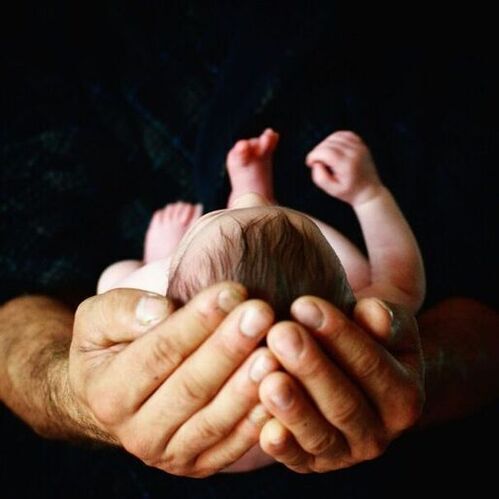
:quality(80)/p7i.vogel.de/wcms/33/50/3350efd72f2c620af7c2133ce55c901f/0131086519v2.jpeg "A new Northwestern study examined all 130,267 babies born in Georgia in 2017 and tracked whether their fathers died at any point during the following five years, through 2022. (Source: Unsplash )")
:quality(80)/p7i.vogel.de/wcms/40/d6/40d677a07d4ad476c3a6999f74423103/0132031242v2.jpeg "Postpartum depression can affect fathers too, especially as they are increasingly involved in the family dynamic. (Source: Unsplash)")