Molecular PsychiatryDepression Stalls Formation of New Brain Cells
Source:
Columbia University Irving Medical Center
4 min Reading Time
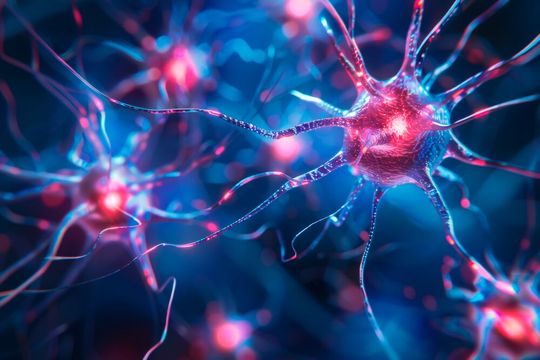
Most of our brain’s 100 billion neurons are created before we’re born, but the trickle of neurons created in the adult brain hippocampus could be instrumental in preventing depression, suggest findings from a new study by researchers at Columbia University Vagelos College of Physicians and Surgeons.
Researchers analysed nearly half a million brain cells from people with depression and control subjects.
A study shows for the first time that neurogenesis stalls in the brains of adults with major depressive disorder and identifies the molecular programs that control neurogenesis, which may help researchers develop new therapies. “Historically, depression was thought to be a disease of neurotransmitter deficiency, especially serotonin, but we now think that depression stems from multiple issues that affect our neurons’ ability to adapt to stress and changing environments,” says Maura Dupont, professor of psychiatry, who led the research.
Without the ability to create new neurons, people with depression may not have the resilience to effectively adapt to the environment.
Prof. Maura Dupont
The new study focused on the brain’s hippocampus — a region known for its central role in episodic memory and emotional responses to the environment and one of the few places in the adult brain that creates new neurons. The region isn’t the only part of the brain involved in depression, but with its role in emotions and memory, it’s thought to play a role in pushing patients to interpret events in a negative light.
“The hippocampus is important for our ability to distinguish between similar but different memories and separate the emotional connotation of past memories and current events,” Dupont says. When this ability, called pattern separation, is impaired, memories, together with their emotional value, become less distinct and more likely to blend together.
“You may be out with a friend for lunch, but she’s tired and doesn’t talk much. With intact pattern separation, you remember this as a unique event. With impaired pattern separation, it becomes mixed with previous memories of feeling rejected, leading you to think, “They’re upset with me,” Dupont explains. “And I see this a lot in my patients, where they can only retrieve negative information from their memories.”
Studies in mice have established that pattern separation is dependent on adult neurogenesis, and a recent study in patients with brain tumors — in whom neurogenesis was ablated by radiation therapy directed to the hippocampus — suggests the same is true in people.
“It’s important to emphasize that we do not yet know the complete mechanism, particularly in humans, but the newborn neurons seem to enhance pattern separation because they are especially responsive to new experiences and can be incorporated into new memory circuits more easily, allowing new memories to be stored separately from the old ones,” Dupont says. “Turning neurogenesis back on may be a way to treat depression in some people by rewiring their hippocampus circuit.”
Depression Associated with Widespread Changes in the Brain
Neurogenesis does not work alone in the brain, but as part of a hippocampus circuit where episodic memories and their emotional valence are stored. The study shows that the whole circuit suffers from molecular changes.
Those changes include alterations in genes that are involved in creating new connections and cross-talk between neurons, providing energy, and transporting cargo within cells. The hippocampus’s primary means of establishing new emotional memories — the trisynaptic circuit — also showed signs of inflammation and cellular stress in the depressed patients.
The researchers were able to detect these changes after examining an extraordinary number of brain cells — nearly half a million — collected from depressed patients and control subjects soon after each donor’s death.
With an array of recently developed cutting-edge techniques, the researchers recorded the activity of every gene in each cell and if the cells’ proteins were altered. The massive amount of data provided an unprecedented view of each cell’s activities and the exact anatomical location in the hippocampus circuit where the affected cells are positioned.
Their data also identified some genes with altered activity that have been shown to have genetic variants associated with major depression, while other dysregulated genes were affected by epigenetic changes reflecting environmental factors at play. “These are like dimmer switches that control how active genes are, and they are affected by life experiences such as stress, learning, aging, chemicals, etc.,” Dupont says.
Date: 08.12.2025
Naturally, we always handle your personal data responsibly. Any personal data we receive from you is processed in accordance with applicable data protection legislation. For detailed information please see our privacy policy.
Consent to the use of data for promotional purposes
I hereby consent to Vogel Communications Group GmbH & Co. KG, Max-Planck-Str. 7-9, 97082 Würzburg including any affiliated companies according to §§ 15 et seq. AktG (hereafter: Vogel Communications Group) using my e-mail address to send editorial newsletters. A list of all affiliated companies can be found here
Newsletter content may include all products and services of any companies mentioned above, including for example specialist journals and books, events and fairs as well as event-related products and services, print and digital media offers and services such as additional (editorial) newsletters, raffles, lead campaigns, market research both online and offline, specialist webportals and e-learning offers. In case my personal telephone number has also been collected, it may be used for offers of aforementioned products, for services of the companies mentioned above, and market research purposes.
Additionally, my consent also includes the processing of my email address and telephone number for data matching for marketing purposes with select advertising partners such as LinkedIn, Google, and Meta. For this, Vogel Communications Group may transmit said data in hashed form to the advertising partners who then use said data to determine whether I am also a member of the mentioned advertising partner portals. Vogel Communications Group uses this feature for the purposes of re-targeting (up-selling, cross-selling, and customer loyalty), generating so-called look-alike audiences for acquisition of new customers, and as basis for exclusion for on-going advertising campaigns. Further information can be found in section “data matching for marketing purposes”.
In case I access protected data on Internet portals of Vogel Communications Group including any affiliated companies according to §§ 15 et seq. AktG, I need to provide further data in order to register for the access to such content. In return for this free access to editorial content, my data may be used in accordance with this consent for the purposes stated here. This does not apply to data matching for marketing purposes.
Right of revocation
I understand that I can revoke my consent at will. My revocation does not change the lawfulness of data processing that was conducted based on my consent leading up to my revocation. One option to declare my revocation is to use the contact form found at https://contact.vogel.de. In case I no longer wish to receive certain newsletters, I have subscribed to, I can also click on the unsubscribe link included at the end of a newsletter. Further information regarding my right of revocation and the implementation of it as well as the consequences of my revocation can be found in the data protection declaration, section editorial newsletter.
“Overall, the wide range of effects we found could reflect different pathogenetic mechanisms, perhaps indicating that depression is not just one disease,” she adds.
Right now, researchers have only a rudimentary understanding of the biological causes of depression, Dupont says. But studies like hers will define what depression looks like at the cellular level, which could lead to the development of new treatments.
“We want to reclassify depression based on its molecular features, similar to what has been done in cancer,” Dupont says. “Classifying cancers based on their cellular characteristics, not their locations, has led to new and improved treatments. We hope the same will be true for depression and other psychiatric or brain diseases.”
Original Article: Dysregulated adult hippocampal neurogenesis in major depressive disorders; Nature Medicine; DOI:10.1038/s41591-026-04571-8




:quality(80)/p7i.vogel.de/wcms/55/f2/55f26cfb29878f58625b4697bacff0b9/0132894544v2.jpeg "The programme is designed to build an integrated R&D platform for sustainable specialty polymers. (Source: NUS)")
:quality(80)/p7i.vogel.de/wcms/2d/9e/2d9ea6bd89a718c2eb6a99172c3b92ad/0132813039v2.jpeg "A new nontargeted chemical analysis of 113 personal care and cleaning products in the US found that nearly all contained unlabeled chemicals. (Source: free licensed)")
:quality(80)/p7i.vogel.de/wcms/1e/cb/1ecbe8d7e82ac7dcfefef112d32415a3/0132811057v1.jpeg "A study of 426 university students highlights the combined importance of laboratory safety practices and healthy dietary habits. (Source: free licensed)")
:quality(80)/p7i.vogel.de/wcms/17/c0/17c0660deff66cc5f9b09a0e3b3286b5/0132714162v1.jpeg "Due to its unique properties, green hydrogen may be a promising tool to achieve a low-carbon economy. (Source: free licensed)")
:quality(80)/p7i.vogel.de/wcms/13/d3/13d35105f74a1c2e22b9c7a270e8e9b3/0132611155v2.jpeg "Circulating cell free DNA. (Source: Amsbio)")
:quality(80)/p7i.vogel.de/wcms/bc/ed/bced6850297a04dbea471a66cb6bb6fe/0132611405v2.jpeg "The latest addition to the range is a peristaltic tubing stop adapter that eliminates the need for fixed stoppers and allows custom cut lengths of peristaltic tubing to be installed on any pump head size. (Source: Biotech Fluidics )")
:quality(80)/p7i.vogel.de/wcms/c2/34/c234a6626d4f6360382ca7f1f440bebb/0132611196v2.jpeg "Testa Analytical's Trinity – a powerful new triple detector for Gel Permeation Chromatography / Size Exclusion Chromatography. (Source: Testa Analytical)")
:quality(80)/p7i.vogel.de/wcms/5b/3f/5b3fc0d5fb08c1f9727125bd926b1481/0132555049v1.jpeg "On 1 and 2 December 2026, the T3 – Transform The Tomorrow conference will explore strategies that help companies future-proof their operations. (Bild: © Vogel Corporate Solutions / AdobeStock 1280236166, Oksana)")
:quality(80)/p7i.vogel.de/wcms/d5/a3/d5a33f32cd6adf709c8afefc998d3f04/0132845576v1.jpeg "The study shows that the foreign media are less likely to report on certain effects of climate change, such as droughts and flooding (shown here: the 2021 Ahrtal floods). (Source: Volker Lannert/ Uni Bonn)")
:quality(80)/p7i.vogel.de/wcms/c9/a3/c9a33d5a20f5de3775aebaf763f5d336/0132811091v1.jpeg "A commercial plant operated by Heirloom Carbon Technologies, featuring air contactors where CO₂ is captured from the atmosphere. (Source: Heirloom Carbon Technologies)")
:quality(80)/p7i.vogel.de/wcms/06/1a/061a5d3a4e85383454d9450761a67de7/0132611653v2.jpeg "Shihong Lin, associate professor of civil and environmental engineering at Rice. (Source: Alex Becker/ Rice University)")
:quality(80)/p7i.vogel.de/wcms/c4/f5/c4f55f42fdf878aec3f850e5569b84ce/0132594173v2.jpeg "The latest research sheds some light on an issue that deserves more attention, that of climate-related suicide. (Source: Unsplash)")
:quality(80)/p7i.vogel.de/wcms/79/76/7976d17b980bedfe35acaa532d690046/0132713841v2.jpeg "Observed rice yield losses from 1°C warming are more than twice as high as model estimates due to underestimated heat stress. (Source: AdobeStock/ducvien)")
:quality(80)/p7i.vogel.de/wcms/28/b6/28b6114fc9915c5dadee94d5c89bd129/0132593216v2.jpeg "Eating foods that contain common preservative food additives may increase the risks of high blood pressure and cardiovascular disease. (Source: Unsplash)")
:quality(80)/p7i.vogel.de/wcms/01/bc/01bcb16a3381a1d46533861eedbbae71/0132371290v1.jpeg "Adding spice may help people eat less by slowing them down. (Source: free licensed)")
:quality(80)/p7i.vogel.de/wcms/b3/16/b316ac585e067d024da89a5156c950a9/0132370983v1.jpeg "Laboratory tests suggest that some low-calorie sweeteners can alter the growth of gut bacteria, with particularly strong effects observed when isosteviol was combined with the antidepressant duloxetine. (Source: free licensed)")
:quality(80)/p7i.vogel.de/wcms/0a/7b/0a7bb76d9504843e17e2f797d9bfddee/0132969222v1.jpeg "Researchers compared 115 Nasa photographs of 13 astronauts taken on Earth and in space to measure changes in lower eyelid position. (Source: Nasa)")
:quality(80)/p7i.vogel.de/wcms/de/98/de983aa98f7152603c5a3a9991f577c6/0132968886v1.jpeg "Pre-existing antibody patterns may reveal how strongly a person will respond to vaccination, helping identify individuals at risk of a blunted immune response. (Source: Jason Drees)")
:quality(80)/p7i.vogel.de/wcms/44/44/4444675f0944af59b65fceb4e6a28941/0132968868v1.jpeg "Rachelle Stark, a Ph.D. student and co-author of the new study, in the Anders Näär lab at Berkeley. (Source: Mathew Burciaga/ UC Berkeley)")
:quality(80)/p7i.vogel.de/wcms/dc/02/dc029120a2681ad297929e51f173b6da/0132969072v1.jpeg "An iron- and phosphoric-acid-modified fishbone catalyst converted waste agricultural film into bio-oil with high olefin selectivity. (Source: free licensed)")
:quality(80)/images.vogel.de/vogelonline/bdb/1710600/1710675/original.jpg "Discover how to set yourself up for success when performing balance-based density determination of solids such as jewelry and precious metals. (Mettler Toledo)")
:quality(80)/images.vogel.de/vogelonline/bdb/1682500/1682579/original.jpg "The new XPR Analytical balance redesigned to meet the needs of laboratory technicians of working fast and lean. (Mettler Toledo)")
:quality(80)/images.vogel.de/vogelonline/bdb/1677000/1677080/original.jpg "Enhance your weighing accuracy, comfort and productivity with the redesigned XPR Analytical balance. (Mettler Toledo)")
:quality(80)/p7i.vogel.de/wcms/18/ee/18eeb6152ac96c560e5ccaf67fd6cdb3/0131685182v2.jpeg "Generic image of a brain MRI scan. (Source: Anna Shvets from Pexels)")
:quality(80)/p7i.vogel.de/wcms/03/4e/034e39bc9a2ef1ee8f868d4a50c3a3e7/0129797396v2.jpeg "A donated Super Ager brain. (Source: Shane Collins, Northwestern University)")
:quality(80)/p7i.vogel.de/wcms/d4/21/d421ea4c124eb14b8ca1c5289d7a087e/0131708182v2.jpeg "Researchers at the University of Turku, Finland, used advanced brain imaging techniques to investigate whether long Covid patients with persistent symptoms show signs of brain inflammation. (Source: University of Turku)")