Researchers have developed a new AI tool which is capable of successfully measuring the colonoscopy quality by reviewing the footage of the procedure and providing feedback to clinicians to improve care.
A team of Northwestern Medicine scientists have developed an AI tool that rapidly and successfully measures colonoscopy quality by reviewing footage of the procedure.
(Source: Unsplash)
Chicago/USA – Colonoscopies are one of the most effective ways to prevent colorectal cancer, which is surging among young adults in the U.S. Yet, the quality of each procedure can vary substantially from one physician to another. As a result, medical societies recommend routinely reviewing every colonoscopist — something that’s challenging and time-consuming for practices to implement. Now, a team of Northwestern Medicine scientists has developed an AI tool that rapidly and successfully measures colonoscopy quality by reviewing footage of the procedure. See a video demonstrating how the tool works here.
In a study of nearly 19,000 colonoscopies published last month in The American Journal of Gastroenterology, the Northwestern team demonstrated the tool’s high accuracy by comparing its quality measurements with those of nurses and other clinicians. The authors say the study marks the first time an AI tool is shown to comprehensively measure the quality of thousands of colonoscopies.
“Our AI software provides a scalable approach to measuring colonoscopy quality and, ultimately, providing feedback to clinicians to improve care quality,” said study lead author Dr. Rajesh Keswani, associate professor of medicine in the division of gastroenterology and hepatology at Northwestern University Feinberg School of Medicine.
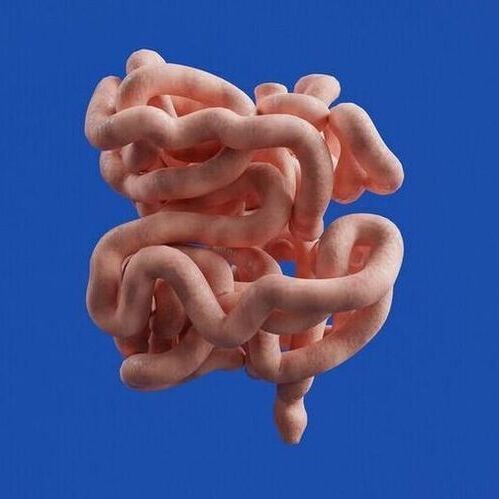
Colonoscopies let physicians examine patients’ large intestines, or colons, via an inserted tube that’s equipped with a camera and with tools to remove precancerous polyps. A high-quality colonoscopy generally means a physician inspects the entire colon, spends enough time looking for abnormalities and uses recommended techniques to remove suspicious polyps.
Previous studies have shown that measuring colonoscopy performance improves the quality of colonoscopy overall and, ultimately, reduces colorectal cancer mortality. By automating that quality-monitoring process, the new tool could make colonoscopy feedback more feasible across entire hospitals or healthcare systems, said Keswani, who also is a Northwestern Medicine physician.
“The goals of screening colonoscopy are to provide safe and effective care,” he said. “This is not possible unless an institution can measure the quality of colonoscopy.”
Findings
The AI tool analyzed nearly 18,600 colonoscopies performed by 55 physicians over 11 months at Northwestern. For the study, the AI software reviewed colonoscopy recordings and identified key moment, such as when the tube reached the beginning of the colon, when it was withdrawn and when polyps were removed.
The tool’s measurement of withdrawal time — a key metric that tracks time spent examining the colon as the scope is being withdrawn — closely matched times recorded by nurses. That showed the technology is highly accurate, the authors said.
The AI also tracked quality indicators that “can't be feasibly measured by humans at scale,” according to Keswani. These included the number of polyps removed during a procedure and how often physicians used cold snare polypectomy, a guideline-recommended technique for removing small polyps.
AI concerns
Last year, a Lancet study created headlines after it suggested that colonoscopists who started using an AI helper to detect polyps were becoming less proficient over time. Keswani said he’s not sure yet how to view the impact of AI on colonoscopies and on medicine in general. He also noted that his AI tool only assesses quality after colonoscopies have been completed.
“One possibility is that physicians rely too much on AI, which leads to deskilling,” he said. “Alternatively, AI can teach us about blind spots and make us better clinicians.”
Date: 08.12.2025
Naturally, we always handle your personal data responsibly. Any personal data we receive from you is processed in accordance with applicable data protection legislation. For detailed information please see our privacy policy.
Consent to the use of data for promotional purposes
I hereby consent to Vogel Communications Group GmbH & Co. KG, Max-Planck-Str. 7-9, 97082 Würzburg including any affiliated companies according to §§ 15 et seq. AktG (hereafter: Vogel Communications Group) using my e-mail address to send editorial newsletters. A list of all affiliated companies can be found here
Newsletter content may include all products and services of any companies mentioned above, including for example specialist journals and books, events and fairs as well as event-related products and services, print and digital media offers and services such as additional (editorial) newsletters, raffles, lead campaigns, market research both online and offline, specialist webportals and e-learning offers. In case my personal telephone number has also been collected, it may be used for offers of aforementioned products, for services of the companies mentioned above, and market research purposes.
Additionally, my consent also includes the processing of my email address and telephone number for data matching for marketing purposes with select advertising partners such as LinkedIn, Google, and Meta. For this, Vogel Communications Group may transmit said data in hashed form to the advertising partners who then use said data to determine whether I am also a member of the mentioned advertising partner portals. Vogel Communications Group uses this feature for the purposes of re-targeting (up-selling, cross-selling, and customer loyalty), generating so-called look-alike audiences for acquisition of new customers, and as basis for exclusion for on-going advertising campaigns. Further information can be found in section “data matching for marketing purposes”.
In case I access protected data on Internet portals of Vogel Communications Group including any affiliated companies according to §§ 15 et seq. AktG, I need to provide further data in order to register for the access to such content. In return for this free access to editorial content, my data may be used in accordance with this consent for the purposes stated here. This does not apply to data matching for marketing purposes.
Right of revocation
I understand that I can revoke my consent at will. My revocation does not change the lawfulness of data processing that was conducted based on my consent leading up to my revocation. One option to declare my revocation is to use the contact form found at https://contact.vogel.de. In case I no longer wish to receive certain newsletters, I have subscribed to, I can also click on the unsubscribe link included at the end of a newsletter. Further information regarding my right of revocation and the implementation of it as well as the consequences of my revocation can be found in the data protection declaration, section editorial newsletter.
Keswani added that his research team is currently studying the role and impact of AI in teaching colonoscopy to trainees.
Other Northwestern authors are Dr. John Pandolfino, Dr. Mozziyar Etemadi, Matthew Wittbrodt, Alex Heller, Kristjana Kristinsdottir and Evandros Kaklamanos.
The study is titled, “Artificial Intelligence Automated Assessment of Colonoscopy Quality Metrics.”




:quality(80)/p7i.vogel.de/wcms/51/68/51687ac4cc19f2757c138498b877de57/0133167039v2.jpeg "CMFs are foams that consist of hollow spheres – made of materials such as stainless steel, nickel, or other metals and alloys – embedded in a metallic matrix. The resulting material is both lightweight and remarkably strong at absorbing compressive forces. (Source: Jie Sun/ NC State University)")
:quality(80)/p7i.vogel.de/wcms/cd/c0/cdc09efd1e5b3b8f83224e7729d66c10/0133105276v2.jpeg "From the data presented in this report, the authors show how TF3-MALS-RI is uniquely able to separate large polyacrylate molecules and provide precise molecular weight and Rg values. (Source: Postnova Analytics)")
:quality(80)/p7i.vogel.de/wcms/c6/f2/c6f2e2b4753a0d0cec682c03df4ed37c/0133088650v2.jpeg "PMBC vials for immunology and oncology research. (Source: Amsbio)")
:quality(80)/p7i.vogel.de/wcms/e0/72/e0728dc8dcadfc4d79a734e08cf6ced3/0133088641v2.jpeg "LM20 Microfluidizer and Cambridge CNT dispersion produced by the LM20 microfluidizer. (Source: Analytik)")
:quality(80)/p7i.vogel.de/wcms/86/01/86014d3d2a28cefc852f65c8d68317e4/0133104231v2.jpeg "Single-handed tube reading using a Handheld 2. (Source: Azenta Life Sciences)")
:quality(80)/p7i.vogel.de/wcms/0b/0f/0b0f8ed042dfc91f32582e10d54c2c7e/0133087444v2.jpeg "Offering advanced automation to increase your throughput, the Intellixcap provides secure sealing – eliminating the need for manual intervention, while preserving vital sample integrity. (Source: Azenta Life Sciences)")
:quality(80)/p7i.vogel.de/wcms/13/d3/13d35105f74a1c2e22b9c7a270e8e9b3/0132611155v2.jpeg "Circulating cell free DNA. (Source: Amsbio)")
:quality(80)/p7i.vogel.de/wcms/bc/ed/bced6850297a04dbea471a66cb6bb6fe/0132611405v2.jpeg "The latest addition to the range is a peristaltic tubing stop adapter that eliminates the need for fixed stoppers and allows custom cut lengths of peristaltic tubing to be installed on any pump head size. (Source: Biotech Fluidics )")
:quality(80)/p7i.vogel.de/wcms/8d/5c/8d5c6c7f897f91d6784825eee20b5584/0133321225v1.jpeg "Empa researcher Christoph Hüglin collects samples of particles that are washed out of the air by rain and snow or settle due to gravity. (Source: Empa)")
:quality(80)/p7i.vogel.de/wcms/a1/af/a1afbc7c8a067bbe94749ec680b4bafd/0133163762v2.jpeg "The study found in murkier water, fish took longer to move towards the food than those in clear water, but individuals in larger groups responded more quickly overall. (Source: Christos Ioannou)")
:quality(80)/p7i.vogel.de/wcms/32/80/3280aa3d44708962943c96fe2d466744/0133088560v2.jpeg "A bumble bee in flight at the University of Bristol Botanic Garden. (Source: Phil Savoie)")
:quality(80)/p7i.vogel.de/wcms/7b/e5/7be5c735140cbe28f3af0ec3d88274b9/0133045403v2.jpeg "After being buried in the ground for two months and broken down by soil organisms, a new pair of cotton underwear (left) shows clear signs of decomposition (right). (Source: Nicolas Zonvi)")
:quality(80)/p7i.vogel.de/wcms/bf/d0/bfd087349a85956a7aefad57ac1204c7/0133241961v2.jpeg "The Thermo Scientific Suretect Beverage Spoilage Multiplex PCR Assay provides a fast, broad-range molecular solution for detecting key spoilage microorganisms that threaten beverage quality. (Source: © OlegDoroshin - stock.adobe.com)")
:quality(80)/p7i.vogel.de/wcms/d4/61/d461ce0bd5743897993c6475f69e7ad6/0133067478v2.jpeg "In Harris County, 50 % of households with children reported food insecurity, compared with 33 % of households without children. (Source: Rice University)")
:quality(80)/p7i.vogel.de/wcms/79/76/7976d17b980bedfe35acaa532d690046/0132713841v2.jpeg "Observed rice yield losses from 1°C warming are more than twice as high as model estimates due to underestimated heat stress. (Source: AdobeStock/ducvien)")
:quality(80)/p7i.vogel.de/wcms/28/b6/28b6114fc9915c5dadee94d5c89bd129/0132593216v2.jpeg "Eating foods that contain common preservative food additives may increase the risks of high blood pressure and cardiovascular disease. (Source: Unsplash)")
:quality(80)/p7i.vogel.de/wcms/83/b4/83b4563a65c6036b61990931507428b4/0133363611v2.jpeg "Magnesium sulphate uptake and the north / south divide for the Precept program. (Source: University of Bristol )")
:quality(80)/p7i.vogel.de/wcms/bb/06/bb06c1c3c5d250f3f93016366c56525d/0133363201v2.jpeg "The team identified more than 1,200 associated genetic variants and found that these influences are remarkably consistent across countries, ages and methods of measuring personality. (Source: Pixabay - PublicDomainPictures)")
:quality(80)/p7i.vogel.de/wcms/e9/26/e926b21b0183c0325122ef07b89671e8/0133363182v2.jpeg "A team of Northwestern Medicine scientists have developed an AI tool that rapidly and successfully measures colonoscopy quality by reviewing footage of the procedure. (Source: Unsplash)")
:quality(80)/p7i.vogel.de/wcms/b0/b5/b0b59a78dc380bafc2326ac209f72187/0133321063v1.jpeg "Light pollution has been linked to cardiovascular disease. (Source: free licensed)")
:quality(80)/images.vogel.de/vogelonline/bdb/1710600/1710675/original.jpg "Discover how to set yourself up for success when performing balance-based density determination of solids such as jewelry and precious metals. (Mettler Toledo)")
:quality(80)/images.vogel.de/vogelonline/bdb/1682500/1682579/original.jpg "The new XPR Analytical balance redesigned to meet the needs of laboratory technicians of working fast and lean. (Mettler Toledo)")
:quality(80)/images.vogel.de/vogelonline/bdb/1677000/1677080/original.jpg "Enhance your weighing accuracy, comfort and productivity with the redesigned XPR Analytical balance. (Mettler Toledo)")
:fill(fff,0)/images.vogel.de/vogelonline/companyimg/107800/107832/65.jpg "logoDueperthal.jpg ()")
:fill(fff,0)/p7i.vogel.de/companies/69/b7/69b7f63f311d9/logo-bimos-tif--2-.jpeg "logo-bimos-tif--2- (https://www.bimos.com/de-de/)")
:quality(80)/p7i.vogel.de/wcms/7e/d5/7ed5f9a1c0fcecd005e8b614bd453eb2/0130963808v2.jpeg "Study senior author Dr. Mohamed Abazeed demonstrates a prototype AI tool that summarizes cancer pathology reports, shown here in a radiation oncology setting. The tool, developed at Northwestern Medicine, is not yet in clinical use and is undergoing further testing. (Source: Northwestern University)")
:quality(80)/p7i.vogel.de/wcms/9f/57/9f57b90c78864d1e4450a54e1ad30f90/0129797374v2.jpeg "A new Physicians Committee for Responsible Medicine poll found that nearly half of Americans aren’t aware that eating processed meat increases the risk of developing colorectal cancer. (Source: Getty Images)")