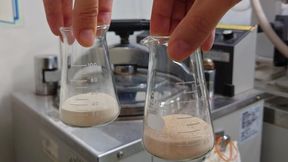
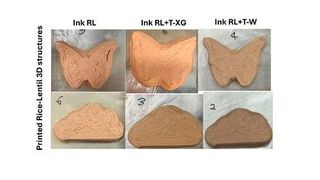
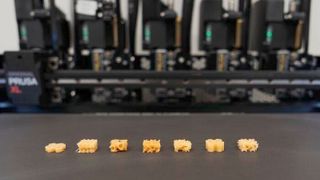
Rice and lentil flours could provide a minimally processed base for 3D food printing. Researchers at Singapore University of Technology and Design tested how different blends hold their shape during printing and how cooking methods change their texture.
Okara, a by-product of soybean processing, as a source of bioactive peptides for a biodegradable, 3D-printable material with potential applications for devices for pain management during breastfeeding and following breast cancer surgery.
Scientists carried out a study in mice and ‘mini-hearts’ — lab-grown human 3D organoids that mimic features of the developing heart. The findings may ultimately have implications for heart repair after a heart attack.
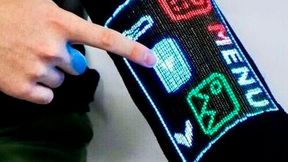
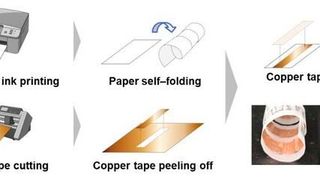
Researchers in Japan have developed a design framework that turns flat paper sheets into customised, self-folding wearable sensors. Inspired by climbing vines, the helical devices conform to fingers or arms without adhesives or straps and can measure biosignals.
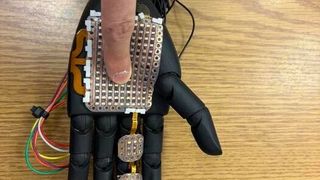
A customizable electronic skin developed by Washington State University researchers detects pressure and temperature across flat and curved prosthetic surfaces. The modular system combines 3D printing and laser cutting with sensing at ten times the resolution of current commercial glove sensors, laying the groundwork for prosthetics that could eventually provide tactile feedback.
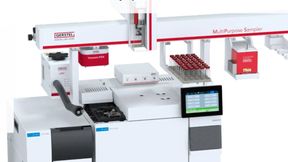
Laboratories are increasingly making use of the 3D printing technology to develop 3D printed drugs, lab-on-a-chip systems and even bioprint tissues and organs. With such transformative changes taking place, 3D printing is redefining what is possible in medicine and R&D.
Researchers have developed a new type of 3D-printable material that mimics the human tissue’s ability to sort and filter, allowing certain molecules to pass through while keeping others out. This material can be used in a variety of applications across medicine, water and robotics.
A molecular material developed at Kyushu University can convert visible sunlight into ultraviolet light under ordinary outdoor conditions. The solid-state system uses photon upconversion to generate UV light from lower-energy photons, opening potential applications in air purification, photocatalysis and low-intensity 3D printing.
Photopolymer resins enable highly precise 3D printing, but their cured structures are usually difficult to recycle. Researchers at Yokohama National University have now developed an initiator-free anthracene-based resin that can be reshaped and reused multiple times while remaining compatible with high-resolution stereolithography.
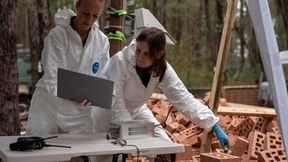
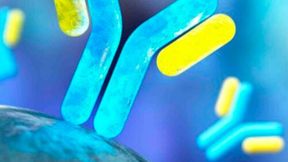
Hantavirus, transmitted from rodents to humans is one of the highest concerns for future pandemics. Researchers have produced a detailed blue print of a protein complex that the Ande Virus uses to infect the host cells. This move will help design effective vaccines and antibody therapies against the deadly Hantavirus.