Okara, a by-product of soybean processing, as a source of bioactive peptides for a biodegradable, 3D-printable material with potential applications for devices for pain management during breastfeeding and following breast cancer surgery.
Okara, a soybean by-product, can be transformed into 3D-printed biomaterials for treatment of skin repair.
(Source: Politecnico di Milano)
Transforming a soybean processing by-product into an innovative material for skin protection and repair. This is the prospect outlined by a study that used okara, a residue from the production of tofu and soy-based beverages, to obtain a bioactive, biodegradable, 3D-printable biomaterial.
A solution that could contribute, in the future, to the development of devices for the local treatment of pain associated with breastfeeding and post-operative recovery following breast cancer surgery.
Published in Communications Materials, the study addresses a twofold challenge: reducing environmental impact by valorizing food-industry by-products and developing new biomedical solutions.
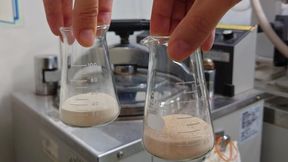
At the heart of the research is the okara, which, although generally considered a waste product, retains a significant protein component and can therefore represent a sustainable source of biologically active molecules. From this by-product, the researchers obtained a protein hydrolysate rich in bioactive peptides, short chains of amino acids derived from proteins, and studied its effects on human dermal fibroblasts, cells that are essential for maintaining skin structure and for tissue repair processes. In vitro tests showed that the okara hydrolysate exerts antioxidant and anti-inflammatory activity and promotes fibroblast migration, an important process for wound healing.
To translate these findings into a technological solution, the okara hydrolysate was incorporated into poly(ε-caprolactone), or PCL, a biocompatible and biodegradable polymer already used in biomedical research. This resulted in a bioactive blend suitable for 3D printing.
Mechanical, thermal and structural analyses showed that the addition of the hydrolysate preserves the main properties of PCL and enables the extended release of bioactive peptides over time.
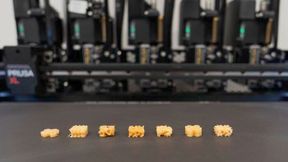
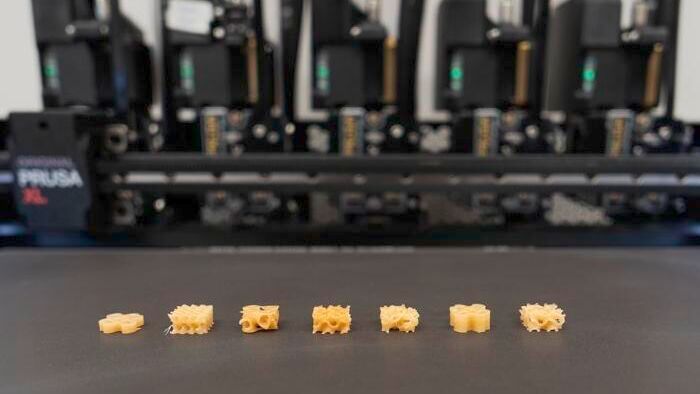
The researchers then verified that, even after 3D printing, the blend retains its antioxidant, anti-inflammatory and pro-regenerative features. The ability to produce structures with complex geometries also confirmed the versatility of the material and its potential for the design of customisable devices.
“The research will continue with the 3D printing of a biomimetic phantom, an experimental model capable of reproducing some of the main characteristics of breast skin tissue. The system will make it possible to study the behaviour of the biomaterial under controlled conditions and to further investigate its properties and functionality before the subsequent validation phases, thus contributing to the development of sustainable and customisable solutions for women’s health,” says Carmen Lammi, Professor at the Department of Pharmaceutical Sciences of the University of Milan.
“The possibility of using 3D printing to produce complex geometries with this bioactive material opens up new opportunities for the development of devices dedicated to women’s health, with potential applications in other biomedical fields as well. In the 3DBioPad project, the valorization of the okara is part of a design approach that considers, from the outset, product function and geometry, material properties and the manufacturing process as interdependent elements. It is through this integration that we aim to combine the development of new solutions for people’s health with a more sustainable use of resources,” explains Professor Serena Graziosi of the Department of Mechanical Engineering at Politecnico di Milano.
Original Article: Upcycling soybean okara proteins into 3D printable bioactive peptide-enhanced PCL composite for wound-care applications; Communications Materials; DOI:10.1038/s43246-026-01348-x
Date: 08.12.2025
Naturally, we always handle your personal data responsibly. Any personal data we receive from you is processed in accordance with applicable data protection legislation. For detailed information please see our privacy policy.
Consent to the use of data for promotional purposes
I hereby consent to Vogel Communications Group GmbH & Co. KG, Max-Planck-Str. 7-9, 97082 Würzburg including any affiliated companies according to §§ 15 et seq. AktG (hereafter: Vogel Communications Group) using my e-mail address to send editorial newsletters. A list of all affiliated companies can be found here
Newsletter content may include all products and services of any companies mentioned above, including for example specialist journals and books, events and fairs as well as event-related products and services, print and digital media offers and services such as additional (editorial) newsletters, raffles, lead campaigns, market research both online and offline, specialist webportals and e-learning offers. In case my personal telephone number has also been collected, it may be used for offers of aforementioned products, for services of the companies mentioned above, and market research purposes.
Additionally, my consent also includes the processing of my email address and telephone number for data matching for marketing purposes with select advertising partners such as LinkedIn, Google, and Meta. For this, Vogel Communications Group may transmit said data in hashed form to the advertising partners who then use said data to determine whether I am also a member of the mentioned advertising partner portals. Vogel Communications Group uses this feature for the purposes of re-targeting (up-selling, cross-selling, and customer loyalty), generating so-called look-alike audiences for acquisition of new customers, and as basis for exclusion for on-going advertising campaigns. Further information can be found in section “data matching for marketing purposes”.
In case I access protected data on Internet portals of Vogel Communications Group including any affiliated companies according to §§ 15 et seq. AktG, I need to provide further data in order to register for the access to such content. In return for this free access to editorial content, my data may be used in accordance with this consent for the purposes stated here. This does not apply to data matching for marketing purposes.
Right of revocation
I understand that I can revoke my consent at will. My revocation does not change the lawfulness of data processing that was conducted based on my consent leading up to my revocation. One option to declare my revocation is to use the contact form found at https://contact.vogel.de. In case I no longer wish to receive certain newsletters, I have subscribed to, I can also click on the unsubscribe link included at the end of a newsletter. Further information regarding my right of revocation and the implementation of it as well as the consequences of my revocation can be found in the data protection declaration, section editorial newsletter.