Gut microbiomes is a key indicator of health and resilience; researchers have studied an endangered subspecies of mantled howler monkeys and found out that environmental change can alter the animals’ gut microbiomes.
Prior studies have provided evidence of gut microbiome changes between pristine and non-pristine habitats, but the new study goes further by looking at three biomarkers of overall physiology.
(Source: Unsplash)
Illinois/USA – As rainforests around the world are cleared for agriculture, livestock grazing, timber harvesting and development, habitat loss is pushing an increasing number of species toward extinction.
New research by scientists at Northwestern University and Universidad Veracruzana shows that the effects of habitat disturbance extend beyond shrinking ranges and declining populations. Studying an endangered subspecies of mantled howler monkeys, the researchers found evidence that environmental change can alter the animals’ gut microbiomes, a key indicator of health and resilience.
The team focused on Mexican mantled howler monkeys living in the Los Tuxtlas Biosphere Reserve in Veracruz, where roughly 60 % of the original rainforest canopy has been lost. Although mantled howler monkeys are generally considered highly adaptable to habitat disturbance, the Mexican subspecies is endangered, making it an important case for understanding how wildlife responds to environmental change.
Lead author Tabor Whitney conducted the research while a doctoral student in the lab of Katharine Amato, associate professor of anthropology at Northwestern.
According to Whitney, prior studies have provided evidence of gut microbiome changes between pristine and non-pristine habitats, but the new study goes further by looking at three biomarkers of overall physiology. It also takes a more nuanced look at distinct habitat characteristics to identify which changes have the most significant consequence on the primates’ physiology.
The Biosphere Reserve provided the research team with a unique opportunity to study howlers in 10 rainforest remnants of varying shape and size, canopy maturity, tree density and diversity, and distance from humans.
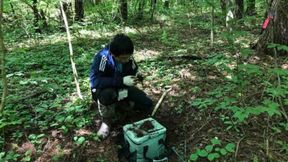
The researchers collected fecal samples from monkeys in each remnant and analyzed three biomarkers in the samples: the gut microbiome, short chain fatty acids and glucocorticoids (a class of steroid hormones). Looked at holistically, the researchers were able to learn how primates dwelling in each location responded to changes in their habitat.
“An awesome takeaway of the study is the knowledge the gut microbiome is the most sensitive to ecological change,” Whitney said. “Moving forward, samples can be collected every five or 10 years for comparing changes over time and evaluating the impact of conservation management efforts.”
A bigger question of the study was to determine which characteristics of a more pristine habitat versus a non-pristine habitat had the greatest influence on the mantled howler’s physiology.
The study found primates in smaller habitats with trees of smaller diameter and less tree diversity had a microbiome makeup substantially different from their counterparts in the more pristine habitats. The insights point to useful strategies for establishing a conservation action plan for the endangered howler species.
Strategies would likely include planting more diverse trees, including fruiting trees that monkeys and birds like to eat, and expanding the canopy, because without connected tree lines, monkeys are less likely to travel to other areas to supplement their diet or mate.
“Landowners we’ve spoken with are really open to these conversations,” Whitney said. “They’ve said they love seeing the monkeys, and if they can help them travel on the trees, they’re very interested in it.”
Whitney said the research has exciting implications for the field of primatology because many researchers in the field have fecal samples stored from their specific area of research that could be analyzed for evolutionary comparison.
While this study was limited to male mantled howlers, the research team is now working on a research paper comparing male to female microbiomes. Whitney suggests future research could be adapted to the study of other categories of endangered species.
“Multi-biomarker fecal assessment of habitat disturbance effects on an endangered howler monkey” was published by the Zoological Society of London in the journal Animal Conservation on Nov. 15.
Date: 08.12.2025
Naturally, we always handle your personal data responsibly. Any personal data we receive from you is processed in accordance with applicable data protection legislation. For detailed information please see our privacy policy.
Consent to the use of data for promotional purposes
I hereby consent to Vogel Communications Group GmbH & Co. KG, Max-Planck-Str. 7-9, 97082 Würzburg including any affiliated companies according to §§ 15 et seq. AktG (hereafter: Vogel Communications Group) using my e-mail address to send editorial newsletters. A list of all affiliated companies can be found here
Newsletter content may include all products and services of any companies mentioned above, including for example specialist journals and books, events and fairs as well as event-related products and services, print and digital media offers and services such as additional (editorial) newsletters, raffles, lead campaigns, market research both online and offline, specialist webportals and e-learning offers. In case my personal telephone number has also been collected, it may be used for offers of aforementioned products, for services of the companies mentioned above, and market research purposes.
Additionally, my consent also includes the processing of my email address and telephone number for data matching for marketing purposes with select advertising partners such as LinkedIn, Google, and Meta. For this, Vogel Communications Group may transmit said data in hashed form to the advertising partners who then use said data to determine whether I am also a member of the mentioned advertising partner portals. Vogel Communications Group uses this feature for the purposes of re-targeting (up-selling, cross-selling, and customer loyalty), generating so-called look-alike audiences for acquisition of new customers, and as basis for exclusion for on-going advertising campaigns. Further information can be found in section “data matching for marketing purposes”.
In case I access protected data on Internet portals of Vogel Communications Group including any affiliated companies according to §§ 15 et seq. AktG, I need to provide further data in order to register for the access to such content. In return for this free access to editorial content, my data may be used in accordance with this consent for the purposes stated here. This does not apply to data matching for marketing purposes.
Right of revocation
I understand that I can revoke my consent at will. My revocation does not change the lawfulness of data processing that was conducted based on my consent leading up to my revocation. One option to declare my revocation is to use the contact form found at https://contact.vogel.de. In case I no longer wish to receive certain newsletters, I have subscribed to, I can also click on the unsubscribe link included at the end of a newsletter. Further information regarding my right of revocation and the implementation of it as well as the consequences of my revocation can be found in the data protection declaration, section editorial newsletter.
Study co-authors are professor-researcher Pedro A.D. Dias, and researchers Ariadna Negrín and David Roberto Chavira Ramírez of the Universidad Veracruzana. Whitney is currently a postdoctoral scholar in the Trienens Institute Climate Change Research Group at Northwestern.