Accurate pH measurements depend on well-maintained electrodes and a systematic approach to troubleshooting. This article covers common calibration, measurement, and mechanical issues, offering practical steps to improve reliability and extend sensor life. It also highlights how digital sensor diagnostics can help identify problems early.
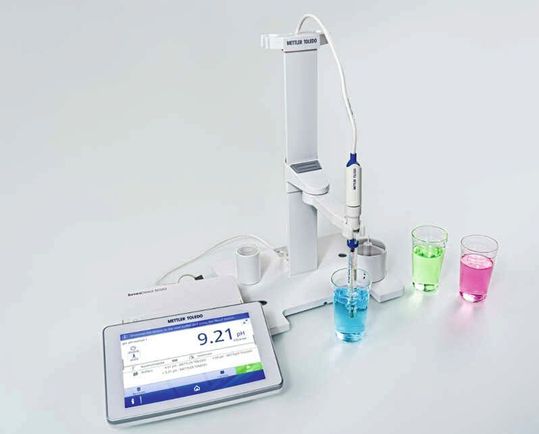
Fig.1: The path to accurate pH measurements starts with precise calibration. Use fresh buffers and verify mV response for optimal electrode performance.
(Source: METTLER TOLEDO)
Troubleshooting is a natural problem-solving process that can be strengthened through knowledge and systematic methods. When faced with abrupt issues that prevent us from completing a task, we naturally look for the source of the problem and seek to fix it.
The word “troubleshooting” itself perfectly captures its meaning: identifying issues and difficulties (trouble) and resolving them with swift, targeted action (shooting).
In our everyday lives, we have learned to troubleshoot technical issues in simple and effective ways. If an app fails to run or a PC crashes, our first reaction is often the same: we restart the device. This is a basic yet reliable form of troubleshooting. It's an intuitive approach to problem-solving and a fundamental part of how we interact with technology and the world around us.
In pH laboratories, troubleshooting is just as important. Though perhaps not quite as intuitive initially, approaches can still be learned to ensure consistent, accurate, and reliable measurements. There are several ways that errors can arise to impact the performance of pH electrodes, with issues typically falling into three broad categories: calibration problems, measurement inconsistencies, and mechanical faults.
This article explores each of these issues in detail and how to troubleshoot them.
Calibration Problems
Calibration is one of the most critical steps in the pH measurement process. Some common calibration-related problems include:
Out-of-range slope values and cell constants
Inaccurate readings
Calibration errors
These can be caused by many factors, including damaged sensors and poor-quality buffers.
How can we handle these issues? Step one in troubleshooting calibration issues is to confirm that you are using high-quality and appropriate buffer solutions. Using fresh, uncontaminated buffers is essential. It is equally important to confirm that the correct buffer group is used for the specific application, and that buffers are used in the proper sequence.
A 3-point calibration would be recommended for a sample with an unknown pH, whereas a study using samples with consistent expected pH values would usually only need a 2-point calibration with a narrow pH range.
One also needs to maintain a stable buffer temperature—preferably room temperature (25°C)—during calibration, to ensure consistent pH values.
Step two can be to check the miliVolt (mV) values. A reliable electrode should exhibit specific mV responses in standard buffer solutions. For example, immersing the electrode in pH 4.01 and pH 7.00 buffers should yield a difference of at least ±180 mV relative to the zero potential. Slope values for pH are acceptable from 95-105% and an offset of 0 ± 30 mV. Electrodes showing a consistently low slope (below 90%) may be damaged or blocked.
Step three would be to ensure that the calibration mode corresponds to the electrode and application requirements. For instance, choosing between linear or segmented calibration modes as appropriate.
Measurement problems, such as drift, inconsistent readings, and slow response times, do affect data quality. These issues can stem from using unsuitable electrodes, variations in sample temperatures, and improper calibration relative to the sample matrix.
How can we troubleshoot these issues? Step one to troubleshoot such issues will be to check the compatibility of the electrode with the sample matrix. Electrodes are designed differently for different samples. Therefore, if an inappropriate electrode is being used in a particular sample, it can lead to unstable or inaccurate readings. Resources like the METTLER TOLEDO sensor finder are designed to help users select the right sensors for their measurement needs.
Date: 08.12.2025
Naturally, we always handle your personal data responsibly. Any personal data we receive from you is processed in accordance with applicable data protection legislation. For detailed information please see our privacy policy.
Consent to the use of data for promotional purposes
I hereby consent to Vogel Communications Group GmbH & Co. KG, Max-Planck-Str. 7-9, 97082 Würzburg including any affiliated companies according to §§ 15 et seq. AktG (hereafter: Vogel Communications Group) using my e-mail address to send editorial newsletters. A list of all affiliated companies can be found here
Newsletter content may include all products and services of any companies mentioned above, including for example specialist journals and books, events and fairs as well as event-related products and services, print and digital media offers and services such as additional (editorial) newsletters, raffles, lead campaigns, market research both online and offline, specialist webportals and e-learning offers. In case my personal telephone number has also been collected, it may be used for offers of aforementioned products, for services of the companies mentioned above, and market research purposes.
Additionally, my consent also includes the processing of my email address and telephone number for data matching for marketing purposes with select advertising partners such as LinkedIn, Google, and Meta. For this, Vogel Communications Group may transmit said data in hashed form to the advertising partners who then use said data to determine whether I am also a member of the mentioned advertising partner portals. Vogel Communications Group uses this feature for the purposes of re-targeting (up-selling, cross-selling, and customer loyalty), generating so-called look-alike audiences for acquisition of new customers, and as basis for exclusion for on-going advertising campaigns. Further information can be found in section “data matching for marketing purposes”.
In case I access protected data on Internet portals of Vogel Communications Group including any affiliated companies according to §§ 15 et seq. AktG, I need to provide further data in order to register for the access to such content. In return for this free access to editorial content, my data may be used in accordance with this consent for the purposes stated here. This does not apply to data matching for marketing purposes.
Right of revocation
I understand that I can revoke my consent at will. My revocation does not change the lawfulness of data processing that was conducted based on my consent leading up to my revocation. One option to declare my revocation is to use the contact form found at https://contact.vogel.de. In case I no longer wish to receive certain newsletters, I have subscribed to, I can also click on the unsubscribe link included at the end of a newsletter. Further information regarding my right of revocation and the implementation of it as well as the consequences of my revocation can be found in the data protection declaration, section editorial newsletter.
Step two would be to check that the sample is at a stable temperature. pH values are temperature-dependent and fluctuations during measurement can cause drifting readings. It is essential to allow buffers and samples to reach a constant temperature before measurement. Room temperature (25°C) is usually recommended, unless measuring the pH of specific samples under certain temperature conditions. Automatic Temperature Compensation (ATC) is also a feature of many modern pH meters, which uses a temperature sensor to correct for changes in the electrode’s response and improve measurement accuracy.
Step three is to check the measurement range and proper selection of the buffers. It is important to know the expected range of the pH values of your samples, as the calibration range should be wide enough to cover the full range of your samples.
Mechanical Faults
These can consist of sensor damage, aging, fouling, crystallization, and any other factors which can degrade electrode performance over time.
How do we resolve these issues? Step one will be to ensure there is sufficient reference electrolyte, particularly for refillable electrodes. The electrolyte level should be above the sample level, and the safe lock should remain open during measurement.
Step two will be to look for any cable and connection-related issues. Loose or damaged cables can introduce signal noise or loss.
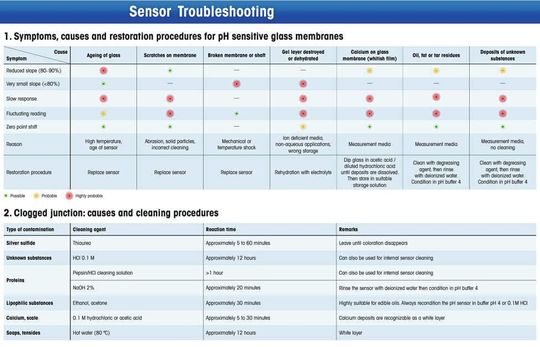
Step three is to check the membrane of the pH electrodes and make sure they are not damaged or contaminated. Inspect the electrode for signs of precipitates or salt deposits, which can be cleaned using distilled water. Cleaning with ethanol followed by rehydration in a diluted acidic solution (e.g., dilute HCl) can also help restore function if your electrode is blocked or showing signs of wear and tear. If you keep having issues, you may need to replace your electrode.
Unlike the outside world, troubleshooting in a lab environment for pH measurement requires a structured approach focusing on calibration, measurement, and mechanical factors. Key practices such as using fresh buffer solutions, maintaining stable sample temperatures, selecting appropriate electrodes, and properly caring for sensors are essential for ensuring accurate pH measurements and prolonging electrode lifespan.
METTLER TOLEDO DES™ digital pH sensors feature integrated sensor diagnostic capabilities that allow operators to detect a range of potential issues during calibration. Operators can check their slope, detect drift, and get helpful reminders for regular visual checks and sensor maintenance.




:quality(80)/p7i.vogel.de/wcms/a0/22/a0220cebf4618cef31ba3a3c28411770/0133693882v1.jpeg "Researchers have demonstrated a technique that uses powdered eggshells to produce high-quality magnesium alloys, which have a wide variety of automotive, aerospace and biomedical applications. The eggshells are used as a low-cost, environmentally sustainable alternative to conventional calcium materials, which are manufactured from ore using an energy-intensive process. This photo shows an eggshell next to a rod of egg-shell modified magnesium alloy. (Source: Bharat Gwalani, NC State University)")
:quality(80)/p7i.vogel.de/wcms/83/7b/837b7447733daa56e185cb8f61e8d3bf/0133694425v2.jpeg "Researcher Jinlong Wang stands beside a garbage bin fitted with a solar-powered insert on the lid that efficiently removes food waste smells compared to a garbage bin with a typical lid. (Source: Pan Yan)")
:quality(80)/p7i.vogel.de/wcms/47/aa/47aa3f86498782fc62cba3fc50a423fa/0133690841v2.jpeg "Making new biological discoveries with minimal human intervention is an important advance in self-driving laboratories. (Source: NIH Image Gallery / Chalmers University of Technology)")
:quality(80)/p7i.vogel.de/wcms/09/cc/09cc110fbf9e50608616dde34a418e57/0133688419v2.jpeg "HiPSCs cultured on iMatrix Laminin-511 with Stemfit Basic03. (Source: Amsbio)")
:quality(80)/p7i.vogel.de/wcms/3e/3c/3e3cc29b52fedebf1c97dea23b92a760/0133673542v2.jpeg "Fig.1: The path to accurate pH measurements starts with precise calibration. Use fresh buffers and verify mV response for optimal electrode performance. (Source: METTLER TOLEDO)")
:quality(80)/p7i.vogel.de/wcms/2d/92/2d9231a37601aa58b40d4688f609f004/0133687591v2.jpeg "Horiba’s new CE IVDR certified Yumizen H500 CRP benchtop hematology analyzer delivers a simultaneous complete blood count with 5-part extended differential and rapid CRP whole blood measurement. (Source: Horiba )")
:quality(80)/p7i.vogel.de/wcms/e5/e9/e5e97a3c76cbf47308ce21c4a567a812/0133686320v2.jpeg "The picture shows the Kern PDS precision scale in combination with Kern Balanceconnection software. (Source: Kern & Sohn)")
:quality(80)/p7i.vogel.de/wcms/a8/6e/a86e9b1f1561a67038b6d8a9fe629117/0133465534v2.jpeg "Clean, calibrate, and store pH electrodes properly to ensure accurate, reliable measurements every time. (Source: METTLER TOLEDO)")
:quality(80)/p7i.vogel.de/wcms/d6/ef/d6ef487a821a27ff89287c75b9a94dec/0133693832v1.jpeg "Extent of ice loss at Konkordiaplatz on the Great Aletsch Glacier, canton Valais between 2022 and 2026, compared with the average of measurements taken between 1953 and 1983. (Source: M. Huss / A. Linsbauer)")
:quality(80)/p7i.vogel.de/wcms/ef/7c/ef7cd23997787d020fc225c2677625cf/0133621949v2.jpeg "The team recorded over 1.6 million individual flowers and more than 5,000 plant-pollinator interactions across 58 plant species and 405 pollinator species. (Source: University of Bristol)")
:quality(80)/p7i.vogel.de/wcms/6f/ea/6feaf3edd34eb4a9f1df201dc2e6448d/0133548706v2.jpeg "The researchers studied people’s perceptions, beliefs and knowledge about climate change in two coastal regions, one low-lying island and the other a mainland coast. (Source: P Afna)")
:quality(80)/p7i.vogel.de/wcms/8d/5c/8d5c6c7f897f91d6784825eee20b5584/0133321225v1.jpeg "Empa researcher Christoph Hüglin collects samples of particles that are washed out of the air by rain and snow or settle due to gravity. (Source: Empa)")
:quality(80)/p7i.vogel.de/wcms/e1/f4/e1f48a0c4b6d5c00059370affdc13113/0133694409v2.jpeg "Broccoli growing beneath semi-transparent, colored solar panels at the experimental site at Kärrbo Prästgård farm in Sweden. (Source: Silvia Ma Lu)")
:quality(80)/p7i.vogel.de/wcms/95/3e/953e490f1819f6638bc08fe3d4d43e87/0133566684v1.jpeg "The soy protein isolate the researchers fed to the mice. (Source: KyotoU / Tomoko T. Asai)")
:quality(80)/p7i.vogel.de/wcms/ba/38/ba38179dbcd20fbc3887b2709193d0a8/0133566669v2.jpeg "Consumers in a Cornell study showed no consistent bias against the colour of hybrid red wines, with several ranking among the most visually appealing. (Source: free licensed)")
:quality(80)/p7i.vogel.de/wcms/ac/d1/acd1a8888f6e78206f11f2b4eb33926f/0133566582v1.jpeg "A claim on the front of a box of food products is a hint, not a verdict. The nutrition label on the back – added sugars, sodium, saturated fat, all of it together – still tells the fuller story. (Source: free licensed)")
:quality(80)/p7i.vogel.de/wcms/20/cf/20cfcbf3af8ae6e5d837de9a236d146a/0133694093v1.jpeg "Research findings could help researchers develop personalized treatments for liver disease. (Source: University of Missouri)")
:quality(80)/p7i.vogel.de/wcms/fe/8c/fe8c5f140f67c0f66456686c5a7f68c8/0133693408v2.jpeg "The scientists used single-cell RNA sequencing and genetically engineered mouse models to identify a signaling pathway linking cardiac lymphatics, the heart’s outer lining, and key growth genes that together help regulate cardiac growth. (Source: Unsplash)")
:quality(80)/p7i.vogel.de/wcms/47/2d/472d0c14306eb683ebaa90ce7db42a9a/0133693184v2.jpeg "A human ribosome, shown in gold, translating an mRNA molecule (red). Three tRNAs (orange) help assemble the growing protein chain, shown in silver-white. The image is based on cryo-electron microscopy structures of human ribosomes. (Source: © Adrian Bothe)")
:quality(80)/p7i.vogel.de/wcms/c8/66/c866dcdcc681fb5466b43ac994f5b2d9/0133693165v2.jpeg "The key research findings showed that exposure to parental smoking during childhood was linked to changes in heart structure and poorer cognitive performance in middle age. (Source: Unsplash)")
:quality(80)/images.vogel.de/vogelonline/bdb/1710600/1710675/original.jpg "Discover how to set yourself up for success when performing balance-based density determination of solids such as jewelry and precious metals. (Mettler Toledo)")
:quality(80)/images.vogel.de/vogelonline/bdb/1682500/1682579/original.jpg "The new XPR Analytical balance redesigned to meet the needs of laboratory technicians of working fast and lean. (Mettler Toledo)")
:quality(80)/images.vogel.de/vogelonline/bdb/1677000/1677080/original.jpg "Enhance your weighing accuracy, comfort and productivity with the redesigned XPR Analytical balance. (Mettler Toledo)")
:fill(fff,0)/p7i.vogel.de/companies/69/b7/69b7f63f311d9/logo-bimos-tif--2-.jpeg "logo-bimos-tif--2- (https://www.bimos.com/de-de/)")
:quality(80)/p7i.vogel.de/wcms/a8/6e/a86e9b1f1561a67038b6d8a9fe629117/0133465534v2.jpeg "Clean, calibrate, and store pH electrodes properly to ensure accurate, reliable measurements every time. (Source: METTLER TOLEDO)")
:quality(80)/p7i.vogel.de/wcms/6c/19/6c19712454c1ea447b855ac8104bdca4/0128418996v2.jpeg "Impact of silver nitrate on the performance of solar panels (Source: © Awais - stock.adobe.com)")