German China
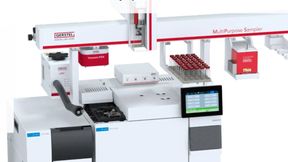
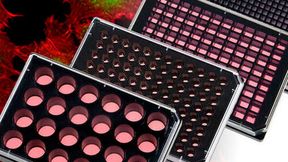
The Raman microscope alpha 300R and the software Particlescout are the perfect combination for the analysis of microparticles.  (Witec)
Microparticles

Automated Microparticle Analysis with Raman Microscopy

The pollution of water, food and the environment by microparticles and especially micro- plastics is a growing concern. Therefore, efficient techniques for analyzing them in detail are urgently needed. A Raman microscopy system equipped with an advanced software package enables researchers to automatically find, classify and identify microparticles.

Read on
CFD simulation for reaction engineering (© nordroden / Fotolia.com)

How to Benefit from CFD Simulation

CFD Simulation in Chemical Reaction Engineering — The goal of reaction engineering is to optimize transport processes (heat transfer, mass transfer and mixing) in order to improve yield/conversion of desired products whilst ensuring the safe operation of the reactor. CFD simulation can help maximizing yield while minimizing costs.

Read on
A discovery by Scripps Research scientists may offer insight into treating blood disorders such as sickle cell anemia. (The Scripps Research Institute)
USA: Sickle Cell Diseases

How Blood Cells Keep Their Shape

In a new study, Velia Fowler, PhD, and her lab at The Scripps Research Institute report that a protein called myosin IIA contracts to give red blood cells their distinctive shape. The findings, published this week in the journal Proceedings of the National Academy of Sciences, could shed light on sickle cell diseases and other disorders where red blood cells are deformed.

Read on
Serendipity: Professor John McGeehan and colleagues inadvertently engineered an enzyme better at degrading plastic than the enzyme which evolved in nature. (Stefan Venter)
UK: Degradation of Plastic

UK Scientists Engineer Plastic-Eating Enzyme

Scientists at the University of Portsmouth have engineered an enzyme which can digest some of our most commonly polluting plastics. The discovery could result in a recycling solution for millions of tonnes of plastic bottles, made of polyethylene terephthalate, or PET, which currently persists for hundreds of years in the environment.

Read on