Early complex life may have been far less mobile than previously thought. The oldest known eukaryotes appear to have remained tied to oxygenated seafloors for hundreds of millions of years, reshaping ideas about where our earliest complex ancestors lived, how they used oxygen and when they acquired mitochondria.
Delicate microfossils don’t last when exposed to the surface. But they remain preserved in deeper rock layers.
(Source: UC Santa Barbara)
From the highest mountains to the deepest ocean, the driest desert to the lushest jungle, Earth displays a dazzling array of lifeforms. And eukaryotes account for many of these lifeforms, including nearly all of the multicellular life we can see in the landscape. But scientists are still piecing together exactly how this domain of life evolved from simpler predecessors.
A team led by scientists at UC Santa Barbara and McGill University now has a better idea of what our early ancestors looked like, where they lived and how they functioned. “We found that the oldest eukaryotes that we’ve seen so far already needed oxygen in some capacity,” said co-lead author Leigh Anne Riedman, a paleontologist at UCSB. “And we were able to figure out that they were living on or within the seafloor by the way they were distributed across the samples.”
The paper, published in Nature, overturns certain long-held assumptions about early eukaryotes while corroborating others. For instance, it seems they had probably acquired mitochondria early on, as many scientists believed, but likely didn’t move into the water column until much later than expected.
The Divisions of Life
Kingdom is often considered the ultimate grouping when sorting life into categories. Distinctions like animal, plant and fungus sit at this level. However, biology is more complex than the labels we invent to classify the living world. Animals, plants and fungi are all part of a larger group called Eukarya, as are other lifeforms with characteristics like mitochondria, membrane-bound organelles and genes enclosed within a nucleus. Learning how this group arose and diversified is a large part of understanding how our world came to look the way it does.
In the early 2000s, most scientists assumed that these microscopic (and mostly single-celled) organisms probably lived in the water column, since they looked a lot like modern plankton. “There was also a conventional wisdom that all these early eukaryotes breathed oxygen and had mitochondria,” said senior author Susannah Porter, a professor in UCSB’s Earth Science Department. “We wrote a couple papers saying, ‘Hey, not so fast. We might be looking at organisms that pre-date these features.’”
Matching Organisms to Their Homes
In this paper, Riedman, Porter and their co-authors wanted to determine whether these early eukaryotes did or did not use oxygen to produce energy, namely if they carried out aerobic or anaerobic respiration. So they used sedimentology and geochemistry to determine where these organisms lived and what oxygen levels were like in those environments.
The team focused on deposits from the McArthur and Birrindudu basins of Northern Territory, Australia, which host the oldest well accepted eukaryote fossils. Today, this region of Australia ranges from outback and savanna to the billabongs and forests of Kakadu N.P. But between 1.75 to 1.4 billion years ago, it was a shallow inland sea replete with lagoons, offshore mudflats and calm coastal waters. Oxygen was beginning to build up in the ocean at this time, but still had a patchy distribution. Atmospheric concentrations were 1% or less of modern levels. “We would not have been able to breathe,” Porter said.
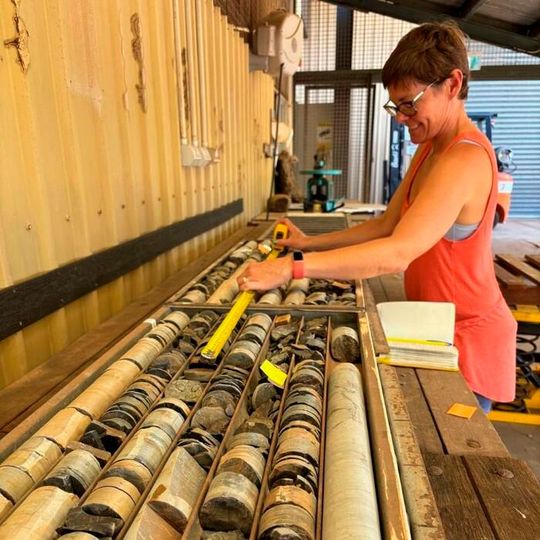
Riedman prepared and sorted microfossils from drill core material, identifying the eukaryotes within the assemblages. Meanwhile, co-lead author Max Lechte and Professor Galen Halverson at McGill University characterized the environments preserved in the rock layers based on the sediment type. This enabled the team to match taxa to four environments — lagoons, tidal areas, coastal regions and offshore waters.
The team then looked at the minerals in the surrounding material to determine how much oxygen was present in each environment. Different concentrations of oxygen in the water affect which minerals will form. For instance, the presence of iron pyrite (FeS2) indicates that there wasn’t any oxygen that would’ve otherwise converted the sulfur to SO3 and SO4. The concentrations of other metal elements in the rock — like vanadium, molybdenum and uranium — also provided insights on ancient oxygen concentrations.
Date: 08.12.2025
Naturally, we always handle your personal data responsibly. Any personal data we receive from you is processed in accordance with applicable data protection legislation. For detailed information please see our privacy policy.
Consent to the use of data for promotional purposes
I hereby consent to Vogel Communications Group GmbH & Co. KG, Max-Planck-Str. 7-9, 97082 Würzburg including any affiliated companies according to §§ 15 et seq. AktG (hereafter: Vogel Communications Group) using my e-mail address to send editorial newsletters. A list of all affiliated companies can be found here
Newsletter content may include all products and services of any companies mentioned above, including for example specialist journals and books, events and fairs as well as event-related products and services, print and digital media offers and services such as additional (editorial) newsletters, raffles, lead campaigns, market research both online and offline, specialist webportals and e-learning offers. In case my personal telephone number has also been collected, it may be used for offers of aforementioned products, for services of the companies mentioned above, and market research purposes.
Additionally, my consent also includes the processing of my email address and telephone number for data matching for marketing purposes with select advertising partners such as LinkedIn, Google, and Meta. For this, Vogel Communications Group may transmit said data in hashed form to the advertising partners who then use said data to determine whether I am also a member of the mentioned advertising partner portals. Vogel Communications Group uses this feature for the purposes of re-targeting (up-selling, cross-selling, and customer loyalty), generating so-called look-alike audiences for acquisition of new customers, and as basis for exclusion for on-going advertising campaigns. Further information can be found in section “data matching for marketing purposes”.
In case I access protected data on Internet portals of Vogel Communications Group including any affiliated companies according to §§ 15 et seq. AktG, I need to provide further data in order to register for the access to such content. In return for this free access to editorial content, my data may be used in accordance with this consent for the purposes stated here. This does not apply to data matching for marketing purposes.
Right of revocation
I understand that I can revoke my consent at will. My revocation does not change the lawfulness of data processing that was conducted based on my consent leading up to my revocation. One option to declare my revocation is to use the contact form found at https://contact.vogel.de. In case I no longer wish to receive certain newsletters, I have subscribed to, I can also click on the unsubscribe link included at the end of a newsletter. Further information regarding my right of revocation and the implementation of it as well as the consequences of my revocation can be found in the data protection declaration, section editorial newsletter.
Combining the taxonomy, sedimentology and mineralogy enabled the authors to understand how the oxygen levels and inhabitants of these environments varied over time and space. And they found that these ancient eukaryotes appeared almost exclusively in rock formed from oxygenated seafloor environments. Not only in shallower waters, but also offshore, as long as there was oxygen.
This correlation implies that ancient eukaryotes probably required oxygen for at least part of their lifecycle. And the strength of the association suggests that these organisms were living on the seafloor itself. If they were present at the oxygenated surface, their remains would’ve settled into anoxic seafloor sediments as well.
The cradle of Eukaryotic Life
The authors had expected to find eukaryotes throughout the ancient seas. “What’s striking to me is how restricted eukaryotes are at this time,” Porter said. “The surface water seems like such an obvious place to live, especially if they have to have oxygen; there’s lots of oxygen at the surface.”
Porter and Riedman suspect that eukaryotes first evolved on the seafloor, and perhaps there hadn’t been any pressure to move into the water column yet, or any openings to allow them to make the change. They’re currently working to uncover when this occurred, which would also open the door to asking how and why.
The geographic restriction could also explain a puzzling pattern: Eukaryotes were neither abundant nor diverse for nearly 1 billion years after genetic and fossil evidence suggests they arose. And that would make sense if they were inhabiting a very limited environment. “The fossils that are 800 million years old, and the ones 1.7 billion years old are, for the most part, the same cast of characters,” Riedman and Porter explained.
But Earth’s surface temperatures plunged around 720 million years ago, and it entered the Cryogenian, also known as Snowball Earth. During this period, ice sheets extended from the poles to the equator. The extreme conditions certainly would have caused mass extinctions, the authors explained, which would’ve opened up previously occupied niches as the planet emerged from its big freeze 635 million years ago. Indeed, the Ediacaran Period that followed marks the first emergence of complex, multicellular life, all of it eukaryotic.
The distribution of fossils also suggests that eukaryotes had probably acquired mitochondria very early on. These specialized energy-generating organelles are a hallmark of all living eukaryotes, and the leading theory posits that they developed from free-living bacteria that were incorporated into an ancestral eukaryotic host cell. In fact, living on the seafloor would’ve put ancestral eukaryotes in close proximity with other organisms, something that would have facilitated this assimilation. Some scientists hypothesize that mitochondria enabled eukaryotes to develop such complex morphology, which the fossils from the McArthur and Birrindudu basins display even 1.75 billion years ago.
While early eukaryote diversity was low in an absolute sense, it’s higher than scientists would expect if the group had just gotten going. “So, although these are the oldest eukaryote fossils yet described, the diversity and variety of form achieved by this point suggest they have a deeper history,” Porter said. She, Riedman and UCSB PhD student Wentao Zheng are currently looking at microfossils from even older layers in the McArthur Basin, as well as the Animikie Basin of Minnesota, but would like to peer earlier still to uncover how the group reached the sophistication already present in these specimens.
Their research is part of a joint project between the Simons Foundation and the Gordon and Betty Moore Foundation investigating the origin of the eukaryotic cell, with additional funding from Nasa’s Exobiology program.
“Studies like this give us an opportunity to understand these little guys as organisms,” Riedman said. “Rather than just viewing them as a name or part of a stamp collection, we can picture where they were living, what they were doing and who they were.” This perspective is precisely what’s needed to unravel the events that led to our planet’s incredible biodiversity, and ultimately our own origins.




:quality(80)/p7i.vogel.de/wcms/62/32/62327aaae1415beeed47db6201e79661/0133375912v2.jpeg "A cotton trailer outfitted with benches and a sunshade offers farmworkers a reprieve from the sun as they take a break from picking cantaloupe melons in Firebaugh, Calif.
(Source: Joe Proudman/ Regents of the University of California)")
:quality(80)/p7i.vogel.de/wcms/e6/c8/e6c8bd554776ee1ad2f1f0723fb243a7/0133369387v1.jpeg "Roman road (Source: Queen Mary University of London)")
:quality(80)/p7i.vogel.de/wcms/51/68/51687ac4cc19f2757c138498b877de57/0133167039v2.jpeg "CMFs are foams that consist of hollow spheres – made of materials such as stainless steel, nickel, or other metals and alloys – embedded in a metallic matrix. The resulting material is both lightweight and remarkably strong at absorbing compressive forces. (Source: Jie Sun/ NC State University)")
:quality(80)/p7i.vogel.de/wcms/cd/c0/cdc09efd1e5b3b8f83224e7729d66c10/0133105276v2.jpeg "From the data presented in this report, the authors show how TF3-MALS-RI is uniquely able to separate large polyacrylate molecules and provide precise molecular weight and Rg values. (Source: Postnova Analytics)")
:quality(80)/p7i.vogel.de/wcms/86/01/86014d3d2a28cefc852f65c8d68317e4/0133104231v2.jpeg "Single-handed tube reading using a Handheld 2. (Source: Azenta Life Sciences)")
:quality(80)/p7i.vogel.de/wcms/0b/0f/0b0f8ed042dfc91f32582e10d54c2c7e/0133087444v2.jpeg "Offering advanced automation to increase your throughput, the Intellixcap provides secure sealing – eliminating the need for manual intervention, while preserving vital sample integrity. (Source: Azenta Life Sciences)")
:quality(80)/p7i.vogel.de/wcms/13/d3/13d35105f74a1c2e22b9c7a270e8e9b3/0132611155v2.jpeg "Circulating cell free DNA. (Source: Amsbio)")
:quality(80)/p7i.vogel.de/wcms/bc/ed/bced6850297a04dbea471a66cb6bb6fe/0132611405v2.jpeg "The latest addition to the range is a peristaltic tubing stop adapter that eliminates the need for fixed stoppers and allows custom cut lengths of peristaltic tubing to be installed on any pump head size. (Source: Biotech Fluidics )")
:quality(80)/p7i.vogel.de/wcms/8d/5c/8d5c6c7f897f91d6784825eee20b5584/0133321225v1.jpeg "Empa researcher Christoph Hüglin collects samples of particles that are washed out of the air by rain and snow or settle due to gravity. (Source: Empa)")
:quality(80)/p7i.vogel.de/wcms/a1/af/a1afbc7c8a067bbe94749ec680b4bafd/0133163762v2.jpeg "The study found in murkier water, fish took longer to move towards the food than those in clear water, but individuals in larger groups responded more quickly overall. (Source: Christos Ioannou)")
:quality(80)/p7i.vogel.de/wcms/32/80/3280aa3d44708962943c96fe2d466744/0133088560v2.jpeg "A bumble bee in flight at the University of Bristol Botanic Garden. (Source: Phil Savoie)")
:quality(80)/p7i.vogel.de/wcms/7b/e5/7be5c735140cbe28f3af0ec3d88274b9/0133045403v2.jpeg "After being buried in the ground for two months and broken down by soil organisms, a new pair of cotton underwear (left) shows clear signs of decomposition (right). (Source: Nicolas Zonvi)")
:quality(80)/p7i.vogel.de/wcms/ef/68/ef68375729607984e5bb0c143afdae70/0133375119v2.jpeg "Printed Rice-Lentil 3D structures
(Source: SUTD)")
:quality(80)/p7i.vogel.de/wcms/bf/d0/bfd087349a85956a7aefad57ac1204c7/0133241961v2.jpeg "The Thermo Scientific Suretect Beverage Spoilage Multiplex PCR Assay provides a fast, broad-range molecular solution for detecting key spoilage microorganisms that threaten beverage quality. (Source: © OlegDoroshin - stock.adobe.com)")
:quality(80)/p7i.vogel.de/wcms/d4/61/d461ce0bd5743897993c6475f69e7ad6/0133067478v2.jpeg "In Harris County, 50 % of households with children reported food insecurity, compared with 33 % of households without children. (Source: Rice University)")
:quality(80)/p7i.vogel.de/wcms/79/76/7976d17b980bedfe35acaa532d690046/0132713841v2.jpeg "Observed rice yield losses from 1°C warming are more than twice as high as model estimates due to underestimated heat stress. (Source: AdobeStock/ducvien)")
:quality(80)/p7i.vogel.de/wcms/22/49/224964dd6850b62cccdbc4bde2d34693/0133372964v1.jpeg "Brain activity recorded during a video game helped researchers predict whether participants would take or avoid a risk half a second before they acted. (Source: free licensed)")
:quality(80)/p7i.vogel.de/wcms/48/a7/48a761934161543f70fef2403b44d714/0133372328v2.jpeg "The link between pollution and coughing persisted in the data, even when pollution levels were below the WHO’s recommended safe daily exposure limit. (Source: free licensed)")
:quality(80)/p7i.vogel.de/wcms/83/b4/83b4563a65c6036b61990931507428b4/0133363611v2.jpeg "Magnesium sulphate uptake and the north / south divide for the Precept program. (Source: University of Bristol )")
:quality(80)/p7i.vogel.de/wcms/bb/06/bb06c1c3c5d250f3f93016366c56525d/0133363201v2.jpeg "The team identified more than 1,200 associated genetic variants and found that these influences are remarkably consistent across countries, ages and methods of measuring personality. (Source: Pixabay - PublicDomainPictures)")
:quality(80)/images.vogel.de/vogelonline/bdb/1710600/1710675/original.jpg "Discover how to set yourself up for success when performing balance-based density determination of solids such as jewelry and precious metals. (Mettler Toledo)")
:quality(80)/images.vogel.de/vogelonline/bdb/1682500/1682579/original.jpg "The new XPR Analytical balance redesigned to meet the needs of laboratory technicians of working fast and lean. (Mettler Toledo)")
:quality(80)/images.vogel.de/vogelonline/bdb/1677000/1677080/original.jpg "Enhance your weighing accuracy, comfort and productivity with the redesigned XPR Analytical balance. (Mettler Toledo)")
:fill(fff,0)/images.vogel.de/vogelonline/companyimg/107800/107832/65.jpg "logoDueperthal.jpg ()")
:fill(fff,0)/images.vogel.de/vogelonline/companyimg/131900/131910/65.jpg "Xylem_tag_rgb.jpg ()")
:quality(80)/p7i.vogel.de/wcms/66/b9/66b943e8e2040aa56fe26aa4af267970/0130610299v1.jpeg "Lystrosaurus embryo within its partially preserved shell , reconstruction of the animal (Source: Professor Julien Benoit/ Sophie Vrard)")
:quality(80)/p7i.vogel.de/wcms/e6/49/e649f8e8a4b990611fd1c1d8a1aa50a5/0129797212v2.jpeg "Case 6, photographed by Dr Jose de la Fuente. Amber now held in the KGJ Colección, Ciudad Real. (Source: Dr Jose de la Fuente)")
:quality(80)/p7i.vogel.de/wcms/38/c4/38c4ae0f3b74f93a886c5b0cfc76d05b/0129056524v2.jpeg "Utah State University biochemists Derek Harris, left, and Lance Seefeldt, and and fellow colleagues with the Nasa-funded Metal Utilization and Selection across Eons (Muse) project at the University of Wisconsin-Madison, are authors of a Jan. 22 ‘Nature Communications’ paper describing breakthrough research on ancient enzymes responsible for life on Earth. (Source: M. Muffoletto, USU)")
:quality(80)/p7i.vogel.de/wcms/73/12/7312cab62a49ade0f27e1bc0f19f38a4/0132255165v1.jpeg "Representative samples of the modern fauna (left three samples) and the Paleozoic fauna (right four samples). (Source: Sarah Leibovitz)")