Gene editing could help solve one of the biggest problems in treating aggressive blood cancers: how to attack cancer cells without destroying healthy donor cells. A new multicentre trial shows that CRISPR-modified stem cell transplants may make CD33-targeted therapies safer and more effective after transplantation.
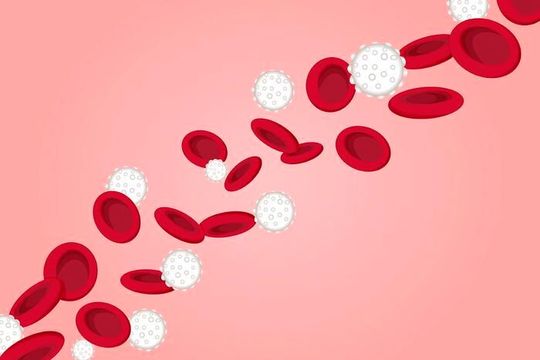
A new study led by WashU Medicine researchers shows that, for blood cancer patients, a genetically engineered stem cell transplant helps prevent toxic side effects and potentially improves the effectiveness of therapies.
(Source: Sara Moser/ Washu Medicine)
For highly aggressive types of blood cancer, stem cell transplantation is often the only potentially curative therapy, yet even after a transplant, these cancers often return.
Now, a clinical trial, led by researchers at Washington University School of Medicine in St. Louis, shows that a stem cell transplant in which the donor cells have been genetically engineered to remove a particular protein helps prevent toxic side effects and potentially improves the effectiveness of therapies given after a transplant to help prevent cancer recurrence.
The study was conducted at Siteman Cancer Center, based at Barnes-Jewish Hospital and Washu Medicine, and 14 other sites in the U.S. and Canada. The findings are published May 12 in the journal Nature Medicine.
According to the study’s corresponding author, John F. DiPersio, MD, PhD, the Virginia E. & Sam J. Golman Professor of Medicine at Washu Medicine, this gene-editing technology could help address a longstanding frustration in the field: CAR-T cell therapy — an immunotherapy that effectively treats some aggressive blood cancers — has not worked against all blood cancers, including acute myeloid leukemia (AML) and myelodysplastic syndrome (MDS).
According to DiPersio, who treats patients at Siteman and is a research member there, myeloid cancers like AML and MDS are tricky to treat with CAR-T cells because the same proteins on cancer cells that the immunotherapy homes in on for destruction are also present on healthy myeloid cells, including therapeutic donor stem cells. As such, the anti-cancer therapy carries a high risk of toxicity because it also destroys healthy blood stem cells, which can trigger a dangerous inflammatory cascade. This effect also could dilute the effect of the anti-cancer therapy because so many of the CAR-T cells are attacking the wrong targets, leaving many cancer cells untouched.
This basic concept was first described by Miriam Y. Kim, MD, now an assistant professor of medicine at Washu Medicine. She began this research as a postdoctoral researcher at the University of Pennsylvania and continued the work in the DiPersio lab before becoming an independent investigator in the Washu Medicine Division of Oncology. She treats patients at Siteman and is also a research member there.
For this clinical trial, patients with AML and MDS received donor stem cells that had a target protein, called CD33, removed, in hopes that immunotherapy targeted against CD33 would kill the cancer and ignore the healthy cells.
“We are encouraged by the results of this study showing that a CD33-deleted stem cell transplant looks very similar to the outcomes of standard stem cell transplantation,” said DiPersio, who also directs Washu Medicine’s Center for Gene and Cellular Immunotherapy. “In the future, we are hopeful we will be able to combine this with CD33-targeted immunotherapies, such as CAR-T cells, and improve treatment options for patients with these very aggressive blood cancers.”
To that end, DiPersio and his collaborators have also published a single case study of a patient with high-risk AML who received a CD33-deleted stem cell transplant and later, upon relapse after the transplant, received a CD33-targeted CAR-T cell therapy, which used T cells from the same donor who provided the stem cell transplant. The patient — who had one of the most aggressive types of AML — achieved complete remission and remains cancer free over one year after receiving the CAR-T cell therapy. The patient also had normal blood cell production return with all blood cells lacking CD33, providing evidence that the genetically engineered donor cells had established themselves in the bone marrow. DiPersio is the senior author of this study, published in October 2025 in JCO Precision Oncology.
Date: 08.12.2025
Naturally, we always handle your personal data responsibly. Any personal data we receive from you is processed in accordance with applicable data protection legislation. For detailed information please see our privacy policy.
Consent to the use of data for promotional purposes
I hereby consent to Vogel Communications Group GmbH & Co. KG, Max-Planck-Str. 7-9, 97082 Würzburg including any affiliated companies according to §§ 15 et seq. AktG (hereafter: Vogel Communications Group) using my e-mail address to send editorial newsletters. A list of all affiliated companies can be found here
Newsletter content may include all products and services of any companies mentioned above, including for example specialist journals and books, events and fairs as well as event-related products and services, print and digital media offers and services such as additional (editorial) newsletters, raffles, lead campaigns, market research both online and offline, specialist webportals and e-learning offers. In case my personal telephone number has also been collected, it may be used for offers of aforementioned products, for services of the companies mentioned above, and market research purposes.
Additionally, my consent also includes the processing of my email address and telephone number for data matching for marketing purposes with select advertising partners such as LinkedIn, Google, and Meta. For this, Vogel Communications Group may transmit said data in hashed form to the advertising partners who then use said data to determine whether I am also a member of the mentioned advertising partner portals. Vogel Communications Group uses this feature for the purposes of re-targeting (up-selling, cross-selling, and customer loyalty), generating so-called look-alike audiences for acquisition of new customers, and as basis for exclusion for on-going advertising campaigns. Further information can be found in section “data matching for marketing purposes”.
In case I access protected data on Internet portals of Vogel Communications Group including any affiliated companies according to §§ 15 et seq. AktG, I need to provide further data in order to register for the access to such content. In return for this free access to editorial content, my data may be used in accordance with this consent for the purposes stated here. This does not apply to data matching for marketing purposes.
Right of revocation
I understand that I can revoke my consent at will. My revocation does not change the lawfulness of data processing that was conducted based on my consent leading up to my revocation. One option to declare my revocation is to use the contact form found at https://contact.vogel.de. In case I no longer wish to receive certain newsletters, I have subscribed to, I can also click on the unsubscribe link included at the end of a newsletter. Further information regarding my right of revocation and the implementation of it as well as the consequences of my revocation can be found in the data protection declaration, section editorial newsletter.
Shielding Healthy Cells
CD33 is an appealing protein to delete from donor stem cells because it is only present on blood-forming cells and not in other tissues, and because there is evidence it is not required for the proper function of blood stem cells, given that individuals born without CD33 have no apparent health problems. After a patient has successfully received this type of stem cell transplant, any remaining cells in the body with CD33 on the surface should, in theory, only be the cancer. Then, CAR-T cells or another immunotherapy designed to target CD33 would kill only the cancer cells and leave healthy donor stem cells untouched.
In this phase 1/2 multicenter clinical trial, 30 adult patients with AML or MDS at high risk of relapse received a stem cell transplant in which CD33 had been removed from the donor cells using CRISPR gene editing technology before the transplant procedure. The CD33-deleted stem cell product is called tremtelectogene empogeditemcel (trem-cel) and was made by Vor Biopharma, which funded the study.
As proof of concept, the patients also received a maintenance therapy that targets CD33, after they underwent the stem cell transplant. While not a CD33-targeted CAR-T cell, the maintenance therapy, called gemtuzumab ozogamicin, is a type of engineered antibody that targets CD33 and carries an anti-cancer drug. Gemtuzumab ozogamicin is approved by the Food and Drug Administration to treat CD33-positive AML and is in clinical trials for CD33-positive MDS. While it helps prevent relapse, the drug’s use is limited because it can cause liver toxicity and damage to blood cells, including dangerously low counts of white blood cells, red blood cells and platelets.
All patients achieved engraftment of their transplanted stem cells by day 28, meaning the cells had gathered in the bone marrow and started working. Some patients met this goal sooner, and platelet production returned by day 16, on average. These timeframes are comparable to those of standard transplanted stem cells.
Average survival was just over 14 months. Nineteen patients received at least one cycle of the antibody maintenance therapy as part of a dose-escalation protocol, and the researchers were able to establish the recommended dose. The researchers found that patients maintained blood cell counts across all doses, suggesting that the gene-edited stem cell transplant protected patients from the dangerously low blood cell counts typically seen during this maintenance therapy following a standard stem cell transplant.
Side effects during the treatment were similar to those of standard transplants, including anemia, low platelets, fever, infections and graft-versus-host disease, in which the donor cells attack the patient’s healthy tissues. Seven patients died during the study, with four due to the cancer progressing and three due to transplant-related causes, including kidney failure, liver toxicity and sepsis.
DiPersio said the results of the study lay the groundwork for developing paired CD33-deleted stem cell transplant and CD33-targeted immunotherapy interventions that avoid destruction of healthy donor cells in the course of cancer treatment.
Original Article: CRISPR−Cas9 CD33-deleted allogeneic hematopoietic cell transplantation with gemtuzumab ozogamicin maintenance in AML: a phase 1/2 trial; Nature Medicine; DOI:10.1038/s41591-026-04362-1




:quality(80)/p7i.vogel.de/wcms/62/32/62327aaae1415beeed47db6201e79661/0133375912v2.jpeg "A cotton trailer outfitted with benches and a sunshade offers farmworkers a reprieve from the sun as they take a break from picking cantaloupe melons in Firebaugh, Calif.
(Source: Joe Proudman/ Regents of the University of California)")
:quality(80)/p7i.vogel.de/wcms/e6/c8/e6c8bd554776ee1ad2f1f0723fb243a7/0133369387v1.jpeg "Roman road (Source: Queen Mary University of London)")
:quality(80)/p7i.vogel.de/wcms/51/68/51687ac4cc19f2757c138498b877de57/0133167039v2.jpeg "CMFs are foams that consist of hollow spheres – made of materials such as stainless steel, nickel, or other metals and alloys – embedded in a metallic matrix. The resulting material is both lightweight and remarkably strong at absorbing compressive forces. (Source: Jie Sun/ NC State University)")
:quality(80)/p7i.vogel.de/wcms/cd/c0/cdc09efd1e5b3b8f83224e7729d66c10/0133105276v2.jpeg "From the data presented in this report, the authors show how TF3-MALS-RI is uniquely able to separate large polyacrylate molecules and provide precise molecular weight and Rg values. (Source: Postnova Analytics)")
:quality(80)/p7i.vogel.de/wcms/a8/6e/a86e9b1f1561a67038b6d8a9fe629117/0133465534v2.jpeg "Clean, calibrate, and store pH electrodes properly to ensure accurate, reliable measurements every time. (Source: METTLER TOLEDO)")
:quality(80)/p7i.vogel.de/wcms/86/01/86014d3d2a28cefc852f65c8d68317e4/0133104231v2.jpeg "Single-handed tube reading using a Handheld 2. (Source: Azenta Life Sciences)")
:quality(80)/p7i.vogel.de/wcms/0b/0f/0b0f8ed042dfc91f32582e10d54c2c7e/0133087444v2.jpeg "Offering advanced automation to increase your throughput, the Intellixcap provides secure sealing – eliminating the need for manual intervention, while preserving vital sample integrity. (Source: Azenta Life Sciences)")
:quality(80)/p7i.vogel.de/wcms/13/d3/13d35105f74a1c2e22b9c7a270e8e9b3/0132611155v2.jpeg "Circulating cell free DNA. (Source: Amsbio)")
:quality(80)/p7i.vogel.de/wcms/ef/7c/ef7cd23997787d020fc225c2677625cf/0133621949v2.jpeg "The team recorded over 1.6 million individual flowers and more than 5,000 plant-pollinator interactions across 58 plant species and 405 pollinator species. (Source: University of Bristol)")
:quality(80)/p7i.vogel.de/wcms/6f/ea/6feaf3edd34eb4a9f1df201dc2e6448d/0133548706v2.jpeg "The researchers studied people’s perceptions, beliefs and knowledge about climate change in two coastal regions, one low-lying island and the other a mainland coast. (Source: P Afna)")
:quality(80)/p7i.vogel.de/wcms/8d/5c/8d5c6c7f897f91d6784825eee20b5584/0133321225v1.jpeg "Empa researcher Christoph Hüglin collects samples of particles that are washed out of the air by rain and snow or settle due to gravity. (Source: Empa)")
:quality(80)/p7i.vogel.de/wcms/a1/af/a1afbc7c8a067bbe94749ec680b4bafd/0133163762v2.jpeg "The study found in murkier water, fish took longer to move towards the food than those in clear water, but individuals in larger groups responded more quickly overall. (Source: Christos Ioannou)")
:quality(80)/p7i.vogel.de/wcms/95/3e/953e490f1819f6638bc08fe3d4d43e87/0133566684v1.jpeg "The soy protein isolate the researchers fed to the mice. (Source: KyotoU / Tomoko T. Asai)")
:quality(80)/p7i.vogel.de/wcms/ba/38/ba38179dbcd20fbc3887b2709193d0a8/0133566669v2.jpeg "Consumers in a Cornell study showed no consistent bias against the colour of hybrid red wines, with several ranking among the most visually appealing. (Source: free licensed)")
:quality(80)/p7i.vogel.de/wcms/ac/d1/acd1a8888f6e78206f11f2b4eb33926f/0133566582v1.jpeg "A claim on the front of a box of food products is a hint, not a verdict. The nutrition label on the back – added sugars, sodium, saturated fat, all of it together – still tells the fuller story. (Source: free licensed)")
:quality(80)/p7i.vogel.de/wcms/84/10/8410a026021778497197d21ef6987940/0133532147v2.jpeg "Fig. 1: Behind every sweet, tangy, or refreshing fruit lies a unique pH balance that shapes its flavor, freshness, and quality. (Source: METTLER TOLEDO)")
:quality(80)/p7i.vogel.de/wcms/4a/5e/4a5e58cfc5b60726971853e9bb54d262/0133621934v2.jpeg "The eluminator, lights up in response to pressure from the fingertip, allowing the shape and distribution of contact to be visualized in real time. (Source: NUS)")
:quality(80)/p7i.vogel.de/wcms/f3/32/f332f826e9c6b84c66c63c6a79fd9e68/0133566559v2.jpeg "An analysis of 1.4 million adults in England found that 59% of participants with high blood pressure had not been diagnosed and were not taking blood pressure-lowering medication. (Source: free licensed)")
:quality(80)/p7i.vogel.de/wcms/5b/68/5b68667dfbf7bae351f864f0590cc985/0133566532v2.jpeg "Blood pressure normally falls during sleep. A modelling study suggests that a delay in the kidneys’ salt-processing rhythm could disrupt this overnight dip, a mechanism that still needs experimental and clinical testing. (Source: free licensed)")
:quality(80)/p7i.vogel.de/wcms/a9/11/a911e9abe761c9bcf5221cd218e14e80/0133560426v2.jpeg "With direct ties to the trade show, the Medica Labmed Forum bridges the gap between current scientific developments and practical healthcare issues. (Source: Constanze Tillmann/Messe Düsseldorf)")
:quality(80)/images.vogel.de/vogelonline/bdb/1710600/1710675/original.jpg "Discover how to set yourself up for success when performing balance-based density determination of solids such as jewelry and precious metals. (Mettler Toledo)")
:quality(80)/images.vogel.de/vogelonline/bdb/1682500/1682579/original.jpg "The new XPR Analytical balance redesigned to meet the needs of laboratory technicians of working fast and lean. (Mettler Toledo)")
:quality(80)/images.vogel.de/vogelonline/bdb/1677000/1677080/original.jpg "Enhance your weighing accuracy, comfort and productivity with the redesigned XPR Analytical balance. (Mettler Toledo)")
:fill(fff,0)/images.vogel.de/vogelonline/companyimg/107800/107832/65.jpg "logoDueperthal.jpg ()")
:quality(80)/p7i.vogel.de/wcms/b0/5e/b05e25f4e785776e2e3b97fb7e137f27/0127561491v2.jpeg "Human cells that have been edited with the new retron-based gene editing technology. Orange dots mark successful gene edits. Green dots show a fluorescent protein tag on the surface of mitochondria. (Source: You-Chiun Chang/ University of Texas at Austin)")
:quality(80)/p7i.vogel.de/wcms/e2/83/e28330d9bc97092bbdc4d7d61b2103f5/0125079999v2.jpeg "Artist’s depiction of a newly discovered cellular mechanism in which protein droplets safeguard regions of the genome that are notably susceptible to DNA repair mistakes. (Source: Yekaterina Kadyshevskaya)")
:quality(80)/p7i.vogel.de/wcms/33/29/3329f5df475bc9699a04dd35506e2b6a/0127659650v1.jpeg "A microscopy image that shows SNAs (in red) taken up into leukemia cells. Cell nuclei shown in blue.
(Source: Mirkin Research Group/ Northwestern University)")
:quality(80)/p7i.vogel.de/wcms/fc/90/fc9085d5ad403446c67cd4d586f4a0d6/0132611789v2.jpeg "Metastatic BAP1-deficient melanoma is the most common intraocular malignancy in adults, but it remains rare and extremely difficult to treat once it spreads. (Source: Turun yliopisto/University of Turku)")