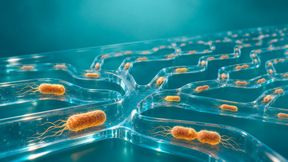
Nanoengineers at the University of California San Diego have developed microscopic robots, called microrobots, that can swim around in the lungs, deliver medication and be used to clear up life-threatening cases of bacterial pneumonia.
Researchers from the University of Bern and the University of Queensland in Australia have revealed that chemical compounds containing special metals are highly effective in fighting dangerous fungal infections. This study can be used as a base to develop innovative drugs to treat these infections.
Scientists at the UT Southwestern (UTSW) Medical Center and the University of London have determined the structure of Type IV secretion system (T4SS), a protein complex which is a key player in antibiotic resistance. A computational biologist at UTSW makes use of machine learning to discover the 3D structure of T4SS.
Of the many contemporary conveniences often taken for granted in developed countries, modern sanitation may be among the most important. A new study suggests that wastewater infrastructure may provide societal benefits far beyond the dramatic improvements in community hygiene. The research highlights a technique known as Wastewater-based Epidemiology.
Healthy adults who eat a diverse diet with at least 8-10 grams of soluble fiber a day have fewer antibiotic-resistant microbes in their guts, according to a study published by Agricultural Research Service scientists and their colleagues in mBio.
Research has revealed an association between the feeding of raw meat to pet dogs and the presence of bacteria resistant to critically important antibiotics.
How can stress in animals be measured? Scientists from Uppsala University and elsewhere have now found that what are known as epigenetic biomarkers could be used to detect long-term exposure to stress in commercially raised chickens.
Despite this significant role, research into the diversity of microorganisms found in the ocean has thus far been only rudimentary. This also includes the chemical compounds they produce. Could such compounds benefit humans as well?
In a first-of-its-kind study, research from the University of Vermont Cancer Center has linked phthalates, commonly called the “everywhere chemical,” to higher incidence of specific childhood cancers.
The sharpest images ever of living bacteria have been recorded by UCL researchers, revealing the complex architecture of the protective layer that surrounds many bacteria and makes them harder to be killed by antibiotics. The study reveals that bacteria with protective outer layers — called Gram-negative bacteria — may have stronger and weaker spots on their surface.