Cardiovascular HealthReplacing Regular Salt Could Prevent Millions of Cardiovascular and Kidney Disease Cases
Source:
George Institute for Global Health
3 min Reading Time
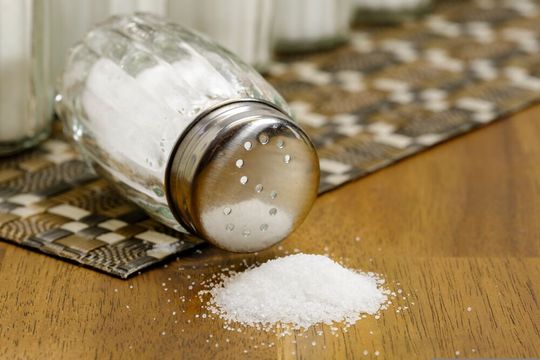
Replacing regular salt with potassium-enriched alternatives could prevent nearly three million deaths annually, according to modelling across 193 countries. The study examines the potential benefits of changes in household kitchens, food manufacturing and restaurants.
Potassium-enriched salt replaces some sodium chloride with potassium chloride. A modelling study estimates that a global switch could prevent 2.96 million deaths annually.
Researchers from The George Institute for Global Health assessed the health benefits of switching the salt supply to potassium-enriched salt across 193 countries. They found almost three million deaths and ten million new cases of cardiovascular and kidney disease could be prevented globally each year.
Bruce Neal, Senior Professorial Fellow at The George Institute said the health gains would be widespread and could avert as many as one in ten cardiovascular deaths in most countries.
“Consuming too much sodium and not enough potassium are well established causes of high blood pressure — a major risk factor for life threatening conditions like strokes, heart attacks and kidney disease. Switching to potassium-enriched salt addresses both these dietary issues at the same time, with substantial health benefits,” he said.
“While a global shift from regular salt to a potassium-enriched substitute is aspirational, this is a starting point to get countries thinking about the opportunity — with much greater potential and at much lower cost than many drug-based treatments.”
Potassium-enriched salt is made by replacing some of the sodium chlorides — which makes up regular table salts — with potassium chloride. It looks, tastes, and cooks like regular salt. In 2025, the World Health Organization (WHO) endorsed the use of potassium-enriched salt to reduce blood pressure and the risk of cardiovascular disease.
Worldwide, one in three adults aged 30-79 have high blood pressure (hypertension), equivalent to around 1.4 billion people. Cardiovascular disease (CVD) is the leading cause of death and disability globally, causing 19.2 million deaths in 2023, an increase of nearly 50 percent over the last 30 years.
The study examined a range of hypothetical scenarios, from a full global switch of all salt to more targeted use among people with diagnosed and treated high blood pressure. Even the most limited level of switching still showed major health gains.
For the world’s adult population (4.6 billion people):
Extent of switch
Deaths prevented (millions)
CVD and CKD* cases prevented (millions)
Only regular table salt used in the home
1.85
6.19
Only salt in processed and restaurant foods
1.56
5.46
Both the above
2.96
10.17
*Chronic kidney disease
For 80% of people with diagnosed or treated hypertension only (659 million people diagnosed, 524 million people treated):
Extent of switch
Deaths prevented (millions)
CVD and CKD* cases prevented (millions)
Only regular table salt used in the home by people with diagnosed hypertension
0.59
1.72
Only regular table salt used in the home by people with treated hypertension
0.48
1.41
*Chronic kidney disease
For 80% of people with diagnosed or treated hypertension only (659 million people diagnosed, 524 million people treated):
While the potential benefits are large, one concern is the risk of high potassium levels (hyperkalaemia) in people with advanced kidney disease. The study found, however, that even among patients with advanced kidney disease the benefits outweighed the risks.
“People with serious kidney disease and those taking medications that significantly raise blood potassium levels need to take precautions. Risks for this group can be managed effectively through patient education, product labelling, and clinical oversight,” said nephrologist Professor Vivek Jha, Senior Professorial Fellow at The George Institute in India.
Professor Neal highlighted the need for country-specific strategies, tailored to whether most sodium intake comes from household salt or processed foods.
“To realise the maximum benefits from switching to potassium-enriched salt, we need to see the food industry in Europe and North America — where over 70% of salt intake comes from processed and restaurant foods — get on board. This would also require investigating ways to scale up the production of potassium chloride to meet demand,” he said.
Estimated annual health impact of replacing all salt with potassium-enriched salt:
Country
Annual deaths prevented
Cases of cardiovascular disease and kidney disease prevented/year
Total fatal and non-fatal events prevented
China
1,082,666
3,614,123
4,696,789
India
399,884
1,528,494
1,928,378
USA
104,787
491,905
596,692
Mexico
30,464
138,546
169,010
Nigeria
18,069
59,348
77,417
United Kingdom
12,951
59,988
72,939
South Africa
6,761
22,955
29,716
Australia
2,076
15,674
17,750
References:
Huang L, et al. The effects on global health outcomes of switching from regular salt to potassium-enriched salt: a modelling study. Nature Health. 2026. https://doi.org/10.1038/s44360-026-00216-9.
Date: 08.12.2025
Naturally, we always handle your personal data responsibly. Any personal data we receive from you is processed in accordance with applicable data protection legislation. For detailed information please see our privacy policy.
Consent to the use of data for promotional purposes
I hereby consent to Vogel Communications Group GmbH & Co. KG, Max-Planck-Str. 7-9, 97082 Würzburg including any affiliated companies according to §§ 15 et seq. AktG (hereafter: Vogel Communications Group) using my e-mail address to send editorial newsletters. A list of all affiliated companies can be found here
Newsletter content may include all products and services of any companies mentioned above, including for example specialist journals and books, events and fairs as well as event-related products and services, print and digital media offers and services such as additional (editorial) newsletters, raffles, lead campaigns, market research both online and offline, specialist webportals and e-learning offers. In case my personal telephone number has also been collected, it may be used for offers of aforementioned products, for services of the companies mentioned above, and market research purposes.
Additionally, my consent also includes the processing of my email address and telephone number for data matching for marketing purposes with select advertising partners such as LinkedIn, Google, and Meta. For this, Vogel Communications Group may transmit said data in hashed form to the advertising partners who then use said data to determine whether I am also a member of the mentioned advertising partner portals. Vogel Communications Group uses this feature for the purposes of re-targeting (up-selling, cross-selling, and customer loyalty), generating so-called look-alike audiences for acquisition of new customers, and as basis for exclusion for on-going advertising campaigns. Further information can be found in section “data matching for marketing purposes”.
In case I access protected data on Internet portals of Vogel Communications Group including any affiliated companies according to §§ 15 et seq. AktG, I need to provide further data in order to register for the access to such content. In return for this free access to editorial content, my data may be used in accordance with this consent for the purposes stated here. This does not apply to data matching for marketing purposes.
Right of revocation
I understand that I can revoke my consent at will. My revocation does not change the lawfulness of data processing that was conducted based on my consent leading up to my revocation. One option to declare my revocation is to use the contact form found at https://contact.vogel.de. In case I no longer wish to receive certain newsletters, I have subscribed to, I can also click on the unsubscribe link included at the end of a newsletter. Further information regarding my right of revocation and the implementation of it as well as the consequences of my revocation can be found in the data protection declaration, section editorial newsletter.
World Health Organization. Use of lower-sodium salt substitutes: WHO guideline. 2025. Available at: https://www.who.int/publications/i/item/9789240105591. Accessed December 2025.
World Health Organization. Global report on hypertension 2025: high stakes: turning evidence into action. 2025. Available at: https://www.who.int/publications/i/item/9789240115569. Accessed December 2025.
Global Burden of Cardiovascular Diseases and Risks 2023 Collaborators. Global, Regional, and National Burden of Cardiovascular Diseases and Risk Factors in 204 Countries and Territories, 1990-2023. J Am Coll Cardiol. 2025. https://doi.org/10.1016/j.jacc.2025.08.015