Researchers have developed a high-throughput method to identify gold nanoparticles capable of delivering therapies directly to the mitochondria, the energy centres inside cancer cells.
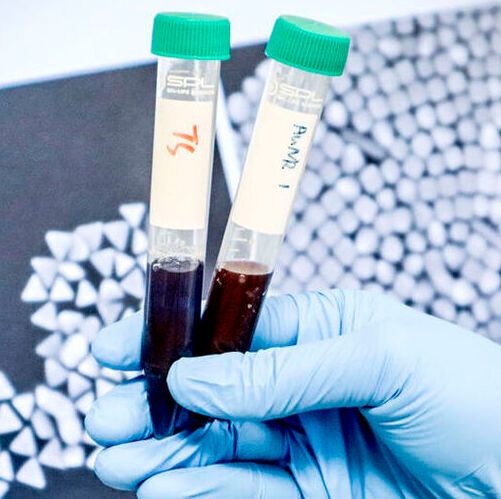
By tagging nanoparticles with unique DNA “barcodes”, the NUS research team was able to track and compare dozens of designs simultaneously in living tumor models, rapidly identifying those most effective at reaching mitochondria (energy centres inside cancer cells).
(Source: NUS)
Queenstown/Singapore – Researchers at the National University of Singapore (NUS) have developed a high-throughput method to identify gold nanoparticles capable of delivering therapies directly to mitochondria (the energy centres inside cancer cells). By tagging nanoparticles with unique DNA “barcodes”, the team was able to track and compare dozens of designs simultaneously in living tumor models, rapidly identifying those most effective at reaching this critical subcellular target.
The approach enables researchers to systematically evaluate how nanoparticle design, including shape, size and surface chemistry, influences their ability to accumulate in tumors and reach mitochondria. Among the candidates tested, two formulations emerged as standout performers. One, a folic acid-modified cubic gold nanoparticle, achieved 99 per cent tumor regression in preclinical studies when used in a combined treatment involving mitochondria-targeted RNA therapy and mild photothermal therapy.
Led by Assistant Professor Andy Tay from the Department of Biomedical Engineering at the College of Design and Engineering and the Institute for Health Innovation & Technology at NUS, the study demonstrates how large libraries of nanomaterials can be screened efficiently inside living systems, providing a rational framework for designing nanoparticles that deliver drugs with far greater precision. The study was published in Advanced Materials on 17 February 2026.
A barcode system for navigating the body
Mitochondria are attractive targets in cancer therapy because they regulate key processes such as energy production and programmed cell death. Delivering drugs directly to these organelles can disrupt tumor metabolism and trigger cancer cell death. However, nanoparticles must overcome a series of biological barriers before reaching mitochondria: travelling through the bloodstream, entering tumors, penetrating cells and escaping cellular compartments that would otherwise degrade therapeutic cargo.
“Getting nanoparticles to the right place inside the body involves putting them through a complicated obstacle course,” said Asst Prof Tay. “Harnessing DNA barcodes enables us to track many nanoparticle designs simultaneously in living systems and quickly identify which ones can jump through various biological hoops successfully.”
In the study, each gold nanoparticle formulation was tagged with a unique DNA sequence, allowing the researchers to trace its distribution using next-generation sequencing. The team tested a library of 30 nanoparticle designs that varied in shape, size and targeting ligands. After administering the pooled nanoparticles to tumor-bearing preclinical models, the researchers analyzed where each design accumulated — from whole organs to specific tumor cell types and ultimately to mitochondria.
This multiplexed approach generated more than 1,000 in vivo data points while requiring around 30-fold fewer in vivo models than conventional one-by-one screening experiments.
The work builds on the team’s earlier study published in November 2024, which first demonstrated the use of DNA barcoding to track nanoparticle biodistribution in tumors. While the previous study compared six nanoparticle designs at the tissue level, this new one greatly expands the library and extends the platform to analyze behavior at cellular and subcellular scales.
“The results revealed an important insight: nanoparticles that accumulated efficiently in tumors were also far more likely to reach mitochondria,” added Asst Prof Tay. “In other words, successful tumor targeting appears to be a prerequisite for effective subcellular delivery.”
Among the nanoparticle formulations tested, two caught the team’s attention. Large spherical particles modified with folic acid accumulated strongly in tumors, partly due to a protective protein layer that
Date: 08.12.2025
Naturally, we always handle your personal data responsibly. Any personal data we receive from you is processed in accordance with applicable data protection legislation. For detailed information please see our privacy policy.
Consent to the use of data for promotional purposes
I hereby consent to Vogel Communications Group GmbH & Co. KG, Max-Planck-Str. 7-9, 97082 Würzburg including any affiliated companies according to §§ 15 et seq. AktG (hereafter: Vogel Communications Group) using my e-mail address to send editorial newsletters. A list of all affiliated companies can be found here
Newsletter content may include all products and services of any companies mentioned above, including for example specialist journals and books, events and fairs as well as event-related products and services, print and digital media offers and services such as additional (editorial) newsletters, raffles, lead campaigns, market research both online and offline, specialist webportals and e-learning offers. In case my personal telephone number has also been collected, it may be used for offers of aforementioned products, for services of the companies mentioned above, and market research purposes.
Additionally, my consent also includes the processing of my email address and telephone number for data matching for marketing purposes with select advertising partners such as LinkedIn, Google, and Meta. For this, Vogel Communications Group may transmit said data in hashed form to the advertising partners who then use said data to determine whether I am also a member of the mentioned advertising partner portals. Vogel Communications Group uses this feature for the purposes of re-targeting (up-selling, cross-selling, and customer loyalty), generating so-called look-alike audiences for acquisition of new customers, and as basis for exclusion for on-going advertising campaigns. Further information can be found in section “data matching for marketing purposes”.
In case I access protected data on Internet portals of Vogel Communications Group including any affiliated companies according to §§ 15 et seq. AktG, I need to provide further data in order to register for the access to such content. In return for this free access to editorial content, my data may be used in accordance with this consent for the purposes stated here. This does not apply to data matching for marketing purposes.
Right of revocation
I understand that I can revoke my consent at will. My revocation does not change the lawfulness of data processing that was conducted based on my consent leading up to my revocation. One option to declare my revocation is to use the contact form found at https://contact.vogel.de. In case I no longer wish to receive certain newsletters, I have subscribed to, I can also click on the unsubscribe link included at the end of a newsletter. Further information regarding my right of revocation and the implementation of it as well as the consequences of my revocation can be found in the data protection declaration, section editorial newsletter.
prolonged circulation in the bloodstream. Meanwhile, large cubic nanoparticles entered tumor cells more efficiently through clathrin-mediated endocytosis — a cellular uptake pathway — enabling effective mitochondrial delivery.
A step towards precision nanomedicine
To explore the therapeutic potential of these findings, the researchers tested the cubic nanoparticle formulation in a combined treatment strategy. The particles were engineered to deliver small interfering RNA (siRNA) that disrupts mitochondrial gene expression, while also generating heat under near-infrared light through photothermal therapy.
This dual approach produced strong anticancer effects in preclinical studies. When applied together, the treatments led to almost complete tumor elimination after a single dose.
Beyond killing cancer cells directly, the nanoparticles also interacted with tumor-associated macrophages (immune cells that normally support tumor growth). The therapy appeared to shift these cells toward a tumor-fighting state, suggesting the approach may help reshape the tumor immune environment.
“Our findings show that nanoparticle design is not governed by a single factor such as shape or size,” added Asst Prof Tay. “Instead, multiple properties interact in complex ways. High-throughput screening platforms like ours allow us to uncover these relationships and move beyond trial-and-error in nanomedicine design.”
The platform could accelerate the development of precision nanomedicine by enabling researchers to rapidly identify nanoparticle designs suited for specific biological targets. Potential applications include targeted delivery of RNA therapies, gene-silencing treatments and photothermal agents for cancer and other diseases.
Looking ahead, the research team plans to expand the nanoparticle library further and integrate automation and artificial intelligence tools to analyze the large datasets generated by the screening platform. The researchers also aim to extend the method to target other cellular organelles, opening new possibilities for highly specific drug delivery within cells.




:quality(80)/p7i.vogel.de/wcms/62/32/62327aaae1415beeed47db6201e79661/0133375912v2.jpeg "A cotton trailer outfitted with benches and a sunshade offers farmworkers a reprieve from the sun as they take a break from picking cantaloupe melons in Firebaugh, Calif.
(Source: Joe Proudman/ Regents of the University of California)")
:quality(80)/p7i.vogel.de/wcms/e6/c8/e6c8bd554776ee1ad2f1f0723fb243a7/0133369387v1.jpeg "Roman road (Source: Queen Mary University of London)")
:quality(80)/p7i.vogel.de/wcms/51/68/51687ac4cc19f2757c138498b877de57/0133167039v2.jpeg "CMFs are foams that consist of hollow spheres – made of materials such as stainless steel, nickel, or other metals and alloys – embedded in a metallic matrix. The resulting material is both lightweight and remarkably strong at absorbing compressive forces. (Source: Jie Sun/ NC State University)")
:quality(80)/p7i.vogel.de/wcms/cd/c0/cdc09efd1e5b3b8f83224e7729d66c10/0133105276v2.jpeg "From the data presented in this report, the authors show how TF3-MALS-RI is uniquely able to separate large polyacrylate molecules and provide precise molecular weight and Rg values. (Source: Postnova Analytics)")
:quality(80)/p7i.vogel.de/wcms/86/01/86014d3d2a28cefc852f65c8d68317e4/0133104231v2.jpeg "Single-handed tube reading using a Handheld 2. (Source: Azenta Life Sciences)")
:quality(80)/p7i.vogel.de/wcms/0b/0f/0b0f8ed042dfc91f32582e10d54c2c7e/0133087444v2.jpeg "Offering advanced automation to increase your throughput, the Intellixcap provides secure sealing – eliminating the need for manual intervention, while preserving vital sample integrity. (Source: Azenta Life Sciences)")
:quality(80)/p7i.vogel.de/wcms/13/d3/13d35105f74a1c2e22b9c7a270e8e9b3/0132611155v2.jpeg "Circulating cell free DNA. (Source: Amsbio)")
:quality(80)/p7i.vogel.de/wcms/bc/ed/bced6850297a04dbea471a66cb6bb6fe/0132611405v2.jpeg "The latest addition to the range is a peristaltic tubing stop adapter that eliminates the need for fixed stoppers and allows custom cut lengths of peristaltic tubing to be installed on any pump head size. (Source: Biotech Fluidics )")
:quality(80)/p7i.vogel.de/wcms/8d/5c/8d5c6c7f897f91d6784825eee20b5584/0133321225v1.jpeg "Empa researcher Christoph Hüglin collects samples of particles that are washed out of the air by rain and snow or settle due to gravity. (Source: Empa)")
:quality(80)/p7i.vogel.de/wcms/a1/af/a1afbc7c8a067bbe94749ec680b4bafd/0133163762v2.jpeg "The study found in murkier water, fish took longer to move towards the food than those in clear water, but individuals in larger groups responded more quickly overall. (Source: Christos Ioannou)")
:quality(80)/p7i.vogel.de/wcms/32/80/3280aa3d44708962943c96fe2d466744/0133088560v2.jpeg "A bumble bee in flight at the University of Bristol Botanic Garden. (Source: Phil Savoie)")
:quality(80)/p7i.vogel.de/wcms/7b/e5/7be5c735140cbe28f3af0ec3d88274b9/0133045403v2.jpeg "After being buried in the ground for two months and broken down by soil organisms, a new pair of cotton underwear (left) shows clear signs of decomposition (right). (Source: Nicolas Zonvi)")
:quality(80)/p7i.vogel.de/wcms/ef/68/ef68375729607984e5bb0c143afdae70/0133375119v2.jpeg "Printed Rice-Lentil 3D structures
(Source: SUTD)")
:quality(80)/p7i.vogel.de/wcms/bf/d0/bfd087349a85956a7aefad57ac1204c7/0133241961v2.jpeg "The Thermo Scientific Suretect Beverage Spoilage Multiplex PCR Assay provides a fast, broad-range molecular solution for detecting key spoilage microorganisms that threaten beverage quality. (Source: © OlegDoroshin - stock.adobe.com)")
:quality(80)/p7i.vogel.de/wcms/d4/61/d461ce0bd5743897993c6475f69e7ad6/0133067478v2.jpeg "In Harris County, 50 % of households with children reported food insecurity, compared with 33 % of households without children. (Source: Rice University)")
:quality(80)/p7i.vogel.de/wcms/79/76/7976d17b980bedfe35acaa532d690046/0132713841v2.jpeg "Observed rice yield losses from 1°C warming are more than twice as high as model estimates due to underestimated heat stress. (Source: AdobeStock/ducvien)")
:quality(80)/p7i.vogel.de/wcms/22/49/224964dd6850b62cccdbc4bde2d34693/0133372964v1.jpeg "Brain activity recorded during a video game helped researchers predict whether participants would take or avoid a risk half a second before they acted. (Source: free licensed)")
:quality(80)/p7i.vogel.de/wcms/48/a7/48a761934161543f70fef2403b44d714/0133372328v2.jpeg "The link between pollution and coughing persisted in the data, even when pollution levels were below the WHO’s recommended safe daily exposure limit. (Source: free licensed)")
:quality(80)/p7i.vogel.de/wcms/83/b4/83b4563a65c6036b61990931507428b4/0133363611v2.jpeg "Magnesium sulphate uptake and the north / south divide for the Precept program. (Source: University of Bristol )")
:quality(80)/p7i.vogel.de/wcms/bb/06/bb06c1c3c5d250f3f93016366c56525d/0133363201v2.jpeg "The team identified more than 1,200 associated genetic variants and found that these influences are remarkably consistent across countries, ages and methods of measuring personality. (Source: Pixabay - PublicDomainPictures)")
:quality(80)/images.vogel.de/vogelonline/bdb/1710600/1710675/original.jpg "Discover how to set yourself up for success when performing balance-based density determination of solids such as jewelry and precious metals. (Mettler Toledo)")
:quality(80)/images.vogel.de/vogelonline/bdb/1682500/1682579/original.jpg "The new XPR Analytical balance redesigned to meet the needs of laboratory technicians of working fast and lean. (Mettler Toledo)")
:quality(80)/images.vogel.de/vogelonline/bdb/1677000/1677080/original.jpg "Enhance your weighing accuracy, comfort and productivity with the redesigned XPR Analytical balance. (Mettler Toledo)")
:fill(fff,0)/images.vogel.de/vogelonline/companyimg/107800/107832/65.jpg "logoDueperthal.jpg ()")
:fill(fff,0)/p7i.vogel.de/companies/69/b7/69b7f63f311d9/logo-bimos-tif--2-.jpeg "logo-bimos-tif--2- (https://www.bimos.com/de-de/)")
:quality(80)/p7i.vogel.de/wcms/33/29/3329f5df475bc9699a04dd35506e2b6a/0127659650v1.jpeg "A microscopy image that shows SNAs (in red) taken up into leukemia cells. Cell nuclei shown in blue.
(Source: Mirkin Research Group/ Northwestern University)")
:quality(80)/p7i.vogel.de/wcms/8f/b9/8fb98a958e4afe679865fbe52a473680/0129940982v2.jpeg "pH measurement in various nanoparticles using the Nine-Focus meter ensures precise stability and performance control. (Source: Mettler Toledo)")