Nicotine e-cigarettes are more effective in helping people quit smoking than many conventional methods such as nicotine gums and patches and quitting with behavioural support or no support at all, an updated Cochrane review finds.
An updated Cochrane review finds that regulated nicotine e-cigarettes help more people quit smoking than nicotine replacement therapies such as patches and gum, although vaping is not risk-free.
Smoking is the leading cause of preventable disease and death, resulting in more than seven million deaths per year, including 1.6 million non-smokers who are exposed to second-hand smoke, according to the World Health Organization (WHO).
The analysis, part of an ongoing living systematic review that is updated as new evidence becomes available, examined 80 randomized controlled trials involving 29,861 participants, nine of which were new to this update.
The review found high-certainty evidence that nicotine e-cigarettes led to higher quit rates than nicotine replacement therapy (NRT), such as patches and gum, resulting in about 4 more quitters per 100 people. Nicotine e-cigarettes also outperformed non-nicotine cigarettes, resulting in about 2 more quitters per 100.
Compared to no support or behavioural support (such as individual counselling and group programmes) quit rates were still higher when people were also provided e-cigarettes, though this evidence is less certain due to risk of bias in the study design.
“We have very strong evidence that regulated nicotine e-cigarettes are substantially less harmful than smoking,” says Dr Jamie Hartmann-Boyce, senior author of the review from University of Massachusetts Amherst. “Based on the consistency of the findings here, it’s clear that they are a proven and viable option for people wishing to quit traditional cigarettes. This update includes 9 new trials and our main conclusions haven’t changed.”
The review found no evidence of increased serious harm from using e-cigarettes to quit, though researchers say longer-term studies are still needed. The findings also apply specifically to regulated, nicotine-containing e-cigarettes; illicit products or those containing other substances, such as THC, may carry different risks.
“It’s worth highlighting that our review looks at regulated e-cigarettes containing nicotine, but many of those available on the market do not meet these standards,” says Dr Hartmann-Boyce. “Unlicensed e-cigarettes are potentially dangerous, with issues including unstable batteries and harmful chemicals. Anyone looking to use e-cigarettes to quit smoking should only purchase devices that have been tested and approved by their country’s regulatory body. Lists of regulated devices are available from the FDA in the US and MHRA in the UK."
Many major health organizations and bodies including the WHO caution that e-cigarettes still expose users to nicotine and other chemicals which can be harmful. There are also concerns that e-cigarette use by children and youth can lead to nicotine addictions and smoking tobacco products.
The authors caution that e-cigarettes aren’t necessarily the best way for everyone looking to quit smoking, and that people should contact stop smoking support services or their clinicians for guidance. Vaping also comes with health risks, but, the authors say, those risks pale in comparison to the dangers of smoking.
Dr Nicola Lindson, lead author of the review based at the University of Oxford, reflects that: “Quitting smoking is hard and a lot of people who smoke will have tried many times to quit smoking and been unsuccessful. For that reason, it is important that there are a number of different options available to help somebody quit, which could encourage them to keep trying. Although nicotine vapes are unlikely to be completely risk free, they are less harmful than smoking and that is the most important comparison to make for people who are still smoking tobacco.”
Dr Hartmann-Boyce sees the switch as a transition rather than an endpoint. “For somebody who is already addicted to nicotine through cigarettes, having a safer alternative like an e-cigarette is something worth considering, especially when other quit aids have proven unsuccessful. We are currently working on a review of interventions to help people quit vaping, which could be the next step along for people looking to transition to a lower-harm product before quitting nicotine altogether.”
Date: 08.12.2025
Naturally, we always handle your personal data responsibly. Any personal data we receive from you is processed in accordance with applicable data protection legislation. For detailed information please see our privacy policy.
Consent to the use of data for promotional purposes
I hereby consent to Vogel Communications Group GmbH & Co. KG, Max-Planck-Str. 7-9, 97082 Würzburg including any affiliated companies according to §§ 15 et seq. AktG (hereafter: Vogel Communications Group) using my e-mail address to send editorial newsletters. A list of all affiliated companies can be found here
Newsletter content may include all products and services of any companies mentioned above, including for example specialist journals and books, events and fairs as well as event-related products and services, print and digital media offers and services such as additional (editorial) newsletters, raffles, lead campaigns, market research both online and offline, specialist webportals and e-learning offers. In case my personal telephone number has also been collected, it may be used for offers of aforementioned products, for services of the companies mentioned above, and market research purposes.
Additionally, my consent also includes the processing of my email address and telephone number for data matching for marketing purposes with select advertising partners such as LinkedIn, Google, and Meta. For this, Vogel Communications Group may transmit said data in hashed form to the advertising partners who then use said data to determine whether I am also a member of the mentioned advertising partner portals. Vogel Communications Group uses this feature for the purposes of re-targeting (up-selling, cross-selling, and customer loyalty), generating so-called look-alike audiences for acquisition of new customers, and as basis for exclusion for on-going advertising campaigns. Further information can be found in section “data matching for marketing purposes”.
In case I access protected data on Internet portals of Vogel Communications Group including any affiliated companies according to §§ 15 et seq. AktG, I need to provide further data in order to register for the access to such content. In return for this free access to editorial content, my data may be used in accordance with this consent for the purposes stated here. This does not apply to data matching for marketing purposes.
Right of revocation
I understand that I can revoke my consent at will. My revocation does not change the lawfulness of data processing that was conducted based on my consent leading up to my revocation. One option to declare my revocation is to use the contact form found at https://contact.vogel.de. In case I no longer wish to receive certain newsletters, I have subscribed to, I can also click on the unsubscribe link included at the end of a newsletter. Further information regarding my right of revocation and the implementation of it as well as the consequences of my revocation can be found in the data protection declaration, section editorial newsletter.
Original Article: Electronic cigarettes for smoking cessation; Cochrane Database of Systematic Reviews; DOI: 10.1002/14651858.CD010216.pub11




:quality(80)/p7i.vogel.de/wcms/55/f2/55f26cfb29878f58625b4697bacff0b9/0132894544v2.jpeg "The programme is designed to build an integrated R&D platform for sustainable specialty polymers. (Source: NUS)")
:quality(80)/p7i.vogel.de/wcms/2d/9e/2d9ea6bd89a718c2eb6a99172c3b92ad/0132813039v2.jpeg "A new nontargeted chemical analysis of 113 personal care and cleaning products in the US found that nearly all contained unlabeled chemicals. (Source: free licensed)")
:quality(80)/p7i.vogel.de/wcms/1e/cb/1ecbe8d7e82ac7dcfefef112d32415a3/0132811057v1.jpeg "A study of 426 university students highlights the combined importance of laboratory safety practices and healthy dietary habits. (Source: free licensed)")
:quality(80)/p7i.vogel.de/wcms/17/c0/17c0660deff66cc5f9b09a0e3b3286b5/0132714162v1.jpeg "Due to its unique properties, green hydrogen may be a promising tool to achieve a low-carbon economy. (Source: free licensed)")
:quality(80)/p7i.vogel.de/wcms/13/d3/13d35105f74a1c2e22b9c7a270e8e9b3/0132611155v2.jpeg "Circulating cell free DNA. (Source: Amsbio)")
:quality(80)/p7i.vogel.de/wcms/bc/ed/bced6850297a04dbea471a66cb6bb6fe/0132611405v2.jpeg "The latest addition to the range is a peristaltic tubing stop adapter that eliminates the need for fixed stoppers and allows custom cut lengths of peristaltic tubing to be installed on any pump head size. (Source: Biotech Fluidics )")
:quality(80)/p7i.vogel.de/wcms/c2/34/c234a6626d4f6360382ca7f1f440bebb/0132611196v2.jpeg "Testa Analytical's Trinity – a powerful new triple detector for Gel Permeation Chromatography / Size Exclusion Chromatography. (Source: Testa Analytical)")
:quality(80)/p7i.vogel.de/wcms/5b/3f/5b3fc0d5fb08c1f9727125bd926b1481/0132555049v1.jpeg "On 1 and 2 December 2026, the T3 – Transform The Tomorrow conference will explore strategies that help companies future-proof their operations. (Bild: © Vogel Corporate Solutions / AdobeStock 1280236166, Oksana)")
:quality(80)/p7i.vogel.de/wcms/7b/e5/7be5c735140cbe28f3af0ec3d88274b9/0133045403v2.jpeg "After being buried in the ground for two months and broken down by soil organisms, a new pair of cotton underwear (left) shows clear signs of decomposition (right). (Source: Nicolas Zonvi)")
:quality(80)/p7i.vogel.de/wcms/c7/5e/c75e9b334a94b8b5c2a758f20ba080a8/0133039712v1.jpeg "Researchers have developed a microaerobic activated sludge process that enables ammonium to be recovered from fermentation industry wastewater instead of releasing nitrogen into the atmosphere. (Source: free licensed)")
:quality(80)/p7i.vogel.de/wcms/9a/a0/9aa0a7f2d93c4f3a9c6297fb39a5c756/0133018161v2.jpeg "Volcanic activity and hydroclimatic anomalies. Eruptions produce a repeating wave pattern in high-altitude winds (left panels) that line up with widespread drying across Asia (right panels). This pattern appears regardless of background climate conditions. (Source: ©2026 Nie et al. CC-BY-ND)")
:quality(80)/p7i.vogel.de/wcms/d5/a3/d5a33f32cd6adf709c8afefc998d3f04/0132845576v1.jpeg "The study shows that the foreign media are less likely to report on certain effects of climate change, such as droughts and flooding (shown here: the 2021 Ahrtal floods). (Source: Volker Lannert/ Uni Bonn)")
:quality(80)/p7i.vogel.de/wcms/79/76/7976d17b980bedfe35acaa532d690046/0132713841v2.jpeg "Observed rice yield losses from 1°C warming are more than twice as high as model estimates due to underestimated heat stress. (Source: AdobeStock/ducvien)")
:quality(80)/p7i.vogel.de/wcms/28/b6/28b6114fc9915c5dadee94d5c89bd129/0132593216v2.jpeg "Eating foods that contain common preservative food additives may increase the risks of high blood pressure and cardiovascular disease. (Source: Unsplash)")
:quality(80)/p7i.vogel.de/wcms/01/bc/01bcb16a3381a1d46533861eedbbae71/0132371290v1.jpeg "Adding spice may help people eat less by slowing them down. (Source: free licensed)")
:quality(80)/p7i.vogel.de/wcms/b3/16/b316ac585e067d024da89a5156c950a9/0132370983v1.jpeg "Laboratory tests suggest that some low-calorie sweeteners can alter the growth of gut bacteria, with particularly strong effects observed when isosteviol was combined with the antidepressant duloxetine. (Source: free licensed)")
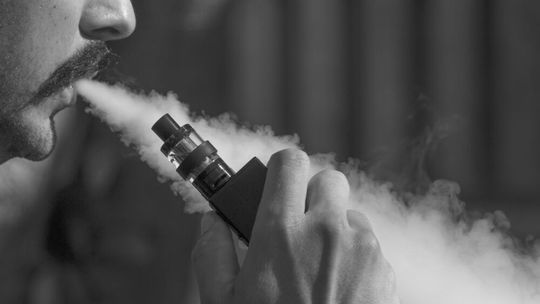
:quality(80)/p7i.vogel.de/wcms/35/a6/35a63dfc2bbb54e81ef1ecc93e81695d/0133045368v2.jpeg "An updated Cochrane review finds that regulated nicotine e-cigarettes help more people quit smoking than nicotine replacement therapies such as patches and gum, although vaping is not risk-free. (Source: free licensed)")
:quality(80)/p7i.vogel.de/wcms/4c/36/4c363d55d98074ca0d82e2100f65e101/0133042959v2.jpeg "A robotic hand fitted with 3D-printed sensor module developed by the research team from Washington State University. The electronic skin can detect pressure and temperature at a fine level, laying the groundwork for bionic skin that could be used on prosthetics to help amputees and others. (Source: Sravanthi Yalamanchili/ WSU)")
:quality(80)/p7i.vogel.de/wcms/d0/31/d0319db16bd12d6421f84f0e37e3b9fb/0133018100v2.jpeg "A baby wearing the Nappa sleep-tracking pants used in the study. (Source: Babacenter)")
:quality(80)/p7i.vogel.de/wcms/8e/95/8e9539127c0938a064ac8c9ad29cc455/0133014930v3.jpeg "Study first author Dr. Reesha Patel doing research in her lab at Northwestern University Feinberg School of Medicine in Chicago. (Source: Ben Schamisso / Northwestern University)")
:quality(80)/images.vogel.de/vogelonline/bdb/1710600/1710675/original.jpg "Discover how to set yourself up for success when performing balance-based density determination of solids such as jewelry and precious metals. (Mettler Toledo)")
:quality(80)/images.vogel.de/vogelonline/bdb/1682500/1682579/original.jpg "The new XPR Analytical balance redesigned to meet the needs of laboratory technicians of working fast and lean. (Mettler Toledo)")
:quality(80)/images.vogel.de/vogelonline/bdb/1677000/1677080/original.jpg "Enhance your weighing accuracy, comfort and productivity with the redesigned XPR Analytical balance. (Mettler Toledo)")
:fill(fff,0)/images.vogel.de/vogelonline/companyimg/107800/107832/65.jpg "logoDueperthal.jpg ()")
:fill(fff,0)/images.vogel.de/vogelonline/companyimg/131900/131910/65.jpg "Xylem_tag_rgb.jpg ()")
:fill(fff,0)/p7i.vogel.de/companies/69/b7/69b7f63f311d9/logo-bimos-tif--2-.jpeg "logo-bimos-tif--2- (https://www.bimos.com/de-de/)")
:quality(80)/p7i.vogel.de/wcms/65/93/659336432a041832cc53a9eb646f022d/0132117793v2.jpeg "Exercise may help people quit smoking by reducing cigarette cravings, cutting daily cigarette consumption and improving abstinence rates, according to a new Adelaide University review. (Source: free licensed)")
:quality(80)/p7i.vogel.de/wcms/f8/57/f857965106a247872ccca800d6871e09/0132611595v1.jpeg "E-cigarettes should be part of discussions between doctors and patients about how to stop smoking, according to new guidance published in Jama. (Source: free licensed)")
:quality(80)/p7i.vogel.de/wcms/d9/f6/d9f6cb2991052e99729ec2f8cdd5701a/0128641463v2.jpeg "Nicotine is toxic to the heart and blood vessels, regardless of whether it is consumed via a vape, a pouch, a shisha or a cigarette, according to an expert consensus report published in the European Heart Journal recently. (Source: Pixabay)")