Food Unprocessed Diet Ensures You Eat More but Consume Fewer Calories
Source: Press release
University of Bristol
4 min Reading Time
A new study has revealed that if one follows an unprocessed food diet, they will eat more but still consume fewer calories as compared to an ultra-processed food diet.
The research reanalyzed data from a seminal clinical trial, led by US National Institutes of Health veteran Dr Kevin Hall, which first exposed how eating exclusively UPFs results in excessive calorie consumption and weight gain.
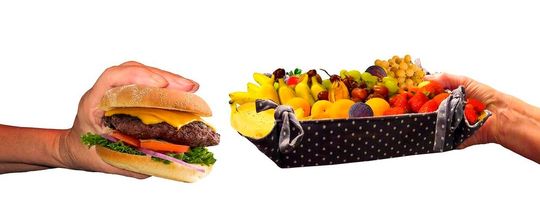
(Source: Pixabay)
Bristol/UK – The research, led by scientists at the University of Bristol and co-authored by top US nutritional experts, revealed that people following a completely unprocessed diet ate more than 50 % greater amounts of food than those eating just UPFs (ultra-processed food), yet still consumed on average 330 fewer calories from food daily.
The findings, published recently in The American Journal of Clinical Nutrition, shed exciting new light on how humans make food choices and give further weight to the idea we have an inbuilt ‘nutritional intelligence’ to achieve a well-balanced diet, which kicks in when eating food in its natural form but is impaired by today’s fast-food culture.
Lead author Jeff Brunstrom, Professor of Experimental Psychology at the University of Bristol, said: “It’s exciting to see when people are offered unprocessed options they intuitively select foods that balance enjoyment, nutrition, and a sense of fullness, while still reducing overall energy intake. Our dietary choices aren’t random – in fact we seem to make much smarter decisions than previously assumed, when foods are presented in their natural state.”
The research reanalyzed data from a seminal clinical trial, led by US National Institutes of Health veteran Dr Kevin Hall, which first exposed how eating exclusively UPFs results in excessive calorie consumption and weight gain. But a closer second look has uncovered something much more intriguing at play, which helps explain exactly why people eating solely wholefoods ate much greater quantities of certain types of food, while maintaining a significantly lower overall calorie intake.
All participants eating only wholefoods chose to load up on fruit and veggies, sometimes consuming several hundreds of grams per meal, instead of more calorific options like steak, pasta, and cream. Overall, this resulted in those on the unprocessed diet eating 57 % greater amounts, measured by weight, of food.
The team at Bristol went on to examine how nutritious the participants’ diets were. This uncovered that the range and volume of fruit and veggies contained essential vitamins and minerals, which wouldn’t have been gained if participants ate just higher calorie wholefoods on offer.
Study co-author Mark Schatzker, acclaimed author of The Dorrito Effect and The End of Craving, explained: “Had participants eaten only the calorie-rich foods, our findings showed they would have fallen short on several essential vitamins and minerals and eventually developed micronutrient insufficiencies. Those micronutrient gaps were filled by lower calorie fruits and vegetables.”
The scientists reckon this reflects a form of nutritional intelligence, which they call “micronutrient deleveraging”, whereby humans prioritize micronutrient-rich foods – in other words fruit and veggies – at the expense of energy-dense options.
The ultra-processed foods told a very different story. Contrary to the common belief they deliver “empty calories,” findings demonstrated they likely met micronutrient requirements, often through vitamin fortification. For example, the foods richest in vitamin A were calorie-rich French toast sticks and pancakes. By contrast on the unprocessed diet, the majority of vitamin A was obtained from carrots and spinach, which are much lower in calories.
Study co-author Dr Annika Flynn, Senior Research Associate at the University of Bristol, said: “This raises the alarming possibility that UPFs deliver both high energy and micronutrients in one hit, which could result in calorie overload, because they effectively kill the beneficial trade-off between calories and micronutrients.”
“Conversely, this healthy competition is promoted by wholefoods and therefore encourages people eating them to favor micronutrient powerhouses, such as fruit and veggies, over high-energy options like pasta and meat.”
The research provides further insight into the effects of highly processed food, which is increasingly prevalent in today’s society, on human behavior and decision making.
Prof Brunstrom added: “Overeating is not necessarily the core problem. Indeed, our research clearly demonstrated consumers on a wholefood diet actually ate far more than those on a processed food one. But the nutritional make-up of food is influencing choices and it seems that UPFs are nudging people towards higher calorie options, which even in much lower quantities are likely to result in excess energy intake and in turn fuel obesity.”
Date: 08.12.2025
Naturally, we always handle your personal data responsibly. Any personal data we receive from you is processed in accordance with applicable data protection legislation. For detailed information please see our privacy policy.
Consent to the use of data for promotional purposes
I hereby consent to Vogel Communications Group GmbH & Co. KG, Max-Planck-Str. 7-9, 97082 Würzburg including any affiliated companies according to §§ 15 et seq. AktG (hereafter: Vogel Communications Group) using my e-mail address to send editorial newsletters. A list of all affiliated companies can be found here
Newsletter content may include all products and services of any companies mentioned above, including for example specialist journals and books, events and fairs as well as event-related products and services, print and digital media offers and services such as additional (editorial) newsletters, raffles, lead campaigns, market research both online and offline, specialist webportals and e-learning offers. In case my personal telephone number has also been collected, it may be used for offers of aforementioned products, for services of the companies mentioned above, and market research purposes.
Additionally, my consent also includes the processing of my email address and telephone number for data matching for marketing purposes with select advertising partners such as LinkedIn, Google, and Meta. For this, Vogel Communications Group may transmit said data in hashed form to the advertising partners who then use said data to determine whether I am also a member of the mentioned advertising partner portals. Vogel Communications Group uses this feature for the purposes of re-targeting (up-selling, cross-selling, and customer loyalty), generating so-called look-alike audiences for acquisition of new customers, and as basis for exclusion for on-going advertising campaigns. Further information can be found in section “data matching for marketing purposes”.
In case I access protected data on Internet portals of Vogel Communications Group including any affiliated companies according to §§ 15 et seq. AktG, I need to provide further data in order to register for the access to such content. In return for this free access to editorial content, my data may be used in accordance with this consent for the purposes stated here. This does not apply to data matching for marketing purposes.
Right of revocation
I understand that I can revoke my consent at will. My revocation does not change the lawfulness of data processing that was conducted based on my consent leading up to my revocation. One option to declare my revocation is to use the contact form found at https://contact.vogel.de. In case I no longer wish to receive certain newsletters, I have subscribed to, I can also click on the unsubscribe link included at the end of a newsletter. Further information regarding my right of revocation and the implementation of it as well as the consequences of my revocation can be found in the data protection declaration, section editorial newsletter.
Recent research, also led by the University of Bristol, similarly showed that by simply switching the order of healthier, more environmentally-friendly dishes on a weekly menu prompts more diners to select them.
The dish swap study is another example of how promoting “healthy competition” prompts people to make greener, leaner food choices.
The research is supported by the National Institute for Health and Care Research (NIHR) Bristol Biomedical Research Centre (Bristol BRC).
Paper: 'Consuming an unprocessed diet reduces energy intake: A post-hoc analysis of an RCT reveals a role for human ‘nutritional intelligence' by J.M Brunstrom et al. in The American Journal of Clinical Nutrition.




:quality(80)/p7i.vogel.de/wcms/fd/73/fd73fcb3ceda89d1419de1083fcab7b4/0130081520v2.jpeg "The fingers at the heart of this technology were inspired by the fin-ray effect — a design principle derived from the natural structure of fish fins. (Source: University of Texas at Austin )")
:quality(80)/p7i.vogel.de/wcms/fe/64/fe649767c802d53ac63ee2c2a40b7e0d/0130060830v2.jpeg "Sample tube with light-active substance (Source: Elvira Eberhardt / Ulm University)")
:quality(80)/p7i.vogel.de/wcms/db/e2/dbe2ae4e02f702b30153a882ef705089/0129978032v1.jpeg "Each of the isolated indium atoms (in gold color) can catalyse the synthesis of methanol (top right). (Source: Constance Ko/ ETH Zurich)")
:quality(80)/p7i.vogel.de/wcms/c1/e6/c1e6ac26eb18993236c100e7f01a78f2/0129937639v1.jpeg "Dogs evolved from highly social ancestors and have been shaped by thousands of years of interacting with humans. (Source: free licensed)")
:quality(80)/p7i.vogel.de/wcms/8f/b9/8fb98a958e4afe679865fbe52a473680/0129940982v2.jpeg "pH measurement in various nanoparticles using the Nine-Focus meter ensures precise stability and performance control. (Source: Mettler Toledo)")
:quality(80)/p7i.vogel.de/wcms/11/74/1174e5d4c8b07a64637dced8c9506b40/0129787561v2.jpeg "The Multicell Plus high-pressure reactor sets a new benchmark for operator safety, all-round accessibility and ease-of-use. (Source: Asynt)")
:quality(80)/p7i.vogel.de/wcms/ef/6e/ef6e96191183411973b77041fb6b1e16/0129785957v2.jpeg "Manufactured from high-quality crystal polystyrene - these new automation-ready plates are available in a choice of ANSI / SLAS standard (96-well and breakable 8-well strip) formats. (Source: Porvair Sciences)")
:quality(80)/p7i.vogel.de/wcms/ad/ca/adcaa20ef5ccaf7e3b325788b1e349c4/0129784872v2.jpeg "The high performance Degasi Flat Film in-line degasser. (Source: Biotech Fluidics)")
:quality(80)/p7i.vogel.de/wcms/2d/45/2d45aba62f5042baa00f7fd4fa629839/0130036533v2.jpeg "The population of Pune, India, is expected to reach 11 million by 2050. (Source: free licensed)")
:quality(80)/p7i.vogel.de/wcms/52/f8/52f8d5521fdab07ed0a865ec0d8919fd/0130009438v2.jpeg "Drylands support around half of global livestock production and sustain the livelihoods of close to a billion people, while also underpinning soil stability and carbon storage. (Source: Kaust )")
:quality(80)/p7i.vogel.de/wcms/fe/49/fe494ada322615b6e6f6ff0f5bb7c5cf/0129926008v2.jpeg "A mandrill eating fruit. (Source: University of Bristol )")
:quality(80)/p7i.vogel.de/wcms/af/4e/af4ea968647ee9cae82b39800c611819/0129865630v2.jpeg "Map of a simulated risk of water stress in 2050 where hydrogen is used in transport and industry. Baseline risk (regardless of hydrogen use) is represented by the background color in each area. Dashed areas show water use exceeding available resources due to hydrogen production. Blue dots show areas where the risk of water stress increases by more than 50 percent in the simulation. (Source: Chalmers University of Technology / Joel Löfving)")
:quality(80)/p7i.vogel.de/wcms/6f/ba/6fba92196d0cbb1467334f8a2ecc520a/0130203021v2.jpeg "Low to moderate wine consumption shows lower risk compared with spirits, beer and cider (Source: free licensed)")
:quality(80)/p7i.vogel.de/wcms/a9/37/a9376f1d9a893570023d9aa97c085bc5/0129927485v2.jpeg "Examples of foods high in PUFAs include fatty fish and soybeans, while MUFAs include olive oil and avocadoes. (Source: free licensed)")
:quality(80)/p7i.vogel.de/wcms/ea/88/ea88ef8810e21cdd9bb852c70f385ba1/0129797385v2.jpeg "A team of NUS food scientists consisting of Assoc Prof Liu Shao Quan (centre), Dr Lu Yuyun (right) and Ms Geng Chenhan (left) pioneered a co-fermentation method that improves both the nutrient and flavor profile of kombu. (Source: NUS)")
:quality(80)/p7i.vogel.de/wcms/84/2c/842c7c1678ceeec7147ea3a36e238e75/0129356324v2.jpeg "Kaust and Nadec have signed a MOU that establishes a framework for long-term cooperation across agricultural research, technology development, and professional training. (Source: Kaust )")
:quality(80)/p7i.vogel.de/wcms/ed/c0/edc0c1a86229b11efd17c5e3f94d14da/0130081211v2.jpeg "A new study finds that virtual visits did not make it easier for psychiatrists, psychologists and therapists to reach significantly more people in areas where access to care has long been limited. (Source: Pixabay)")
:quality(80)/p7i.vogel.de/wcms/9c/52/9c52318bc94be17e6662dfceffa4a0c0/0130060546v2.jpeg "Domestic cat ‘Lanni’ from co-author of the study, Latasha Ludwig, Assistant Clinical Professor at Cornell University, USA. (Source: © Latasha Ludwig)")
:quality(80)/p7i.vogel.de/wcms/4b/f4/4bf4cc9e28e65e11a27dd41da2d1a7f5/0130038185v2.jpeg "The biomarker p-tau217 could help identify women at elevated dementia risk decades before clinical symptoms begin. (Source: free licensed)")
:quality(80)/p7i.vogel.de/wcms/4f/29/4f292f402b157e2ab8c57e9f2a3e3199/0130036120v2.jpeg "The chemistry is powered by an LED lamp that triggers a self-sustaining chain reaction, forging new carbon–carbon bonds under mild conditions without toxic or expensive chemicals. (Source: Nordin Ćatić/ St John’s College, Cambridge)")
:quality(80)/images.vogel.de/vogelonline/bdb/1710600/1710675/original.jpg "Discover how to set yourself up for success when performing balance-based density determination of solids such as jewelry and precious metals. (Mettler Toledo)")
:quality(80)/images.vogel.de/vogelonline/bdb/1682500/1682579/original.jpg "The new XPR Analytical balance redesigned to meet the needs of laboratory technicians of working fast and lean. (Mettler Toledo)")
:quality(80)/images.vogel.de/vogelonline/bdb/1677000/1677080/original.jpg "Enhance your weighing accuracy, comfort and productivity with the redesigned XPR Analytical balance. (Mettler Toledo)")
:quality(80)/p7i.vogel.de/wcms/67/3d/673df9ae6868bc3fe54d85f42984c308/0126926329v2.jpeg "The researchers developed a cunning way to redesign weekly set menus so healthier, greener dishes weren’t competing so much with typically more popular, less healthy options, boosting the likelihood of them being picked more often in hospitals across the UK. (Source: Pixabay)")
:quality(80)/p7i.vogel.de/wcms/d1/3c/d13c2ad34af600dbd360c0bb0990b922/0129045715v2.jpeg "Replacing animal products with plant-based foods helps reduce the risk of heart disease and type 2 diabetes, finds a new review by the Physicians Committee for Responsible Medicine. (Source: Pixabay)")