German China
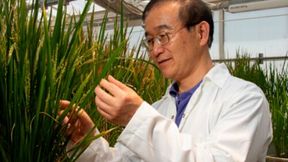
Advances in so-called large language models that run on artificial intelligence are giving navigation robots, like Boston Dynamic's Spot, newfound powers of understanding and reasoning. (Source: Nick Dentamaro)
AI

Now You Can Easily Communicate with a Robot

Researchers from Brown University have developed a software that makes use of AI language models to break down instructions for the robot and also removes the need for training data. Thus, making it seamless for humans to communicate with robots.

Read on
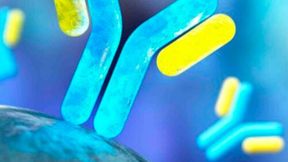
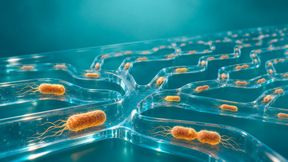
Tumors are known to disperse, or shed, their DNA into the environments surrounding them. (Source: free licensed)
Biosensor Leverages CRISPR

Researchers Engineer Bacteria that Can Detect Tumor DNA

Researchers from the University of California San Diego, in collaboration with Australian colleagues, have developed bacteria that can detect tumor DNA within a live organism. This breakthrough showed the potential of using the newly designed “Cellular Assay for Targeted CRISPR-discriminated Horizontal gene transfer” system to identify the presence of cancer in the colons of mice.

Read on
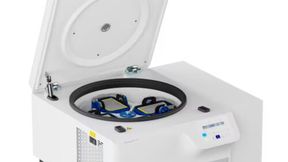
Fig.1: Laboratory devices with similar principle components can be modeled analogously by organizations promoting interoperability standards.  (Source: Labforward)
Labforward, SiLA and LADS

Collaborating to Enable Plug-and-Play Solutions, Break Implementation Barriers, and Craft Future-Proof Lab Automation Strategies

We explore the significance of device connectivity as the fundamental element in implementing lab automation strategies and future-proofing laboratory operations. Through expert perspectives, we explain how device connectivity standards, such as LADS and SiLA, unify device driver development, improve data management, and promote efficient and effective lab execution workflows.

Read on
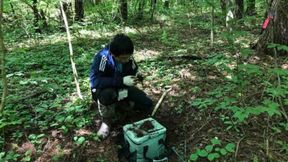
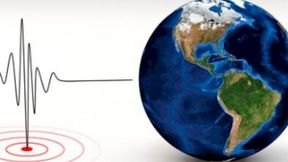
To date, primarily individuals and households are taking measures to adapt to climate change impacts, especially in the Global South. (Source: free licensed)
Global Warming

Around the Globe, Climate Adaptation Lacks Coordination

An extensive meta-study reveals that the world relies too heavily on individual households for climate change adaptation, with little systematic collaboration between global, national, and local actors. Experts from Universität Hamburg and LMU Munich warn of the pressing need for cohesive action, and the potential risks of isolated measures.

Read on