German China
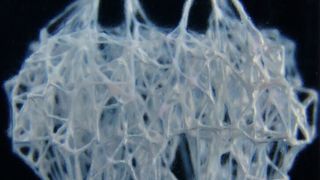
A network of capillaries 3D-printed using a newly developed technique. (Source: Hayes et al. 2022, Advanced Materials)
USA: New 3D-Printing Approach

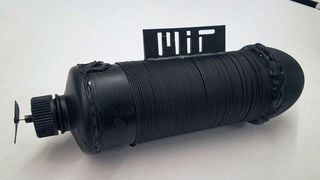
How to print a robot from scratch

Imagine a future in which you could 3D-print an entire robot or stretchy, electronic medical device with the press of a button —no tedious hours spent assembling parts by hand. That possibility may be closer than ever thanks to a recent advancement in 3D-printing technology led by engineers at CU Boulder.

Read on

When AI is applied to chemical and pharmaceutical laboratories, it creates innovative and quality products or solutions in a much shorter period of time as compared to the more traditional methods.  (Source: NDABCREATIVITY - stock.adobe.com)
Digital Transformation

AI Dominates Today’s Research Labs

Laboratories across the globe are making use of smart technologies such as Artificial Intelligence (AI)—in line with the ‘Industry 4.0’ concept—due to its numerous advantages as well as to keep up with today’s changing and demanding market requirements. One of the most crucial aspects of the AI technology for laboratories is its ability to analyze large sets of data and also recommend the best possible solutions for developing innovative and at times revolutionary products.

Read on
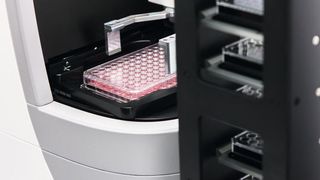
It is a long way from motorization to true automation in imaging. (Zeiss)
Microscopy & Automation

Long Way from Motorization to True Automation

Rapid developments at all levels of microscopy, such as contrast, illumination, resolution, signal detection and data processing have occurred over the last decades and there is reason to expect that these advances will continue. However, severe limitations in accuracy, reproducibility and throughput are caused by the involvement of humans in all steps of the imaging workflow. It also poses a significant burden and workload for the researcher. To improve this situation is the biggest challenge in automation.

Read on