Food testing laboratories need reliable data management systems in order to comply with the ever increasing regulatory requirements. LIMS platforms play an important role in terms of compliance with HACCP and ISO 17025 as well as in the implementation of comprehensive security mechanisms.
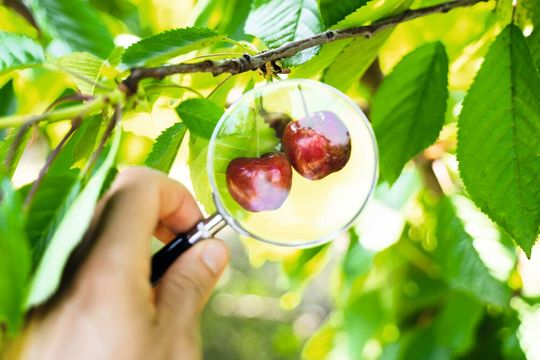
Fig.1: Food testing laboratories have to deal with ever larger amounts of data due to increased regulatory requirements.
Assuring food quality and safety is a global issue and food testing laboratories now operate within an increasingly stringent regulatory environment that requires robust testing technologies and effective information management. Today’s approaches to food safety aim to eliminate contamination incidents, and are based on risk assessment and the application of preventative control plans. One of the challenges for food testing laboratories is to manage the high volume of data that these approaches generate. Advanced Laboratory Information Management Systems (LIMS) provide the tools for standardizing and harmonizing food testing operations, managing the data flow and enabling compliance with the ISO 17025 international standard.
The Codex Alimentarius
The HACCP system is based on the principles of the Codex Alimentarius. The Codex coordinates the fair trade in food on an international level and aims to protect the health of consumers with the help of uniform standards. It consists of seven principles:
Principle 1: Perform a hazard analysis.
Principle 2: Determine the Critical Control Points (CCPs).
Principle 3: Define one or more limit values which, if exceeded, measures are initiated.
Principle 4: Establish and document a system for monitoring the CCP.
Principle 5: Determine the corrective actions to be taken if monitoring indicates that a particular CCP is no longer controlled.
Principle 6: Establish the verification procedures (as evidence) that confirm that the HACCP system is working effectively.
Principle 7: Introduce and maintain documentation of the hazard analysis and critical control points, which takes into account all processes and records relating to these principles and their application.
The Regulatory Environment is Evolving
Microbial, chemical and physical contamination of food products all pose threats to human health. Containing these within accepted limits requires a rigorous approach to food safety management and testing. Food safety concerns over recent years have led to industry and governmental bodies responding by strengthening regulations and increasing the focus on risk management in food production processes.
ISO 17025 is a quality management standard that enables laboratories to demonstrate that they operate competently and generate valid results, and in 2017 was updated to provide a risk-based approach with an increased focus on information technology. The requirements of ISO 17025 build on the critical points for food safety described in the mandatory Hazard Analysis Critical Control Points (HACCP) methodology, which is at the core of food safety management programs.
Meeting ISO 17025 Requirements with LIMS
ISO 10725 guidance is focused on: resource qualification and control; validated sampling and testing methods; accuracy and traceability of results; incidents and deviations; performance evaluation; and improvements. The processes and systems needed to achieve and maintain compliance involve the storage and management of large amounts of data. Effective data management is essential to avoid the risk of erroneous information, compromised product quality and regulatory noncompliance.
Advanced LIMS offer a solution that can be implemented across the entire workflow at food manufacturing and testing facilities to provide a single user interface that enables standardization and eases compliance across multiple testing sites. Modern LIMS are built to comply with ISO 17025, delivering preconfigured processes that support laboratories in integrating analytical and quality workflows to achieve compliance, streamline data management and preserve data integrity.
The seven core principles of HACCP can be addressed using LIMS (see LAB Info) , with workflows mapping directly to laboratory processes. Following hazard analysis, critical control points (CCPs) are determined and can be entered into LIMS, with contamination grades assigned and critical limits set. Monitoring procedures are established by defining sampling schedules and setting other parameters, so that LIMS can identify and report incidents to drive corrective action. The system will also drive verification procedures and preventative measures at the defined CPPs. All data, processes, instrument reports and user details remain secure within the LIMS.
The workflow-based functionality of LIMS enables not only the mapping of laboratory processes, but also the automation of decisions and actions according to defined criteria. Data integrity and records are maintained according to the ALCOA+ principles, created originally for the pharmaceutical industry but equally applicable to the food and beverage environment.
Date: 08.12.2025
Naturally, we always handle your personal data responsibly. Any personal data we receive from you is processed in accordance with applicable data protection legislation. For detailed information please see our privacy policy.
Consent to the use of data for promotional purposes
I hereby consent to Vogel Communications Group GmbH & Co. KG, Max-Planck-Str. 7-9, 97082 Würzburg including any affiliated companies according to §§ 15 et seq. AktG (hereafter: Vogel Communications Group) using my e-mail address to send editorial newsletters. A list of all affiliated companies can be found here
Newsletter content may include all products and services of any companies mentioned above, including for example specialist journals and books, events and fairs as well as event-related products and services, print and digital media offers and services such as additional (editorial) newsletters, raffles, lead campaigns, market research both online and offline, specialist webportals and e-learning offers. In case my personal telephone number has also been collected, it may be used for offers of aforementioned products, for services of the companies mentioned above, and market research purposes.
Additionally, my consent also includes the processing of my email address and telephone number for data matching for marketing purposes with select advertising partners such as LinkedIn, Google, and Meta. For this, Vogel Communications Group may transmit said data in hashed form to the advertising partners who then use said data to determine whether I am also a member of the mentioned advertising partner portals. Vogel Communications Group uses this feature for the purposes of re-targeting (up-selling, cross-selling, and customer loyalty), generating so-called look-alike audiences for acquisition of new customers, and as basis for exclusion for on-going advertising campaigns. Further information can be found in section “data matching for marketing purposes”.
In case I access protected data on Internet portals of Vogel Communications Group including any affiliated companies according to §§ 15 et seq. AktG, I need to provide further data in order to register for the access to such content. In return for this free access to editorial content, my data may be used in accordance with this consent for the purposes stated here. This does not apply to data matching for marketing purposes.
Right of revocation
I understand that I can revoke my consent at will. My revocation does not change the lawfulness of data processing that was conducted based on my consent leading up to my revocation. One option to declare my revocation is to use the contact form found at https://contact.vogel.de. In case I no longer wish to receive certain newsletters, I have subscribed to, I can also click on the unsubscribe link included at the end of a newsletter. Further information regarding my right of revocation and the implementation of it as well as the consequences of my revocation can be found in the data protection declaration, section editorial newsletter.
Two sample lifecycles that are important in food safety and quality — environmental monitoring and quality control (QC) samples — are both managed by LIMS and are associated with the final product. LIMS dashboards can be optimized by product and facility to give operators visibility of the entire process. Data visualization in real time makes it easy to monitor critical process points in order to detect and quickly respond to results that are out-of-specification or showing adverse trends. Here, preconfigured rules enable LIMS to notify operators if a process is trending out of control before the product fails, allowing mitigating action to avoid losses and rework.
Equipment calibration and maintenance, traceability, record-keeping, validation and reporting can all be managed in LIMS. This protects against the use of equipment and instrumentation that is due for calibration or maintenance and prevents users without proper training records from conducting tests. Electronic signing ensures a permanent record of all approvals in line with the record-keeping requirements of HACCP.
Collaborative working is made easy with secure access, from any location, to system dashboards and reports. Once testing is complete, autogenerated Certificates of Analysis show final results and demonstrate that product specifications have been met. Activities though the entire process are tracked and stored in the audit trail.
Conclusions
Food testing laboratories require reliable data management systems to better ensure they meet evolving regulatory needs. LIMS platforms that deliver integrated workflows, automated procedures and secure record keeping have an important role in directly supporting HACCP and ISO 17025 compliance, and in integrating wider safety functions in food testing facilities.
* E. Ingalls: Thermo Fisher Scientific, 02454 Waltham/USA




:quality(80)/p7i.vogel.de/wcms/62/32/62327aaae1415beeed47db6201e79661/0133375912v2.jpeg "A cotton trailer outfitted with benches and a sunshade offers farmworkers a reprieve from the sun as they take a break from picking cantaloupe melons in Firebaugh, Calif.
(Source: Joe Proudman/ Regents of the University of California)")
:quality(80)/p7i.vogel.de/wcms/e6/c8/e6c8bd554776ee1ad2f1f0723fb243a7/0133369387v1.jpeg "Roman road (Source: Queen Mary University of London)")
:quality(80)/p7i.vogel.de/wcms/51/68/51687ac4cc19f2757c138498b877de57/0133167039v2.jpeg "CMFs are foams that consist of hollow spheres – made of materials such as stainless steel, nickel, or other metals and alloys – embedded in a metallic matrix. The resulting material is both lightweight and remarkably strong at absorbing compressive forces. (Source: Jie Sun/ NC State University)")
:quality(80)/p7i.vogel.de/wcms/cd/c0/cdc09efd1e5b3b8f83224e7729d66c10/0133105276v2.jpeg "From the data presented in this report, the authors show how TF3-MALS-RI is uniquely able to separate large polyacrylate molecules and provide precise molecular weight and Rg values. (Source: Postnova Analytics)")
:quality(80)/p7i.vogel.de/wcms/86/01/86014d3d2a28cefc852f65c8d68317e4/0133104231v2.jpeg "Single-handed tube reading using a Handheld 2. (Source: Azenta Life Sciences)")
:quality(80)/p7i.vogel.de/wcms/0b/0f/0b0f8ed042dfc91f32582e10d54c2c7e/0133087444v2.jpeg "Offering advanced automation to increase your throughput, the Intellixcap provides secure sealing – eliminating the need for manual intervention, while preserving vital sample integrity. (Source: Azenta Life Sciences)")
:quality(80)/p7i.vogel.de/wcms/13/d3/13d35105f74a1c2e22b9c7a270e8e9b3/0132611155v2.jpeg "Circulating cell free DNA. (Source: Amsbio)")
:quality(80)/p7i.vogel.de/wcms/bc/ed/bced6850297a04dbea471a66cb6bb6fe/0132611405v2.jpeg "The latest addition to the range is a peristaltic tubing stop adapter that eliminates the need for fixed stoppers and allows custom cut lengths of peristaltic tubing to be installed on any pump head size. (Source: Biotech Fluidics )")
:quality(80)/p7i.vogel.de/wcms/8d/5c/8d5c6c7f897f91d6784825eee20b5584/0133321225v1.jpeg "Empa researcher Christoph Hüglin collects samples of particles that are washed out of the air by rain and snow or settle due to gravity. (Source: Empa)")
:quality(80)/p7i.vogel.de/wcms/a1/af/a1afbc7c8a067bbe94749ec680b4bafd/0133163762v2.jpeg "The study found in murkier water, fish took longer to move towards the food than those in clear water, but individuals in larger groups responded more quickly overall. (Source: Christos Ioannou)")
:quality(80)/p7i.vogel.de/wcms/32/80/3280aa3d44708962943c96fe2d466744/0133088560v2.jpeg "A bumble bee in flight at the University of Bristol Botanic Garden. (Source: Phil Savoie)")
:quality(80)/p7i.vogel.de/wcms/7b/e5/7be5c735140cbe28f3af0ec3d88274b9/0133045403v2.jpeg "After being buried in the ground for two months and broken down by soil organisms, a new pair of cotton underwear (left) shows clear signs of decomposition (right). (Source: Nicolas Zonvi)")
:quality(80)/p7i.vogel.de/wcms/ef/68/ef68375729607984e5bb0c143afdae70/0133375119v2.jpeg "Printed Rice-Lentil 3D structures
(Source: SUTD)")
:quality(80)/p7i.vogel.de/wcms/bf/d0/bfd087349a85956a7aefad57ac1204c7/0133241961v2.jpeg "The Thermo Scientific Suretect Beverage Spoilage Multiplex PCR Assay provides a fast, broad-range molecular solution for detecting key spoilage microorganisms that threaten beverage quality. (Source: © OlegDoroshin - stock.adobe.com)")
:quality(80)/p7i.vogel.de/wcms/d4/61/d461ce0bd5743897993c6475f69e7ad6/0133067478v2.jpeg "In Harris County, 50 % of households with children reported food insecurity, compared with 33 % of households without children. (Source: Rice University)")
:quality(80)/p7i.vogel.de/wcms/79/76/7976d17b980bedfe35acaa532d690046/0132713841v2.jpeg "Observed rice yield losses from 1°C warming are more than twice as high as model estimates due to underestimated heat stress. (Source: AdobeStock/ducvien)")
:quality(80)/p7i.vogel.de/wcms/22/49/224964dd6850b62cccdbc4bde2d34693/0133372964v1.jpeg "Brain activity recorded during a video game helped researchers predict whether participants would take or avoid a risk half a second before they acted. (Source: free licensed)")
:quality(80)/p7i.vogel.de/wcms/48/a7/48a761934161543f70fef2403b44d714/0133372328v2.jpeg "The link between pollution and coughing persisted in the data, even when pollution levels were below the WHO’s recommended safe daily exposure limit. (Source: free licensed)")
:quality(80)/p7i.vogel.de/wcms/83/b4/83b4563a65c6036b61990931507428b4/0133363611v2.jpeg "Magnesium sulphate uptake and the north / south divide for the Precept program. (Source: University of Bristol )")
:quality(80)/p7i.vogel.de/wcms/bb/06/bb06c1c3c5d250f3f93016366c56525d/0133363201v2.jpeg "The team identified more than 1,200 associated genetic variants and found that these influences are remarkably consistent across countries, ages and methods of measuring personality. (Source: Pixabay - PublicDomainPictures)")
:quality(80)/images.vogel.de/vogelonline/bdb/1710600/1710675/original.jpg "Discover how to set yourself up for success when performing balance-based density determination of solids such as jewelry and precious metals. (Mettler Toledo)")
:quality(80)/images.vogel.de/vogelonline/bdb/1682500/1682579/original.jpg "The new XPR Analytical balance redesigned to meet the needs of laboratory technicians of working fast and lean. (Mettler Toledo)")
:quality(80)/images.vogel.de/vogelonline/bdb/1677000/1677080/original.jpg "Enhance your weighing accuracy, comfort and productivity with the redesigned XPR Analytical balance. (Mettler Toledo)")
:fill(fff,0)/images.vogel.de/vogelonline/companyimg/107800/107832/65.jpg "logoDueperthal.jpg ()")
:fill(fff,0)/p7i.vogel.de/companies/69/b7/69b7f63f311d9/logo-bimos-tif--2-.jpeg "logo-bimos-tif--2- (https://www.bimos.com/de-de/)")
:quality(80)/p7i.vogel.de/wcms/88/c9/88c92055b10f9811b3b9328a71dcfb33/0131255382v2.jpeg "Fig.1: A certified standard pH 7 buffer (Source: Mettler Toledo)")
:quality(80)/p7i.vogel.de/wcms/33/84/3384c65b6e2b17654172bd88b9b97f0d/0127608881v2.jpeg "Analytik Jena has expanded its qpcrsoft 6.0 software for the qtower iris with an optional module for 21 CFR Part 11 compliance. (Source: Analytik Jena)")