What if your body could tell you exactly what it needs in real time? Caltech scientists have developed advanced wearable sensors, powered by nanoparticle technology, that continuously track key biomarkers like vitamins, metabolites, and medications.
A researcher holds one of Caltech's printed, wearable sweat sensors based on the core–shell nanoparticle technology developed in Wei Gao's lab.
(Source: Caltech)
The future of medicine may very well lie in the personalization of health care — knowing exactly what an individual needs and then delivering just the right mix of nutrients, metabolites, and medications, if necessary, to stabilize and improve their condition. To make this possible, physicians first need a way to continuously measure and monitor certain biomarkers of health.
To that end, a team of Caltech engineers has developed a technique for inkjet printing arrays of special nanoparticles that enables the mass production of long-lasting wearable sweat sensors. These sensors could be used to monitor a variety of biomarkers, such as vitamins, hormones, metabolites, and medications, in real time, providing patients and their physicians with the ability to continually follow changes in the levels of those molecules.
Gallery
Wearable biosensors that incorporate the new nanoparticles have been successfully used to monitor metabolites in patients suffering from long Covid and the levels of chemotherapy drugs in cancer patients at City of Hope in Duarte, California.
“These are just two examples of what is possible,” says Wei Gao, a professor of medical engineering in the Andrew and Peggy Cherng Department of Medical Engineering at Caltech. “There are many chronic conditions and their biomarkers that these sensors now give us the possibility to monitor continuously and noninvasively,” says Gao, who is the corresponding author on a paper in the journal Nature Materials describing the new technique.
Gao and his team describe the nanoparticles as core–shell cubic nanoparticles. The cubes are formed in a solution that includes the molecule that the researchers want to track — for example, vitamin C. As the monomers spontaneously assemble to form a polymer, the target molecule — vitamin C — is trapped inside the cubic nanoparticles. Next, a solvent is used to specifically remove the vitamin C molecules, leaving behind a molecularly imprinted polymer shell dotted with holes that have shapes exactly matching that of the vitamin C molecules — akin to artificial antibodies that selectively recognize the shapes of only particular molecules.
Importantly, in the new study, the researchers combine those specially formed polymers with a nanoparticle core made of nickel hexacyanoferrate (NiHCF). This material can be oxidized or reduced under an applied electrical voltage when in contact with human sweat or other bodily fluids. Returning to the vitamin C example, fluid will come into contact with the NiHCF core as long as the vitamin C–shaped holes are unoccupied, and this will generate an electrical signal.
When vitamin C molecules come into contact with the polymer, however, they slip into those holes, thus preventing sweat or other bodily fluids from making contact with the core. This weakens the electrical signal. The strength of the electrical signal, then, reveals just how much vitamin C is present.
“This core is critical. The nickel hexacyanoferrate core is highly stable, even in biological fluids, making these sensors ideal for long-term measurement,” says Gao, who is also a Heritage Medical Research Institute Investigator and a Ronald and JoAnne Willens Scholar.
The new core-shell nanoparticles are highly versatile and are used in printing sensor arrays that measure levels of multiple amino acids, metabolites, hormones, or drugs in sweat or bodily fluids simply by using multiple nanoparticle “inks” in a single array. For example, in the work described in the paper, the researchers printed out nanoparticles that bind to vitamin C along with other nanoparticles that bind to the amino acid tryptophan and creatinine, a biomarker commonly measured to see how well the kidneys are working. All of the nanoparticles were combined into one sensor that was then mass produced. These three molecules are of interest in studies of patients with long Covid.
Similarly, the researchers printed out nanoparticles-based wearable sensors that were specific to three different antitumor drugs on individual sensors that were then tested on cancer patients at City of Hope.
“Demonstrating the potential of this technology, we were able to remotely monitor the amount of cancer drugs in the body at any given time,” Gao says. “This is pointing the way to the goal of dose personalization not only for cancer but for many other conditions as well.”
Date: 08.12.2025
Naturally, we always handle your personal data responsibly. Any personal data we receive from you is processed in accordance with applicable data protection legislation. For detailed information please see our privacy policy.
Consent to the use of data for promotional purposes
I hereby consent to Vogel Communications Group GmbH & Co. KG, Max-Planck-Str. 7-9, 97082 Würzburg including any affiliated companies according to §§ 15 et seq. AktG (hereafter: Vogel Communications Group) using my e-mail address to send editorial newsletters. A list of all affiliated companies can be found here
Newsletter content may include all products and services of any companies mentioned above, including for example specialist journals and books, events and fairs as well as event-related products and services, print and digital media offers and services such as additional (editorial) newsletters, raffles, lead campaigns, market research both online and offline, specialist webportals and e-learning offers. In case my personal telephone number has also been collected, it may be used for offers of aforementioned products, for services of the companies mentioned above, and market research purposes.
Additionally, my consent also includes the processing of my email address and telephone number for data matching for marketing purposes with select advertising partners such as LinkedIn, Google, and Meta. For this, Vogel Communications Group may transmit said data in hashed form to the advertising partners who then use said data to determine whether I am also a member of the mentioned advertising partner portals. Vogel Communications Group uses this feature for the purposes of re-targeting (up-selling, cross-selling, and customer loyalty), generating so-called look-alike audiences for acquisition of new customers, and as basis for exclusion for on-going advertising campaigns. Further information can be found in section “data matching for marketing purposes”.
In case I access protected data on Internet portals of Vogel Communications Group including any affiliated companies according to §§ 15 et seq. AktG, I need to provide further data in order to register for the access to such content. In return for this free access to editorial content, my data may be used in accordance with this consent for the purposes stated here. This does not apply to data matching for marketing purposes.
Right of revocation
I understand that I can revoke my consent at will. My revocation does not change the lawfulness of data processing that was conducted based on my consent leading up to my revocation. One option to declare my revocation is to use the contact form found at https://contact.vogel.de. In case I no longer wish to receive certain newsletters, I have subscribed to, I can also click on the unsubscribe link included at the end of a newsletter. Further information regarding my right of revocation and the implementation of it as well as the consequences of my revocation can be found in the data protection declaration, section editorial newsletter.
In the paper, the team also showed that the nanoparticles can be used to print sensors that can be implanted just below the skin to precisely monitor drug levels in the body.
Original Article: Printable molecule-selective core–shell nanoparticles for wearable and implantable sensing; Nature Materials; DOI:10.1038/s41563-024-02096-4




:quality(80)/p7i.vogel.de/wcms/06/a1/06a11f1d752afb35854aa9e1afb62e98/0129209625v2.jpeg "“Unsinkable\" metal tube made from chemically-etched aluminum floats in distilled water at the lab of University of Rochester professor Chunlei Guo. (Source: J. Adam Fenster / University of Rochester)")
:quality(80)/p7i.vogel.de/wcms/6d/df/6ddf023361ec7f8fbfb6c56521577960/0129056554v2.jpeg "The evolution of carburization (depicted by the spheres) under kinetic control (illustrated by the surface contours). The molecular beams represent gas evolution under synthesis conditions while the fiery sphere highlights the formation of the pure tungsten semi-carbide phase with additional molecular beams at the top to illustrate its catalytic performance. (Source: Sinhara M. H. D. Perera)")
:quality(80)/p7i.vogel.de/wcms/26/3d/263d97f8f2797267ecf2781b56882758/0129056451v1.jpeg "A study by the Complexity Science Hub finds that AI systems are already involved in nearly one-third of newly written software code, with rapid adoption in the United States and Europe and measurable productivity gains mainly for experienced developers. (Source: free licensed)")
:quality(80)/p7i.vogel.de/wcms/63/0c/630cf9ab0cafdcdd9b33802d53c5b943/0128938770v1.jpeg "A microscopic close-up of the bubbles in foam, whose movements mathematically mirror the process of deep learning, used to train modern AI systems. (Source: Crocker Lab)")
:quality(80)/p7i.vogel.de/wcms/21/03/21030cc2541c455da0769decca8d1f82/0129146048v2.jpeg "Vyon porous plastics from Porvair Sciences are the perfect material for filtration applications in the healthcare and medical device market. (Source: Porvair Sciences)")
:quality(80)/p7i.vogel.de/wcms/bd/aa/bdaae5b9d381e2471ab37f479ad43d79/0129143884v2.jpeg "The Solvent Line Monitor from Testa Analytical is a true plug-and-play addition to any HPLC system designed to detect when one or more of its pump solvent reservoirs are empty and automatically shut-off the system. (Source: Testa Analytical)")
:quality(80)/p7i.vogel.de/wcms/8f/66/8f66b8acbb3037ca8e6b320bcad1c817/0129118043v2.jpeg "The Plasmaquant 9200 series is ideal for applications in research, trace analysis and quality control. (Source: Analytik Jena )")
:quality(80)/p7i.vogel.de/wcms/66/82/66825163ab842baded640db1a484e729/0129117548v2.jpeg "Biotech Fluidics has announced the Smartsaver solvent recycling unit which is designed to recover up to 90 % of your mobile phase by redirection of the pure solvent to the solvent reservoir during isocratic HPLC. (Source: Biotech Fluidics )")
:quality(80)/p7i.vogel.de/wcms/90/f8/90f8c3152a59205a7cac1cc182eb186b/0129209634v2.jpeg "Nitrate in drinking water linked to increased dementia risk while nitrate from vegetables is linked to a lower risk, researchers find . (Source: free licensed)")
:quality(80)/p7i.vogel.de/wcms/53/ac/53acd3796c0d43ad0f7cfd80dd7ab82e/0129209615v1.jpeg "Prenatal exposure to NO2, black carbon, and PM2.5 may reduce recognition memory in newborns, with effects more pronounced in boys than in girls. (Source: free licensed)")
:quality(80)/p7i.vogel.de/wcms/a3/cd/a3cdc440f6f0f426b85042082678018f/0129165252v2.jpeg "People exposed to wildfire smoke have a higher risk of suffering a stroke, according to research published in the European Heart Journal recently. (Source: Pixabay)")
:quality(80)/p7i.vogel.de/wcms/6c/15/6c15f7685b6076b906f2d572f6c71bb8/0129103298v2.jpeg "Although only 2 % of U.S. homes rely on wood as their primary heating source, residential wood burning accounts for more than one-fifth of Americans’ wintertime exposure to outdoor fine particulate matter (PM2.5), the new study found. (Source: Pixabay)")
:quality(80)/p7i.vogel.de/wcms/d1/3c/d13c2ad34af600dbd360c0bb0990b922/0129045715v2.jpeg "Replacing animal products with plant-based foods helps reduce the risk of heart disease and type 2 diabetes, finds a new review by the Physicians Committee for Responsible Medicine. (Source: Pixabay)")
:quality(80)/p7i.vogel.de/wcms/e1/b3/e1b3e26d03101ba93b76b304da150c9a/0129025388v2.jpeg "The research reanalyzed data from a seminal clinical trial, led by US National Institutes of Health veteran Dr Kevin Hall, which first exposed how eating exclusively UPFs results in excessive calorie consumption and weight gain. (Source: Pixabay)")
:quality(80)/p7i.vogel.de/wcms/75/db/75db8afe45607bee750df705e22b60e9/0128938816v1.jpeg "A new academic review suggests that bamboo shoots could offer significant health benefits, including improved blood sugar control, gut health and antioxidant activity. (Source: free licensed)")
:quality(80)/p7i.vogel.de/wcms/85/42/85423f3382c25d1ae0ac5645e969cd36/0128898289v2.jpeg "Dr Arya Gopinath Madathil Pulikkal (left) and Asst Prof Andy Tay (right) in front of a small greenhouse containing Choy Sum plants. (Source: NUS)")
:quality(80)/p7i.vogel.de/wcms/f1/ea/f1eac0379480f4aa25ab2db9e0a396ed/0129209654v2.jpeg "Roe deer in study plot (Source: Walter Di Nicola)")
:quality(80)/p7i.vogel.de/wcms/34/a4/34a44fab2ba6af4b5f7cb8c3ecfc6362/0129207768v1.jpeg "AI generated image of the New Zealand cave (Source: P Scofield, Canterbury Museum)")
:quality(80)/p7i.vogel.de/wcms/a4/12/a412474313fc7d83bc51a4b99ef0af73/0129189645v2.jpeg "Around age 35, men’s risk for cardiovascular risk began to rise faster and stayed higher through midlife. (Source: Pixabay)")
:quality(80)/images.vogel.de/vogelonline/bdb/1710600/1710675/original.jpg "Discover how to set yourself up for success when performing balance-based density determination of solids such as jewelry and precious metals. (Mettler Toledo)")
:quality(80)/images.vogel.de/vogelonline/bdb/1682500/1682579/original.jpg "The new XPR Analytical balance redesigned to meet the needs of laboratory technicians of working fast and lean. (Mettler Toledo)")
:quality(80)/images.vogel.de/vogelonline/bdb/1677000/1677080/original.jpg "Enhance your weighing accuracy, comfort and productivity with the redesigned XPR Analytical balance. (Mettler Toledo)")
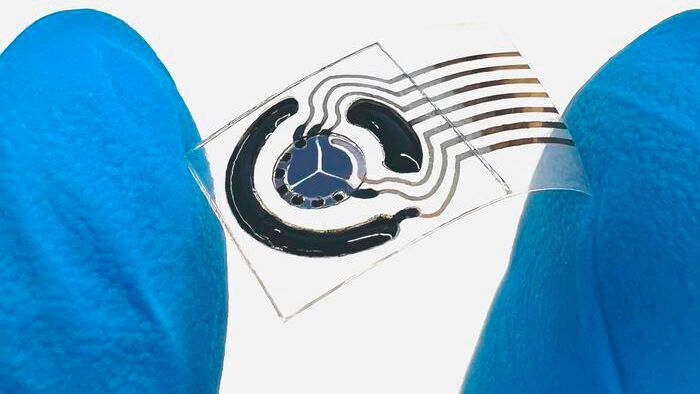
:quality(80)/p7i.vogel.de/wcms/17/1c/171c2ac65a48b07b58bf33c4ee613b35/0122810009v1.jpeg "A researcher holds one of Caltech's printed, wearable sweat sensors based on the core–shell nanoparticle technology developed in Wei Gao's lab.(Source: Caltech)")
:quality(80)/p7i.vogel.de/wcms/b1/69/b1691d95d67e0ba4ef60c539662ea4ff/0122810012v1.jpeg "The fully integrated wireless wearable patch for long Covid monitoring. The scale bar shown for scale is 1 cm.(Source: Caltech)")
:quality(80)/p7i.vogel.de/wcms/ac/e6/ace62ad84e0702378d2e5d19f131a40a/0122810014v1.jpeg "A transmission electron microscopy image of a core–shell cubic nanoparticle. The new core-shell nanoparticles are highly versatile and are used in printing sensor arrays that measure levels of multiple amino acids, metabolites, hormones, or drugs in sweat or bodily fluids simply by using multiple nanoparticle \"inks\" in a single array. (Source: Caltech)")
:quality(80)/p7i.vogel.de/wcms/8c/37/8c37df98186148a2e09336e0405f8f0f/0122810011v1.jpeg "A team of Caltech engineers has developed a technique for inkjet printing arrays of special nanoparticles that enables the mass production of long-lasting wearable sweat sensors. These sensors could be used to monitor a variety of biomarkers, such as vitamins, hormones, metabolites, and medications, in real time, providing patients and their physicians with the ability to continually follow changes in the levels of those molecules.(Source: Caltech)")
:quality(80)/p7i.vogel.de/wcms/ba/d0/bad03565c8b1c0f58aa447079fdb40c0/0122323410v1.jpeg "E-textile swatches wired for testing (Source: Marzia Dulal)")
:quality(80)/p7i.vogel.de/wcms/71/0b/710b65311648262eb99c8690377b73dd/0124237452v2.jpeg "Northwestern University researchers have developed the first wearable device for measuring gases emitted from and absorbed by the skin. (Source: John A. Rogers/Northwestern University)")
:quality(80)/p7i.vogel.de/wcms/6f/8a/6f8ad39c13a8ea5a09af36d222ffdd9b/0125682235v2.jpeg "Researchers have developed a new wearable sensor which can continuously measure a person’s hydration levels. (Source: University of Texas at Austin)")