The first fossil egg ever found from a mammal ancestor is offering rare insight into how Lystrosaurus survived Earth’s greatest mass extinction. The discovery not only settles a long-running question about early mammalian reproduction, but also points to egg-laying and rapid development as key survival traits in a hostile prehistoric world.
Lystrosaurus embryo within its partially preserved shell , reconstruction of the animal
(Source: Professor Julien Benoit/ Sophie Vrard)
A remarkable new discovery is shedding light on one of the greatest survival stories in Earth’s history, and answering a decades-old scientific mystery. Lystrosaurus, a hardy, plant-eating mammal ancestor, rose to prominence in the wake of the End-Permian Mass Extinction some 252 million years ago, the most devastating extinction event our planet has ever experienced. While countless species vanished, Lystrosaurus not only survived, but thrived in a world marked by extreme environmental instability, intense heat, and prolonged droughts.
Now, groundbreaking research published in Plos One reveals a discovery that transforms our understanding of this iconic survivor. An international team led by Professor Julien Benoit, Professor Jennifer Botha (Evolutionary Studies Institute, University of the Witwatersrand, South Africa), and Dr Vincent Fernandez (ESRF – The European Synchrotron, France) has identified, for the first time, an egg containing an embryo of Lystrosaurus, dating back approximately 250 million years. This extraordinary fossil represents the first-ever egg discovered from a mammal ancestor, finally answering a long-standing question: Did the ancestors of mammals lay eggs?
Gallery
The answer is yes.
The researchers suggest these eggs were likely soft-shelled, explaining why they have remained elusive for so long. Unlike the hard, mineralized eggs of dinosaurs, which fossilize readily, soft-shelled eggs rarely preserve, making this find exceptionally rare. But the implications go far beyond reproduction.
“This fossil was discovered during a field excursion I led in 2008, nearly 17 years ago. My preparator and exceptional fossil finder, John Nyaphuli, identified a small nodule that at first revealed only tiny flecks of bone. As he carefully prepared the specimen, it became clear that it was a perfectly curled-up Lystrosaurus hatchling. I suspected even then that it had died within the egg, but at the time, we simply didn’t have the technology to confirm it,” says Professor Botha.
With the advent of advanced synchrotron x-ray CT and the bright X-rays of the ESRF, Professor Benoit and Dr Vincent Fernandez were finally able to unlock the last pieces of the puzzle. Dr Fernandez described the experience as particularly thrilling: “Understanding reproduction in mammal ancestors has been a long-lasting enigma and this fossil provides a key piece to this puzzle. It was essential that we scanned the fossil just right to capture the level of detail needed to resolve such tiny, delicate bones.”
This research is important because it provides the first direct evidence that mammal ancestors, such as Lystrosaurus, laid eggs, resolving a long-standing question about the origins of mammalian reproduction.
Professor Julien Benoit
The scans revealed a critical clue. “When I saw the incomplete mandibular symphysis, I was genuinely excited,” says Professor Benoit. “The mandible, the lower jaw, is made up of two halves that must fuse before the animal can feed. The fact that this fusion had not yet occurred shows that the individual would have been incapable of feeding itself.”
The study reveals that Lystrosaurus laid relatively large eggs for its body size. In modern animals, larger eggs typically contain more yolk, providing all the nutrients an embryo needs to develop independently, without parental feeding after hatching. This strongly suggests that Lystrosaurus did not produce milk for its young, unlike modern mammals. Large eggs also offer another crucial advantage: they are more resistant to drying out. In the harsh, drought-prone environment following the extinction, this would have been a critical survival trait. The findings further suggest that Lystrosaurus hatchlings were likely precocial, born at an advanced stage of development. These young animals would have been capable of feeding themselves, escaping predators, and reaching reproductive maturity quickly.
In other words, Lystrosaurus succeeded by living fast and reproducing early.
In a world on the brink, this strategy proved unstoppable. This discovery not only provides the first direct evidence of egg-laying in mammal ancestors but also offers a powerful explanation for how Lystrosaurus came to dominate post-extinction ecosystems. As scientists continue to uncover the biology of ancient survivors, one thing is becoming clear: resilience, adaptability, and reproductive strategy were key to enduring Earth’s darkest chapter, and Lystrosaurus mastered them all
Date: 08.12.2025
Naturally, we always handle your personal data responsibly. Any personal data we receive from you is processed in accordance with applicable data protection legislation. For detailed information please see our privacy policy.
Consent to the use of data for promotional purposes
I hereby consent to Vogel Communications Group GmbH & Co. KG, Max-Planck-Str. 7-9, 97082 Würzburg including any affiliated companies according to §§ 15 et seq. AktG (hereafter: Vogel Communications Group) using my e-mail address to send editorial newsletters. A list of all affiliated companies can be found here
Newsletter content may include all products and services of any companies mentioned above, including for example specialist journals and books, events and fairs as well as event-related products and services, print and digital media offers and services such as additional (editorial) newsletters, raffles, lead campaigns, market research both online and offline, specialist webportals and e-learning offers. In case my personal telephone number has also been collected, it may be used for offers of aforementioned products, for services of the companies mentioned above, and market research purposes.
Additionally, my consent also includes the processing of my email address and telephone number for data matching for marketing purposes with select advertising partners such as LinkedIn, Google, and Meta. For this, Vogel Communications Group may transmit said data in hashed form to the advertising partners who then use said data to determine whether I am also a member of the mentioned advertising partner portals. Vogel Communications Group uses this feature for the purposes of re-targeting (up-selling, cross-selling, and customer loyalty), generating so-called look-alike audiences for acquisition of new customers, and as basis for exclusion for on-going advertising campaigns. Further information can be found in section “data matching for marketing purposes”.
In case I access protected data on Internet portals of Vogel Communications Group including any affiliated companies according to §§ 15 et seq. AktG, I need to provide further data in order to register for the access to such content. In return for this free access to editorial content, my data may be used in accordance with this consent for the purposes stated here. This does not apply to data matching for marketing purposes.
Right of revocation
I understand that I can revoke my consent at will. My revocation does not change the lawfulness of data processing that was conducted based on my consent leading up to my revocation. One option to declare my revocation is to use the contact form found at https://contact.vogel.de. In case I no longer wish to receive certain newsletters, I have subscribed to, I can also click on the unsubscribe link included at the end of a newsletter. Further information regarding my right of revocation and the implementation of it as well as the consequences of my revocation can be found in the data protection declaration, section editorial newsletter.




:quality(80)/p7i.vogel.de/wcms/62/32/62327aaae1415beeed47db6201e79661/0133375912v2.jpeg "A cotton trailer outfitted with benches and a sunshade offers farmworkers a reprieve from the sun as they take a break from picking cantaloupe melons in Firebaugh, Calif.
(Source: Joe Proudman/ Regents of the University of California)")
:quality(80)/p7i.vogel.de/wcms/e6/c8/e6c8bd554776ee1ad2f1f0723fb243a7/0133369387v1.jpeg "Roman road (Source: Queen Mary University of London)")
:quality(80)/p7i.vogel.de/wcms/51/68/51687ac4cc19f2757c138498b877de57/0133167039v2.jpeg "CMFs are foams that consist of hollow spheres – made of materials such as stainless steel, nickel, or other metals and alloys – embedded in a metallic matrix. The resulting material is both lightweight and remarkably strong at absorbing compressive forces. (Source: Jie Sun/ NC State University)")
:quality(80)/p7i.vogel.de/wcms/cd/c0/cdc09efd1e5b3b8f83224e7729d66c10/0133105276v2.jpeg "From the data presented in this report, the authors show how TF3-MALS-RI is uniquely able to separate large polyacrylate molecules and provide precise molecular weight and Rg values. (Source: Postnova Analytics)")
:quality(80)/p7i.vogel.de/wcms/86/01/86014d3d2a28cefc852f65c8d68317e4/0133104231v2.jpeg "Single-handed tube reading using a Handheld 2. (Source: Azenta Life Sciences)")
:quality(80)/p7i.vogel.de/wcms/0b/0f/0b0f8ed042dfc91f32582e10d54c2c7e/0133087444v2.jpeg "Offering advanced automation to increase your throughput, the Intellixcap provides secure sealing – eliminating the need for manual intervention, while preserving vital sample integrity. (Source: Azenta Life Sciences)")
:quality(80)/p7i.vogel.de/wcms/13/d3/13d35105f74a1c2e22b9c7a270e8e9b3/0132611155v2.jpeg "Circulating cell free DNA. (Source: Amsbio)")
:quality(80)/p7i.vogel.de/wcms/bc/ed/bced6850297a04dbea471a66cb6bb6fe/0132611405v2.jpeg "The latest addition to the range is a peristaltic tubing stop adapter that eliminates the need for fixed stoppers and allows custom cut lengths of peristaltic tubing to be installed on any pump head size. (Source: Biotech Fluidics )")
:quality(80)/p7i.vogel.de/wcms/8d/5c/8d5c6c7f897f91d6784825eee20b5584/0133321225v1.jpeg "Empa researcher Christoph Hüglin collects samples of particles that are washed out of the air by rain and snow or settle due to gravity. (Source: Empa)")
:quality(80)/p7i.vogel.de/wcms/a1/af/a1afbc7c8a067bbe94749ec680b4bafd/0133163762v2.jpeg "The study found in murkier water, fish took longer to move towards the food than those in clear water, but individuals in larger groups responded more quickly overall. (Source: Christos Ioannou)")
:quality(80)/p7i.vogel.de/wcms/32/80/3280aa3d44708962943c96fe2d466744/0133088560v2.jpeg "A bumble bee in flight at the University of Bristol Botanic Garden. (Source: Phil Savoie)")
:quality(80)/p7i.vogel.de/wcms/7b/e5/7be5c735140cbe28f3af0ec3d88274b9/0133045403v2.jpeg "After being buried in the ground for two months and broken down by soil organisms, a new pair of cotton underwear (left) shows clear signs of decomposition (right). (Source: Nicolas Zonvi)")
:quality(80)/p7i.vogel.de/wcms/ef/68/ef68375729607984e5bb0c143afdae70/0133375119v2.jpeg "Printed Rice-Lentil 3D structures
(Source: SUTD)")
:quality(80)/p7i.vogel.de/wcms/bf/d0/bfd087349a85956a7aefad57ac1204c7/0133241961v2.jpeg "The Thermo Scientific Suretect Beverage Spoilage Multiplex PCR Assay provides a fast, broad-range molecular solution for detecting key spoilage microorganisms that threaten beverage quality. (Source: © OlegDoroshin - stock.adobe.com)")
:quality(80)/p7i.vogel.de/wcms/d4/61/d461ce0bd5743897993c6475f69e7ad6/0133067478v2.jpeg "In Harris County, 50 % of households with children reported food insecurity, compared with 33 % of households without children. (Source: Rice University)")
:quality(80)/p7i.vogel.de/wcms/79/76/7976d17b980bedfe35acaa532d690046/0132713841v2.jpeg "Observed rice yield losses from 1°C warming are more than twice as high as model estimates due to underestimated heat stress. (Source: AdobeStock/ducvien)")
:quality(80)/p7i.vogel.de/wcms/22/49/224964dd6850b62cccdbc4bde2d34693/0133372964v1.jpeg "Brain activity recorded during a video game helped researchers predict whether participants would take or avoid a risk half a second before they acted. (Source: free licensed)")
:quality(80)/p7i.vogel.de/wcms/48/a7/48a761934161543f70fef2403b44d714/0133372328v2.jpeg "The link between pollution and coughing persisted in the data, even when pollution levels were below the WHO’s recommended safe daily exposure limit. (Source: free licensed)")
:quality(80)/p7i.vogel.de/wcms/83/b4/83b4563a65c6036b61990931507428b4/0133363611v2.jpeg "Magnesium sulphate uptake and the north / south divide for the Precept program. (Source: University of Bristol )")
:quality(80)/p7i.vogel.de/wcms/bb/06/bb06c1c3c5d250f3f93016366c56525d/0133363201v2.jpeg "The team identified more than 1,200 associated genetic variants and found that these influences are remarkably consistent across countries, ages and methods of measuring personality. (Source: Pixabay - PublicDomainPictures)")
:quality(80)/images.vogel.de/vogelonline/bdb/1710600/1710675/original.jpg "Discover how to set yourself up for success when performing balance-based density determination of solids such as jewelry and precious metals. (Mettler Toledo)")
:quality(80)/images.vogel.de/vogelonline/bdb/1682500/1682579/original.jpg "The new XPR Analytical balance redesigned to meet the needs of laboratory technicians of working fast and lean. (Mettler Toledo)")
:quality(80)/images.vogel.de/vogelonline/bdb/1677000/1677080/original.jpg "Enhance your weighing accuracy, comfort and productivity with the redesigned XPR Analytical balance. (Mettler Toledo)")
:fill(fff,0)/images.vogel.de/vogelonline/companyimg/107800/107832/65.jpg "logoDueperthal.jpg ()")
:fill(fff,0)/images.vogel.de/vogelonline/companyimg/131900/131910/65.jpg "Xylem_tag_rgb.jpg ()")
:fill(fff,0)/p7i.vogel.de/companies/69/b7/69b7f63f311d9/logo-bimos-tif--2-.jpeg "logo-bimos-tif--2- (https://www.bimos.com/de-de/)")
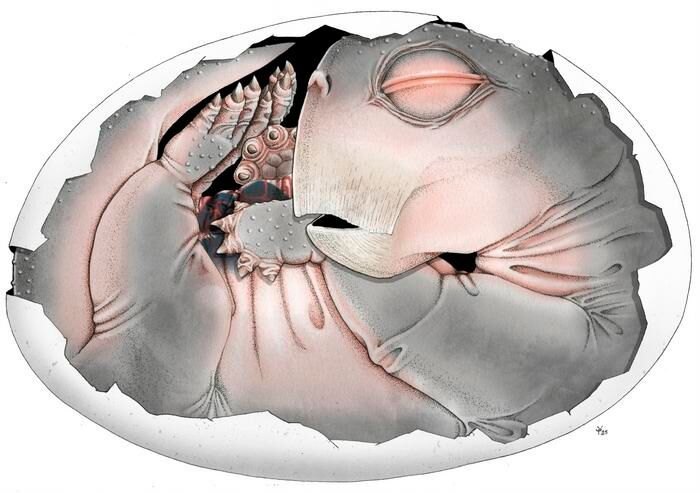
:quality(80)/p7i.vogel.de/wcms/fa/6b/fa6bebe9614fb40b76c61c704523209d/0130610299v1.jpeg "Lystrosaurus embryo within its partially preserved shell , reconstruction of the animal(Source: Professor Julien Benoit/ Sophie Vrard)")
:quality(80)/p7i.vogel.de/wcms/f3/bc/f3bc8e701c2c1dec84de9823fb823083/0130610298v1.jpeg "Egg photographed in the control room of the ESRF in France(Source: Professor Julien Benoit)")
:quality(80)/p7i.vogel.de/wcms/ed/69/ed6947fbcb68d95f9c3a89040a8d3323/0130610297v1.jpeg "3D reconstruction of the skeleton(Source: Professor Julien Benoit)")
:quality(80)/p7i.vogel.de/wcms/e7/fd/e7fd5458ef0049646c0604052c2316af/0132026077v2.jpeg "A Heliconius melpomene with a partly digested load of pollen grains on its proboscis; Heliconius are the only butterflies known to collect and digest pollen, which is linked to their elongated life span. (Source: Louise Bestea)")
:quality(80)/p7i.vogel.de/wcms/34/a4/34a44fab2ba6af4b5f7cb8c3ecfc6362/0129207768v1.jpeg "AI generated image of the New Zealand cave (Source: P Scofield, Canterbury Museum)")