



:quality(80)/p7i.vogel.de/wcms/45/87/458714daead8bb6b83d5305ff764e8c1/0130386255v1.jpeg "Examples of drawings from each category, with the scores they received from humans, independent AI and the human-guided AI. (Source: Advanced Science)")
:quality(80)/p7i.vogel.de/wcms/66/7c/667c242f45cc06eb5bee090c7723ba0b/0130384415v2.jpeg "Inspired by arm-wrestling, the NUS team built a self-training platform (left) where two rings of muscle tissues continuously and autonomously pull against each other. Ostrabot (right), made from a single trained ring of muscle and two flexible tails, swims 3 times faster than counterparts with conventionally cultured muscle. (Source: National University of Singapore)")
:quality(80)/p7i.vogel.de/wcms/92/ad/92adbafb37924cea35ea3cf05b7a23e5/0130206318v2.jpeg "The world’s first fully functioning proof-of-concept quantum battery
(Source: Csiro)")
:quality(80)/p7i.vogel.de/wcms/9f/8b/9f8bc2b8491d7a514ca154e9588a07b7/0130205846v1.jpeg "The researchers’ new material, based on mineralised sawdust, is an excellent fire retardant. (Source: Dan Vivas Glaser / from Kürsteiner R et al. Chem Circularity 2026)")
:quality(80)/p7i.vogel.de/wcms/6e/7c/6e7c762e933c938a92431a785df4690f/0130440213v2.jpeg "Biotech Fluidics' valving solutions offer low swept volume and eliminate reagent carryover concerns. (Source: Biotech Fluidics)")
:quality(80)/p7i.vogel.de/wcms/b0/0b/b00b237311ce4ceb03b2ba1136b6b074/0130440144v2.jpeg "Azenta Life Sciences offers a range of low binding consumables that deliver consistent performance from sensitive applications that require low DNA input such as Next Generation Sequencing and Molecular Biology. (Source: Azenta)")
:quality(80)/p7i.vogel.de/wcms/6c/ef/6cef060860810f12200fbd6d56884e9d/0130440127v2.jpeg "The Automated Plate Seal Remover from Azenta Life Sciences is a compact system for removing seals from a wide range of microplates at the single touch of a button, without damaging the plate or seal. (Source: Azenta )")
:quality(80)/p7i.vogel.de/wcms/14/ca/14ca189a5a6a5ac4c434039fc35af36c/0130440109v2.jpeg "Afys3G has launched the Information Marking System Lambda768. (Source: Afys3G)")
:quality(80)/p7i.vogel.de/wcms/5d/bb/5dbb962b09bae1c078a8ff996666bc8e/0130386229v2.jpeg "This image created using Gemini Pro, depicts an activated carbon fiber functionalized with amine groups (–NH2) at adjacent positions. This arrangement improves the energy efficacy of key interactions, enabling the desorption of captured carbon dioxide at lower temperatures. (Source: Gemini / Yasuhiro Yamada/ Chiba University / KI-generiert)")
:quality(80)/p7i.vogel.de/wcms/21/9b/219b000051ab1ea14ab5f92e4fd0f9bb/0130384937v2.jpeg "Deforestation in the Appalachian mountains. (Source: Alex Diaz on Unsplash)")
:quality(80)/p7i.vogel.de/wcms/e9/9c/e99cb19231197af70c489cb4acc2ead0/0130293444v2.jpeg "A new global study, led by researchers at Kaust in Saudi Arabia, shows that forests are most effective for climate regulation when conserved or restored in their natural or native locations. (Source: Kaust )")
:quality(80)/p7i.vogel.de/wcms/af/40/af40b535eb65c287fbd22ed5483d1d0e/0130206243v2.jpeg "The researchers dug soil pits in order to measure the carbon storage in soil
(Source: Johanna Asch)")
:quality(80)/p7i.vogel.de/wcms/c3/11/c3116fd7b394726eee766f62ca041009/0130435223v2.jpeg "Peaches are climacteric fruits, which means they continue to ripen after being picked. The recommended storage temperature is 0°C, otherwise there is a risk of cold damage. (Source: © Esther Hildebrandt - stock.adobe.com)")
:quality(80)/p7i.vogel.de/wcms/2a/07/2a0737995810d504b318f8a0f9ac2c3d/0130386209v1.jpeg "Simple, repeatable eating habits may help people stick to diets, see better results, study says (Source: free licensed)")
:quality(80)/p7i.vogel.de/wcms/6f/ba/6fba92196d0cbb1467334f8a2ecc520a/0130203021v2.jpeg "Low to moderate wine consumption shows lower risk compared with spirits, beer and cider (Source: free licensed)")
:quality(80)/p7i.vogel.de/wcms/a9/37/a9376f1d9a893570023d9aa97c085bc5/0129927485v2.jpeg "Examples of foods high in PUFAs include fatty fish and soybeans, while MUFAs include olive oil and avocadoes. (Source: free licensed)")
:quality(80)/p7i.vogel.de/wcms/40/c0/40c0c09c2bad7b925a069edbbac90621/0130385557v1.jpeg "When a stroke damages brain tissue (red) along an important movement pathway (yellow), the injured side of the brain may show faster aging (red), while parts of the opposite side may appear relatively “younger” (blue) as the brain tries to compensate. This pattern is linked to more severe movement problems and less recovery.
(Bild: Stevens INI)")
:quality(80)/p7i.vogel.de/wcms/32/14/3214c28a03f71ad067c5f27e5bd6772b/0130386218v1.jpeg "Antimicrobial-resistant Salmonella poses severe challenges to global food safety and public health. (Source: free licensed)")
:quality(80)/p7i.vogel.de/wcms/30/2e/302e195d532fc9aced73406b07642b57/0130384900v2.jpeg "Sleeping for 11 minutes more, doing an additional 4.5 minutes of moderate-to-vigorous physical activity, and eating additional quarter of a cup of vegetables were associated with a 10 % reduction in major cardiovascular events. (Source: Pixabay)")
:quality(80)/p7i.vogel.de/wcms/47/41/4741ee3c589369a09ab0e3a26b7143f0/0130384858v2.jpeg "A female, Aedes aegypti mosquito, after taking her blood meal. (Source: Lauren Bishop CDC)")
:quality(80)/images.vogel.de/vogelonline/bdb/1710600/1710675/original.jpg "Discover how to set yourself up for success when performing balance-based density determination of solids such as jewelry and precious metals. (Mettler Toledo)")
:quality(80)/images.vogel.de/vogelonline/bdb/1682500/1682579/original.jpg "The new XPR Analytical balance redesigned to meet the needs of laboratory technicians of working fast and lean. (Mettler Toledo)")
:quality(80)/images.vogel.de/vogelonline/bdb/1677000/1677080/original.jpg "Enhance your weighing accuracy, comfort and productivity with the redesigned XPR Analytical balance. (Mettler Toledo)")
Postharvest Analytics Aroma Profile as an Indicator of Chilling Stress
The determination of volatile organic compounds (VOCs) in postharvest analysis using gas chromatography coupled with mass spectrometry (GC–MS) has proven to be a suitable tool for predicting the extent of chilling injury and minimizing food losses. The peach example presented here may serve as a model case for other commodities.
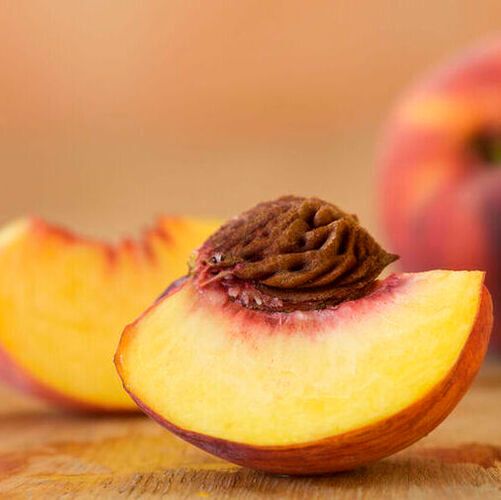
To bridge and extend transport and marketing periods, peaches and other climacteric fruits are stored under refrigerated conditions. Cooling affects metabolism by slowing respiration and the ripening process, thereby extending shelf life. While cold storage offers clear advantages, it also carries certain risks. It may lead to chilling injury (CI). These physiological disorders typically become apparent only after storage—when fruit is displayed at retail or ripens further at room temperature in consumers’ homes. Chilling injury represents a significant challenge for marketing and quality management: fruit may appear externally sound during cold storage, while sensory defects often become evident only after purchase.
Signs of Chilling Injury
Sign in or register and read on
Please log in or register and read this article. To be able to read this article in full, you must be registered. Free registration gives you access to exclusive specialist information.
Already registered? Log in here