Researchers have revealed that fungal infections can lead to blood poisoning which can be fatal. The immune system plays a vital role to protect the body from these infections.
In people with a healthy immune system, surgical procedures that damage the mucosal barrier, among other things, can favor the spread of Candida albicans.
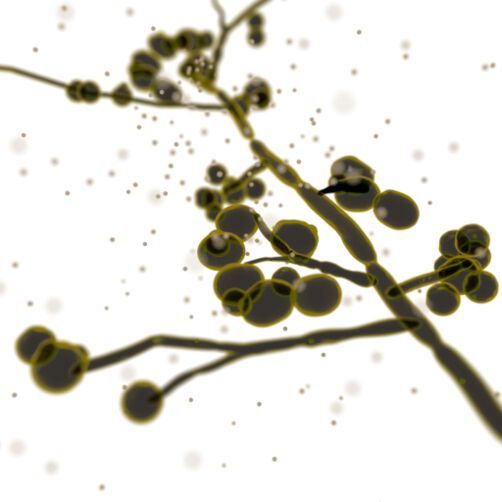
Bern/Switzerland – Normally, the yeast Candida albicans is a harmless co-inhabitant of our mucous membranes. About half of the population is colonized by it without noticing. As long as the body's immune system is intact, it effortlessly keeps the fungus in check. It becomes dangerous when the immune system is weakened. This can be the case, for example, with diseases such as Aids or when taking medication that suppresses the immune defense. In people with a healthy immune system, surgical procedures that damage the mucosal barrier, among other things, can favor the spread of Candida albicans. Once the yeast fungus enters the bloodstream, it can cause blood poisoning (sepsis), leading to permanent damage to internal organs: One-third to one-half of patients do not survive such fungal sepsis.
The natural response of the immune system to the invasion of pathogens is an inflammatory reaction. Sophisticated control mechanisms ensure that only invaders are fought without attacking healthy tissue at the same time. A key role is played by a specific protein, the so-called interleukin 1 receptor antagonist. This protein is the natural antagonist of the pro-inflammatory signal substance interleukin 1, preventing it from overshooting the target and triggering uncontrolled inflammatory reactions.
Inflammation inhibitor weakens immune defense
A new study led by Stefan Freigang of the Institute of Tissue Medicine and Pathology (IGMP) at the University of Bern now suggests that the interleukin 1 receptor antagonist (IL-1Ra), despite its anti-inflammatory function, contributes to the spread of Candida albicans. In this context, IL-1Ra produced by the so-called phagocytes (macrophages) seem to be of particular importance. In mice, the researchers were able to show that the amount of those anti-inflammatory proteins in the macrophages increased when Candida albicans entered the bloodstream, and that they subsequently interfered with the immune defense. They inhibited the production and swarming of neutrophils, a subgroup of white blood cells. Neutrophils form an important early barrier against infection by regularly patrolling blood vessels to clear invading pathogens.
Mice genetically bred so that their phagocytes no longer produced the anti-inflammatory proteins had an intact arsenal of neutrophils. Accordingly, they were able to successfully fight an infection with Candida albicans within a short time. In the control group of normal mice, on the other hand, which produced the anti-inflammatory protein, the fungi were able to spread because of the inhibited neutrophils.
Interestingly, the loss of the anti-inflammatory proteins did not lead to an overshooting of the inflammatory response, as would have been expected, but to a reduction.
"We explain this by the fact that there were enough neutrophils to eliminate the yeast fungus before it could even trigger a pathogenic inflammatory response," says Stefan Freigang.
So, if fewer anti-inflammatory proteins are produced, the neutrophils as the "first line of defense" can do their work undisturbed. However, if the proteins are produced by the phagocytes, this weakens the immune defense. Such complex and dynamic interactions of the immune system can only be mapped in a living organism, which in this case requires animal experiments with genetically modified and normal mice as a control group.
Possible therapeutic approach
The research results of the Bernese researchers could enable new therapeutic approaches in the future. "Fungal sepsis remains difficult to treat and is associated with a high mortality rate. In order to develop more effective treatment strategies, we need a better understanding of the underlying disease mechanisms," explains Stefan Freigang.
In a next step, the researchers want to use samples from patients to confirm the observations from the mouse model and investigate whether the specific protein also promotes infections with Candida albicans in humans. "If this is confirmed, agents targeting the protein could be used as a new strategy to combat the yeast and possibly other fungal infections," Freigang said.
Date: 08.12.2025
Naturally, we always handle your personal data responsibly. Any personal data we receive from you is processed in accordance with applicable data protection legislation. For detailed information please see our privacy policy.
Consent to the use of data for promotional purposes
I hereby consent to Vogel Communications Group GmbH & Co. KG, Max-Planck-Str. 7-9, 97082 Würzburg including any affiliated companies according to §§ 15 et seq. AktG (hereafter: Vogel Communications Group) using my e-mail address to send editorial newsletters. A list of all affiliated companies can be found here
Newsletter content may include all products and services of any companies mentioned above, including for example specialist journals and books, events and fairs as well as event-related products and services, print and digital media offers and services such as additional (editorial) newsletters, raffles, lead campaigns, market research both online and offline, specialist webportals and e-learning offers. In case my personal telephone number has also been collected, it may be used for offers of aforementioned products, for services of the companies mentioned above, and market research purposes.
Additionally, my consent also includes the processing of my email address and telephone number for data matching for marketing purposes with select advertising partners such as LinkedIn, Google, and Meta. For this, Vogel Communications Group may transmit said data in hashed form to the advertising partners who then use said data to determine whether I am also a member of the mentioned advertising partner portals. Vogel Communications Group uses this feature for the purposes of re-targeting (up-selling, cross-selling, and customer loyalty), generating so-called look-alike audiences for acquisition of new customers, and as basis for exclusion for on-going advertising campaigns. Further information can be found in section “data matching for marketing purposes”.
In case I access protected data on Internet portals of Vogel Communications Group including any affiliated companies according to §§ 15 et seq. AktG, I need to provide further data in order to register for the access to such content. In return for this free access to editorial content, my data may be used in accordance with this consent for the purposes stated here. This does not apply to data matching for marketing purposes.
Right of revocation
I understand that I can revoke my consent at will. My revocation does not change the lawfulness of data processing that was conducted based on my consent leading up to my revocation. One option to declare my revocation is to use the contact form found at https://contact.vogel.de. In case I no longer wish to receive certain newsletters, I have subscribed to, I can also click on the unsubscribe link included at the end of a newsletter. Further information regarding my right of revocation and the implementation of it as well as the consequences of my revocation can be found in the data protection declaration, section editorial newsletter.
The research findings were published in the journal Immunity.




:quality(80)/p7i.vogel.de/wcms/92/ad/92adbafb37924cea35ea3cf05b7a23e5/0130206318v2.jpeg "The world’s first fully functioning proof-of-concept quantum battery
(Source: Csiro)")
:quality(80)/p7i.vogel.de/wcms/9f/8b/9f8bc2b8491d7a514ca154e9588a07b7/0130205846v1.jpeg "The researchers’ new material, based on mineralised sawdust, is an excellent fire retardant. (Source: Dan Vivas Glaser / from Kürsteiner R et al. Chem Circularity 2026)")
:quality(80)/p7i.vogel.de/wcms/fd/73/fd73fcb3ceda89d1419de1083fcab7b4/0130081520v2.jpeg "The fingers at the heart of this technology were inspired by the fin-ray effect — a design principle derived from the natural structure of fish fins. (Source: University of Texas at Austin )")
:quality(80)/p7i.vogel.de/wcms/fe/64/fe649767c802d53ac63ee2c2a40b7e0d/0130060830v2.jpeg "Sample tube with light-active substance (Source: Elvira Eberhardt / Ulm University)")
:quality(80)/p7i.vogel.de/wcms/8f/b9/8fb98a958e4afe679865fbe52a473680/0129940982v2.jpeg "pH measurement in various nanoparticles using the Nine-Focus meter ensures precise stability and performance control. (Source: Mettler Toledo)")
:quality(80)/p7i.vogel.de/wcms/11/74/1174e5d4c8b07a64637dced8c9506b40/0129787561v2.jpeg "The Multicell Plus high-pressure reactor sets a new benchmark for operator safety, all-round accessibility and ease-of-use. (Source: Asynt)")
:quality(80)/p7i.vogel.de/wcms/ef/6e/ef6e96191183411973b77041fb6b1e16/0129785957v2.jpeg "Manufactured from high-quality crystal polystyrene - these new automation-ready plates are available in a choice of ANSI / SLAS standard (96-well and breakable 8-well strip) formats. (Source: Porvair Sciences)")
:quality(80)/p7i.vogel.de/wcms/ad/ca/adcaa20ef5ccaf7e3b325788b1e349c4/0129784872v2.jpeg "The high performance Degasi Flat Film in-line degasser. (Source: Biotech Fluidics)")
:quality(80)/p7i.vogel.de/wcms/e9/9c/e99cb19231197af70c489cb4acc2ead0/0130293444v2.jpeg "A new global study, led by researchers at Kaust in Saudi Arabia, shows that forests are most effective for climate regulation when conserved or restored in their natural or native locations. (Source: Kaust )")
:quality(80)/p7i.vogel.de/wcms/af/40/af40b535eb65c287fbd22ed5483d1d0e/0130206243v2.jpeg "The researchers dug soil pits in order to measure the carbon storage in soil
(Source: Johanna Asch)")
:quality(80)/p7i.vogel.de/wcms/2d/45/2d45aba62f5042baa00f7fd4fa629839/0130036533v2.jpeg "The population of Pune, India, is expected to reach 11 million by 2050. (Source: free licensed)")
:quality(80)/p7i.vogel.de/wcms/52/f8/52f8d5521fdab07ed0a865ec0d8919fd/0130009438v2.jpeg "Drylands support around half of global livestock production and sustain the livelihoods of close to a billion people, while also underpinning soil stability and carbon storage. (Source: Kaust )")
:quality(80)/p7i.vogel.de/wcms/6f/ba/6fba92196d0cbb1467334f8a2ecc520a/0130203021v2.jpeg "Low to moderate wine consumption shows lower risk compared with spirits, beer and cider (Source: free licensed)")
:quality(80)/p7i.vogel.de/wcms/a9/37/a9376f1d9a893570023d9aa97c085bc5/0129927485v2.jpeg "Examples of foods high in PUFAs include fatty fish and soybeans, while MUFAs include olive oil and avocadoes. (Source: free licensed)")
:quality(80)/p7i.vogel.de/wcms/ea/88/ea88ef8810e21cdd9bb852c70f385ba1/0129797385v2.jpeg "A team of NUS food scientists consisting of Assoc Prof Liu Shao Quan (centre), Dr Lu Yuyun (right) and Ms Geng Chenhan (left) pioneered a co-fermentation method that improves both the nutrient and flavor profile of kombu. (Source: NUS)")
:quality(80)/p7i.vogel.de/wcms/84/2c/842c7c1678ceeec7147ea3a36e238e75/0129356324v2.jpeg "Kaust and Nadec have signed a MOU that establishes a framework for long-term cooperation across agricultural research, technology development, and professional training. (Source: Kaust )")
:quality(80)/p7i.vogel.de/wcms/6e/b9/6eb95805568aa78dc2ed57f829cf33d4/0130300421v2.jpeg "A 10-minute digital program co-developed by a University of Texas psychologist significantly reduced symptoms of depression four weeks after use, according to results from one of the largest randomized controlled trials of single-session mental health interventions. (Source: University of Texas at Austin )")
:quality(80)/p7i.vogel.de/wcms/6f/e9/6fe9d920eca2c0b3bdeb55cbe9f01908/0130299237v2.jpeg "Study authors Jason Miska and Leah Billingham reading out enzymatic activity of microglia in cell cultures. (Source: Northwestern University.)")
:quality(80)/p7i.vogel.de/wcms/c4/54/c454661a9dd459cf7c5b632f79829358/0130284530v2.jpeg "The study shows that AI can be used to assess the build-up of calcium deposits in the arteries of the breast from the standard X-ray mammography scans that are currently used in routine breast cancer screening. (Source: ESC)")
:quality(80)/p7i.vogel.de/wcms/67/9b/679b140c164dbd7c4fe9eda4da91329b/0130281406v3.jpeg "This is the highest resolution molecular structure ever constructed of a key protein complex on the surface of the Andes virus, called the Gn-Gc tetramer, that enables it to infect cells. (Source: University of Texas at Austin)")
:quality(80)/images.vogel.de/vogelonline/bdb/1710600/1710675/original.jpg "Discover how to set yourself up for success when performing balance-based density determination of solids such as jewelry and precious metals. (Mettler Toledo)")
:quality(80)/images.vogel.de/vogelonline/bdb/1682500/1682579/original.jpg "The new XPR Analytical balance redesigned to meet the needs of laboratory technicians of working fast and lean. (Mettler Toledo)")
:quality(80)/images.vogel.de/vogelonline/bdb/1677000/1677080/original.jpg "Enhance your weighing accuracy, comfort and productivity with the redesigned XPR Analytical balance. (Mettler Toledo)")
:fill(fff,0)/p7i.vogel.de/companies/5f/3f/5f3f63ceedc78/knf-logo.jpg "KNF_Logo.jpg (www.knf.com)")
:quality(80)/p7i.vogel.de/wcms/18/e6/18e6f3c86e5006f24237775af2a6124b/0129504632v1.jpeg "The Listeria lifecycle after it infects a mammalian host. Counterclockwise from upper left, the bacteria are quickly ingested by an immune system cell called a macrophage, where they end up in an organ called the phagosome for digestion. But they escape the phagosome and enlist a protein called actin to build a needle-like protrusion and push it through the cell wall into a neighboring cell, starting the cycle over again. The Listeria strain used for cancer therapy is unable to co-opt actin and thus cannot infect other cells to cause illness. (Source: American Society for Cell Biology)")
:quality(80)/p7i.vogel.de/wcms/c9/f9/c9f90a352f8676b188f434fa02da7649/0125476575v1.jpeg "Prof. Dr. Stephanie Ganal-Vonarburg is a research group leader at the Department of Biomedical Research (DBMR), University of Bern, and University Clinic for Visceral Surgery and Medicine, Inselspital, University Hospital Bern. (Source: ZVG)")