A study published in Nature, led by researchers Brooke Williams and Hawthorne Beyer, reveals that tropical forests have a vast potential for natural regrowth — an area larger than Mexico could regrow, potentially storing up to 23.4 gigatons of carbon. This discovery offers a significant new pathway for addressing climate change and restoring ecological balance.
The study tracked regrowth between 2000 and 2012, and then checked if the regrowth was maintained through 2015.
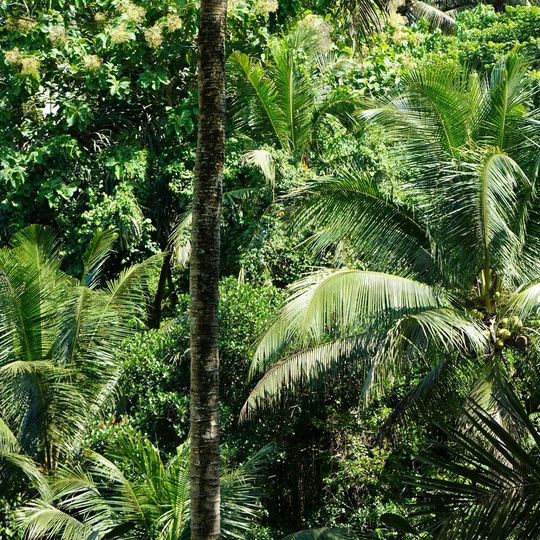
A groundbreaking new study finds that up to 215 million hectares of land (an area larger than Mexico) in humid tropical regions around the world has the potential to naturally regrow. That much forest could store 23.4 gigatons of carbon over 30 years and also have a significant impact on concerns like biodiversity loss and water quality. The study showed that more than half of the area with strong potential for regrowth was in five countries: Brazil, Mexico, Indonesia, China, and Colombia.
“Tree planting in degraded landscapes can be costly. By leveraging natural regeneration techniques, nations can meet their restoration goals cost effectively,” says the study’s co-lead author, Brooke Williams, a researcher at the Queensland University of Technology, Australia, and the Institute for Capacity Exchange in Environmental Decisions. “Our model can guide where these savings can best be taken advantage of,” she says.
Matthew Fagan, associate professor of geography and environmental systems at University of Maryland, Baltimore County (UMBC) and second author on the new study, developed a data set the authors relied on.
In that work, “We used satellite images to identify millions of small areas where tree cover increased over time. We then excluded the areas planted by humans with machine learning, focusing on natural regrowth,” Fagan says. The study tracked regrowth between 2000 and 2012, and then checked if the regrowth was maintained through 2015. “Those natural patches were the input data for this novel study,” he says, “the first to predict where future forest regrowth will occur, given observed past regrowth.”
The study, co-led by Hawthorne Beyer, head of geospatial science at Mombak, a Brazilian startup which aims to generate high-quality carbon credits through reforestation of the Amazon, and director of science at Institute for Capacity Exchange in Environmental Decisions, also pulled in global data sets describing factors like soil quality, slope, road and population density, local wealth, distance from urban centers and from healthy forest, and more. “Any time you build one of these global studies, you’re standing on the backs of so many other scientists,” Fagan says. “Each one of these studies represents years of work.”
The study found that the factors most strongly associated with high regrowth potential were a patch’s proximity to existing forest, the density of nearby forest, and the content of carbon in the soil. Those factors in particular “seem to do a really good job explaining the patterns of regrowth we see across the world,” Fagan says. Being close to existing forest, for example, is key to supplying a variety of seeds to the area to support diverse regrowth, Fagan explains.
Keeping it Local — by Supplying a Global Map
The end product of the study is a digital map of the global tropics, where each pixel — representing 30 x 30 square meters of land — indicates the estimated potential for regrowth. That map, made possible by an extensive international collaboration of researchers, is a boon to environmentalists worldwide hoping to advocate locally for their efforts.
“Our goal and our hope is that this is used democratically by local people, organizations, and localities from the county level all the way up to the national level, to advocate for where restoration should happen,” Fagan says. “The people who live there should be in charge of what happens there — where and how to restore really depends on local conditions.”
Fagan points out that some of the potential regrowth areas the study identified are unlikely to be restored for a variety of reasons, such as being in active use for ranching or crops or located on prime real estate near roads and urban centers. However, a meaningful portion of the 215 million hectares is abandoned and degraded cattle pastures or previously logged forests, where encouraging natural regeneration would have minimal cost to local economies and a long list of benefits.
“If you restored that to rainforest, the benefit to water quality, water provision, local biodiversity, and to soil quality would be immense,” Fagan says. “It would also be an immense benefit for pulling carbon out of the atmosphere, so really it’s just a question of, ‘Where can we do this most efficiently?’ That’s what this paper is all about.”
Date: 08.12.2025
Naturally, we always handle your personal data responsibly. Any personal data we receive from you is processed in accordance with applicable data protection legislation. For detailed information please see our privacy policy.
Consent to the use of data for promotional purposes
I hereby consent to Vogel Communications Group GmbH & Co. KG, Max-Planck-Str. 7-9, 97082 Würzburg including any affiliated companies according to §§ 15 et seq. AktG (hereafter: Vogel Communications Group) using my e-mail address to send editorial newsletters. A list of all affiliated companies can be found here
Newsletter content may include all products and services of any companies mentioned above, including for example specialist journals and books, events and fairs as well as event-related products and services, print and digital media offers and services such as additional (editorial) newsletters, raffles, lead campaigns, market research both online and offline, specialist webportals and e-learning offers. In case my personal telephone number has also been collected, it may be used for offers of aforementioned products, for services of the companies mentioned above, and market research purposes.
Additionally, my consent also includes the processing of my email address and telephone number for data matching for marketing purposes with select advertising partners such as LinkedIn, Google, and Meta. For this, Vogel Communications Group may transmit said data in hashed form to the advertising partners who then use said data to determine whether I am also a member of the mentioned advertising partner portals. Vogel Communications Group uses this feature for the purposes of re-targeting (up-selling, cross-selling, and customer loyalty), generating so-called look-alike audiences for acquisition of new customers, and as basis for exclusion for on-going advertising campaigns. Further information can be found in section “data matching for marketing purposes”.
In case I access protected data on Internet portals of Vogel Communications Group including any affiliated companies according to §§ 15 et seq. AktG, I need to provide further data in order to register for the access to such content. In return for this free access to editorial content, my data may be used in accordance with this consent for the purposes stated here. This does not apply to data matching for marketing purposes.
Right of revocation
I understand that I can revoke my consent at will. My revocation does not change the lawfulness of data processing that was conducted based on my consent leading up to my revocation. One option to declare my revocation is to use the contact form found at https://contact.vogel.de. In case I no longer wish to receive certain newsletters, I have subscribed to, I can also click on the unsubscribe link included at the end of a newsletter. Further information regarding my right of revocation and the implementation of it as well as the consequences of my revocation can be found in the data protection declaration, section editorial newsletter.
Original Article: Global potential for natural regeneration in deforested tropical regions; Nature; DOI:10.1038/s41586-024-08106-4




:quality(80)/p7i.vogel.de/wcms/45/87/458714daead8bb6b83d5305ff764e8c1/0130386255v1.jpeg "Examples of drawings from each category, with the scores they received from humans, independent AI and the human-guided AI. (Source: Advanced Science)")
:quality(80)/p7i.vogel.de/wcms/66/7c/667c242f45cc06eb5bee090c7723ba0b/0130384415v2.jpeg "Inspired by arm-wrestling, the NUS team built a self-training platform (left) where two rings of muscle tissues continuously and autonomously pull against each other. Ostrabot (right), made from a single trained ring of muscle and two flexible tails, swims 3 times faster than counterparts with conventionally cultured muscle. (Source: National University of Singapore)")
:quality(80)/p7i.vogel.de/wcms/92/ad/92adbafb37924cea35ea3cf05b7a23e5/0130206318v2.jpeg "The world’s first fully functioning proof-of-concept quantum battery
(Source: Csiro)")
:quality(80)/p7i.vogel.de/wcms/9f/8b/9f8bc2b8491d7a514ca154e9588a07b7/0130205846v1.jpeg "The researchers’ new material, based on mineralised sawdust, is an excellent fire retardant. (Source: Dan Vivas Glaser / from Kürsteiner R et al. Chem Circularity 2026)")
:quality(80)/p7i.vogel.de/wcms/8f/b9/8fb98a958e4afe679865fbe52a473680/0129940982v2.jpeg "pH measurement in various nanoparticles using the Nine-Focus meter ensures precise stability and performance control. (Source: Mettler Toledo)")
:quality(80)/p7i.vogel.de/wcms/11/74/1174e5d4c8b07a64637dced8c9506b40/0129787561v2.jpeg "The Multicell Plus high-pressure reactor sets a new benchmark for operator safety, all-round accessibility and ease-of-use. (Source: Asynt)")
:quality(80)/p7i.vogel.de/wcms/ef/6e/ef6e96191183411973b77041fb6b1e16/0129785957v2.jpeg "Manufactured from high-quality crystal polystyrene - these new automation-ready plates are available in a choice of ANSI / SLAS standard (96-well and breakable 8-well strip) formats. (Source: Porvair Sciences)")
:quality(80)/p7i.vogel.de/wcms/ad/ca/adcaa20ef5ccaf7e3b325788b1e349c4/0129784872v2.jpeg "The high performance Degasi Flat Film in-line degasser. (Source: Biotech Fluidics)")
:quality(80)/p7i.vogel.de/wcms/5d/bb/5dbb962b09bae1c078a8ff996666bc8e/0130386229v2.jpeg "This image created using Gemini Pro, depicts an activated carbon fiber functionalized with amine groups (–NH2) at adjacent positions. This arrangement improves the energy efficacy of key interactions, enabling the desorption of captured carbon dioxide at lower temperatures. (Source: Gemini / Yasuhiro Yamada/ Chiba University / KI-generiert)")
:quality(80)/p7i.vogel.de/wcms/21/9b/219b000051ab1ea14ab5f92e4fd0f9bb/0130384937v2.jpeg "Deforestation in the Appalachian mountains. (Source: Alex Diaz on Unsplash)")
:quality(80)/p7i.vogel.de/wcms/e9/9c/e99cb19231197af70c489cb4acc2ead0/0130293444v2.jpeg "A new global study, led by researchers at Kaust in Saudi Arabia, shows that forests are most effective for climate regulation when conserved or restored in their natural or native locations. (Source: Kaust )")
:quality(80)/p7i.vogel.de/wcms/af/40/af40b535eb65c287fbd22ed5483d1d0e/0130206243v2.jpeg "The researchers dug soil pits in order to measure the carbon storage in soil
(Source: Johanna Asch)")
:quality(80)/p7i.vogel.de/wcms/2a/07/2a0737995810d504b318f8a0f9ac2c3d/0130386209v1.jpeg "Simple, repeatable eating habits may help people stick to diets, see better results, study says (Source: free licensed)")
:quality(80)/p7i.vogel.de/wcms/6f/ba/6fba92196d0cbb1467334f8a2ecc520a/0130203021v2.jpeg "Low to moderate wine consumption shows lower risk compared with spirits, beer and cider (Source: free licensed)")
:quality(80)/p7i.vogel.de/wcms/a9/37/a9376f1d9a893570023d9aa97c085bc5/0129927485v2.jpeg "Examples of foods high in PUFAs include fatty fish and soybeans, while MUFAs include olive oil and avocadoes. (Source: free licensed)")
:quality(80)/p7i.vogel.de/wcms/ea/88/ea88ef8810e21cdd9bb852c70f385ba1/0129797385v2.jpeg "A team of NUS food scientists consisting of Assoc Prof Liu Shao Quan (centre), Dr Lu Yuyun (right) and Ms Geng Chenhan (left) pioneered a co-fermentation method that improves both the nutrient and flavor profile of kombu. (Source: NUS)")
:quality(80)/p7i.vogel.de/wcms/40/c0/40c0c09c2bad7b925a069edbbac90621/0130385557v1.jpeg "When a stroke damages brain tissue (red) along an important movement pathway (yellow), the injured side of the brain may show faster aging (red), while parts of the opposite side may appear relatively “younger” (blue) as the brain tries to compensate. This pattern is linked to more severe movement problems and less recovery.
(Bild: Stevens INI)")
:quality(80)/p7i.vogel.de/wcms/32/14/3214c28a03f71ad067c5f27e5bd6772b/0130386218v1.jpeg "Antimicrobial-resistant Salmonella poses severe challenges to global food safety and public health. (Source: free licensed)")
:quality(80)/p7i.vogel.de/wcms/30/2e/302e195d532fc9aced73406b07642b57/0130384900v2.jpeg "Sleeping for 11 minutes more, doing an additional 4.5 minutes of moderate-to-vigorous physical activity, and eating additional quarter of a cup of vegetables were associated with a 10 % reduction in major cardiovascular events. (Source: Pixabay)")
:quality(80)/p7i.vogel.de/wcms/47/41/4741ee3c589369a09ab0e3a26b7143f0/0130384858v2.jpeg "A female, Aedes aegypti mosquito, after taking her blood meal. (Source: Lauren Bishop CDC)")
:quality(80)/images.vogel.de/vogelonline/bdb/1710600/1710675/original.jpg "Discover how to set yourself up for success when performing balance-based density determination of solids such as jewelry and precious metals. (Mettler Toledo)")
:quality(80)/images.vogel.de/vogelonline/bdb/1682500/1682579/original.jpg "The new XPR Analytical balance redesigned to meet the needs of laboratory technicians of working fast and lean. (Mettler Toledo)")
:quality(80)/images.vogel.de/vogelonline/bdb/1677000/1677080/original.jpg "Enhance your weighing accuracy, comfort and productivity with the redesigned XPR Analytical balance. (Mettler Toledo)")
:quality(80)/p7i.vogel.de/wcms/d8/14/d8142f8910c28b1ad2c7366c01743c63/0120517295v1.jpeg "Mangrove planting in Zanzibar (Source: Matthew Clark/ Imperial College London)")
:quality(80)/p7i.vogel.de/wcms/92/f6/92f683a8555e5936ec654e3d0d0c881c/0127101084v1.jpeg "Mosses, long overlooked on the forest floor, are revealed as hidden carbon champions in a landmark study across 413 subtropical forests, reshaping our understanding of global carbon storage. (Source: free licensed)")
:quality(80)/p7i.vogel.de/wcms/e9/9c/e99cb19231197af70c489cb4acc2ead0/0130293444v2.jpeg "A new global study, led by researchers at Kaust in Saudi Arabia, shows that forests are most effective for climate regulation when conserved or restored in their natural or native locations. (Source: Kaust )")