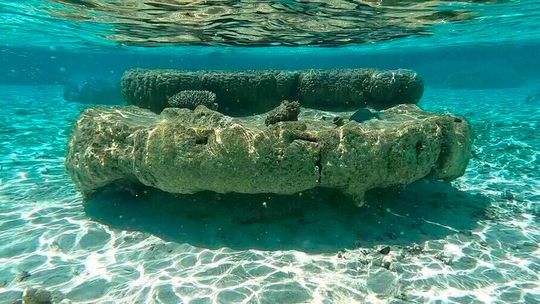
A new study has analyzed coral samples from the Maldives in the central Indian Ocean and has revealed that sea-level rise in the Indian Ocean began accelerating far earlier than previously thought.
A NUS-led study has confirmed corals to be reliable indicators of relative sea-level changes, making them a powerful tool for climate research.
(Source: NUS)
Queenstown/Singapore – A groundbreaking international study by marine scientists based in Singapore has revealed that sea-level rise in the Indian Ocean began accelerating far earlier than previously thought, with corals providing an unbroken natural record of ocean change stretching back to the early 20th century. Published in Nature Communications, the study was led by Professor Paul Kench from the Department of Geography, at the National University of Singapore’s (NUS) Faculty of Arts and Social Sciences, in collaboration with researchers from NUS and Nanyang Technological University (NTU).
By analyzing coral samples from the Maldives in the central Indian Ocean, the scientists reconstructed a century-long chronology of sea-level changes and climate shifts with remarkable precision.
They were able to extend the sea-level record for the Indian Ocean back a further 60 years, all the way to the early 1900s, offering a much longer and clearer historical context for interpreting modern sea-level changes.
The study yielded two significant findings.
The first is the pronounced acceleration of rising sea levels in the Indian Ocean from around 1959 – earlier than indicated by coastal tide gauges or satellite observations. The timing aligns closely with global temperature increases and accelerated glacial melt driven by human activity, showing that the Indian Ocean has been highly responsive to climatic changes for over half a century.
The second is that sea levels in the Indian Ocean, which covers approximately 30 % of the world’s ocean area and supports around 30 % of the global population, have risen significantly by 30 cm since the middle of the 20th century.
“What we’re seeing is a clear fingerprint of human-driven climate change etched into the skeletons of corals. The early acceleration in sea-level rise is a warning sign that the ocean has been responding to global warming far earlier and more strongly than we thought,” said Prof Kench.
Accelerating sea-level rise threatens millions living in coastal areas with increased flooding, erosion, saltwater intrusion, and damage to vital ecosystems like mangroves and coral reefs.
The effects of sea-level changes in the Indian Ocean ripples beyond Asia to the rest of the world, underscoring the need for international cooperation to address global challenges such as water security, agriculture, and disaster preparedness.
For Singapore and its Southeast Asian neighbors, the uncovering of long-term patterns of sea-level changes can improve climate models and strengthen the region’s ability to plan for future risks under continued global warming.
For example, the new coral-derived data from the study offers a historical baseline that can enhance the efforts that Singapore already has in place to guard against rising sea levels, such as the Coastal-Inland Flood Model and Climate Impact Science Research Programme, by improving the accuracy of sea-level projections and informing adaptive strategies.
Corals confirmed as trusted recorders of sea-level and climate history
This research sets a new standard for how scientists can use coral to look back in time and understand how our oceans have changed.
As corals grow, they build their skeletons layer by layer similar to how trees form rings. Each layer captures details about the ocean at that time, such as temperature, salt levels, and even sea level.
To make sure data from the coral samples from the Indian Ocean that were analyzed was reliable, the team compared it with real sea-level measurements from tide stations and satellites, and found that they matched up closely.
The successful calibration of coral proxies against instrumental sea-level records means that we can trust corals to tell us about past sea-level changes, with their coral growth rates validated to be reliable indicators of relative sea-level changes, making them a powerful tool for climate research.
In addition to tracking long-term sea-level changes, the coral records also captured signs of extreme climate events such as unusual warming and cooling periods, as well as droughts. These signals closely match historical weather records, offering valuable insight into the frequency and severity of past climate extremes.
Date: 08.12.2025
Naturally, we always handle your personal data responsibly. Any personal data we receive from you is processed in accordance with applicable data protection legislation. For detailed information please see our privacy policy.
Consent to the use of data for promotional purposes
I hereby consent to Vogel Communications Group GmbH & Co. KG, Max-Planck-Str. 7-9, 97082 Würzburg including any affiliated companies according to §§ 15 et seq. AktG (hereafter: Vogel Communications Group) using my e-mail address to send editorial newsletters. A list of all affiliated companies can be found here
Newsletter content may include all products and services of any companies mentioned above, including for example specialist journals and books, events and fairs as well as event-related products and services, print and digital media offers and services such as additional (editorial) newsletters, raffles, lead campaigns, market research both online and offline, specialist webportals and e-learning offers. In case my personal telephone number has also been collected, it may be used for offers of aforementioned products, for services of the companies mentioned above, and market research purposes.
Additionally, my consent also includes the processing of my email address and telephone number for data matching for marketing purposes with select advertising partners such as LinkedIn, Google, and Meta. For this, Vogel Communications Group may transmit said data in hashed form to the advertising partners who then use said data to determine whether I am also a member of the mentioned advertising partner portals. Vogel Communications Group uses this feature for the purposes of re-targeting (up-selling, cross-selling, and customer loyalty), generating so-called look-alike audiences for acquisition of new customers, and as basis for exclusion for on-going advertising campaigns. Further information can be found in section “data matching for marketing purposes”.
In case I access protected data on Internet portals of Vogel Communications Group including any affiliated companies according to §§ 15 et seq. AktG, I need to provide further data in order to register for the access to such content. In return for this free access to editorial content, my data may be used in accordance with this consent for the purposes stated here. This does not apply to data matching for marketing purposes.
Right of revocation
I understand that I can revoke my consent at will. My revocation does not change the lawfulness of data processing that was conducted based on my consent leading up to my revocation. One option to declare my revocation is to use the contact form found at https://contact.vogel.de. In case I no longer wish to receive certain newsletters, I have subscribed to, I can also click on the unsubscribe link included at the end of a newsletter. Further information regarding my right of revocation and the implementation of it as well as the consequences of my revocation can be found in the data protection declaration, section editorial newsletter.
Prof Kench said, “These findings have far-reaching implications for climate adaptation planning globally, especially for low-lying and densely populated coastal regions. We hope this work contributes meaningfully to the global dialogue on resilience and preparedness.”
This pioneering research deepens our understanding of how oceans respond to climate change, while setting a new standard for using natural archives to reconstruct environmental history. As coastal nations around the world confront the realities of rising seas, the insights uncovered by Singapore’s marine scientists offer both a clearer view of the past and a critical guide for planning a more resilient future.
About the Study
The study titled “Coral growth records 20th Century sea-level acceleration and climatic variability in the Indian Ocean” was published in Nature Communications on 1 July 2025. It represents a milestone in paleoclimate science, combining marine biology, geochemistry, and oceanography to produce the most detailed Indian Ocean sea-level record to date.
The interdisciplinary approach taken for this study, combining marine biology, geochemistry, climatology, and oceanography, demonstrates the power of collaborative science in tackling complex global challenges. It also highlights the role of Singapore’s research institutions in contributing to world-class climate science.




:quality(80)/p7i.vogel.de/wcms/65/88/658810e8f70ddd88a4dc014f211630a6/0132611511v2.jpeg "In regulated cleanrooms, control is important, but being able to demonstrate control is equally important. (Source: Vaisala)")
:quality(80)/p7i.vogel.de/wcms/87/99/87991d857ac02b67176f4c88015a4d57/0132611186v2.jpeg "Supercritical fluid extraction is an area of growing interest and CO2 is the most common supercritical fluid used in SFE procedures as a replacement for traditional hexane use. (Source: Scimed)")
:quality(80)/p7i.vogel.de/wcms/7a/1c/7a1cac56bca0dde5268e4ede1c762741/0132539982v2.jpeg "The flexible material can be customized to act like different kinds of tissue. (Source: University of Texas at Austin)")
:quality(80)/p7i.vogel.de/wcms/ed/ff/edff58efa9930f672f2e50a63e65562f/0132477775v1.jpeg "Contemporary languages and endangerment status. Made with a Natural Earth base map using data from Glottolog 5.3 and information adapted from Glottoscope. (Source: Claire Bowern)")
:quality(80)/p7i.vogel.de/wcms/13/d3/13d35105f74a1c2e22b9c7a270e8e9b3/0132611155v2.jpeg "Circulating cell free DNA. (Source: Amsbio)")
:quality(80)/p7i.vogel.de/wcms/bc/ed/bced6850297a04dbea471a66cb6bb6fe/0132611405v2.jpeg "The latest addition to the range is a peristaltic tubing stop adapter that eliminates the need for fixed stoppers and allows custom cut lengths of peristaltic tubing to be installed on any pump head size. (Source: Biotech Fluidics )")
:quality(80)/p7i.vogel.de/wcms/c2/34/c234a6626d4f6360382ca7f1f440bebb/0132611196v2.jpeg "Testa Analytical's Trinity – a powerful new triple detector for Gel Permeation Chromatography / Size Exclusion Chromatography. (Source: Testa Analytical)")
:quality(80)/p7i.vogel.de/wcms/5b/3f/5b3fc0d5fb08c1f9727125bd926b1481/0132555049v1.jpeg "On 1 and 2 December 2026, the T3 – Transform The Tomorrow conference will explore strategies that help companies future-proof their operations. (Bild: © Vogel Corporate Solutions / AdobeStock 1280236166, Oksana)")
:quality(80)/p7i.vogel.de/wcms/06/1a/061a5d3a4e85383454d9450761a67de7/0132611653v2.jpeg "Shihong Lin, associate professor of civil and environmental engineering at Rice. (Source: Alex Becker/ Rice University)")
:quality(80)/p7i.vogel.de/wcms/c4/f5/c4f55f42fdf878aec3f850e5569b84ce/0132594173v2.jpeg "The latest research sheds some light on an issue that deserves more attention, that of climate-related suicide. (Source: Unsplash)")
:quality(80)/p7i.vogel.de/wcms/22/b8/22b8fa1a4146bc06c4c15d63992ebb88/0132589504v2.jpeg "Hepa filters are known to improve air quality and clean the air of microbes in laboratory settings, but this is the largest ‘real-world’ study to date to test if they reduce infections in care homes. (Source: Unsplash)")
:quality(80)/p7i.vogel.de/wcms/31/c1/31c1b666641702292624a4e8ca799a09/0132480890v1.jpeg "Decades of PFAS-laced sewage sludge, once spread on farms as fertilizer, have left millions of acres of American cropland contaminated with “forever chemicals”. (Source: frei lizenziert)")
:quality(80)/p7i.vogel.de/wcms/28/b6/28b6114fc9915c5dadee94d5c89bd129/0132593216v2.jpeg "Eating foods that contain common preservative food additives may increase the risks of high blood pressure and cardiovascular disease. (Source: Unsplash)")
:quality(80)/p7i.vogel.de/wcms/01/bc/01bcb16a3381a1d46533861eedbbae71/0132371290v1.jpeg "Adding spice may help people eat less by slowing them down. (Source: free licensed)")
:quality(80)/p7i.vogel.de/wcms/b3/16/b316ac585e067d024da89a5156c950a9/0132370983v1.jpeg "Laboratory tests suggest that some low-calorie sweeteners can alter the growth of gut bacteria, with particularly strong effects observed when isosteviol was combined with the antidepressant duloxetine. (Source: free licensed)")
:quality(80)/p7i.vogel.de/wcms/22/50/2250f9358ba65ad3c4de05ff5ea9f74e/0132117868v1.jpeg "Japanese researchers have developed a naturally bred yeast that produces nine times more ornithine while retaining normal brewing performance, opening a route to craft beer with added fermentation value. (Source: free licensed)")
:quality(80)/p7i.vogel.de/wcms/bb/f9/bbf9cc2b059213fd10c280304a51b143/0132611525v2.jpeg "Nanoact colored cellulose nanobeads were developed by Asahi Kasei by utilizing its core technology of cellulose processing. (Source: Asahi Kasei)")
:quality(80)/p7i.vogel.de/wcms/fc/90/fc9085d5ad403446c67cd4d586f4a0d6/0132611789v2.jpeg "Metastatic BAP1-deficient melanoma is the most common intraocular malignancy in adults, but it remains rare and extremely difficult to treat once it spreads. (Source: Turun yliopisto/University of Turku)")
:quality(80)/p7i.vogel.de/wcms/32/97/32977422ebe164ada6f807d16e410900/0132611708v2.jpeg "Ground sloths, which could reach the size of small elephants, originated in South America and spread into North America via the Panamanian land bridge. (Source: Natural History Museum of Los Angeles County)")
:quality(80)/p7i.vogel.de/wcms/96/6f/966f8a0a2b0c36f08622a4c5c3abb54f/0132611669v1.jpeg "A larkspur specimen in bloom at Beal Botanical Garden. Known for their toxicity, injurious plants such as larkspur and wolfsbane have been leveraged by humans for millennia for their medicinal potential. (Source: Finn Gomez/ Paul Henderson)")
:quality(80)/images.vogel.de/vogelonline/bdb/1710600/1710675/original.jpg "Discover how to set yourself up for success when performing balance-based density determination of solids such as jewelry and precious metals. (Mettler Toledo)")
:quality(80)/images.vogel.de/vogelonline/bdb/1682500/1682579/original.jpg "The new XPR Analytical balance redesigned to meet the needs of laboratory technicians of working fast and lean. (Mettler Toledo)")
:quality(80)/images.vogel.de/vogelonline/bdb/1677000/1677080/original.jpg "Enhance your weighing accuracy, comfort and productivity with the redesigned XPR Analytical balance. (Mettler Toledo)")
:fill(fff,0)/images.vogel.de/vogelonline/companyimg/131900/131910/65.jpg "Xylem_tag_rgb.jpg ()")
:fill(fff,0)/p7i.vogel.de/companies/69/b7/69b7f63f311d9/logo-bimos-tif--2-.jpeg "logo-bimos-tif--2- (https://www.bimos.com/de-de/)")
:quality(80)/p7i.vogel.de/wcms/60/54/6054287023c79b93d166c8b7802f9ad4/0130972957v2.jpeg "Scientists have discovered extensive, ancient and modern deep-sea coral reefs within the Galápagos Marine Reserve – the first of their kind ever to be documented inside the marine protected area since it was established in 1998. (Source: WHOI/NSF)")
:quality(80)/p7i.vogel.de/wcms/d3/ca/d3ca208f2264e3288610ce2fa6b8b756/0126953134v2.jpeg "Clownfish (Amphiprion bicinctus) shelter among their anemone hosts (Radianthus magnifica) in the Red Sea — a fragile partnership threatened by rising marine temperatures. (Source: Kaust )")