Solid-State BatteriesNew Pyrochlore-Type Electrolyte Discovery Paves Way for High-Performance, Safe Lithium-Ion Batteries
Source:
Tokyo University of Science
3 min Reading Time
Researchers at Tokyo University of Science and Denso Corporation have discovered a groundbreaking pyrochlore-type oxyfluoride solid electrolyte for all-solid-state lithium-ion batteries. This new material promises to revolutionize the industry with its non-flammable nature, high energy density, and exceptional ionic conductivity, stable in air and efficient across a wide temperature range.
Researchers have discovered a pyrochlore-type oxyfluoride as a stable, lithium-ion conductor with excellent conductivity, suitable for use as solid electrolytes in all-solid-state lithium-ion batteries.
All-solid-state lithium-ion (Li-ion) batteries with solid electrolytes are non-flammable and have higher energy density and transference numbers than those with liquid electrolytes. They are expected to take a share of the market for conventional liquid electrolyte Li-ion batteries, such as electric vehicles. However, despite these advantages, solid electrolytes have lower Li-ion conductivity and pose challenges in achieving adequate electrode-solid electrolyte contact. While sulfide-based solid electrolytes are conductive, they react with moisture to form toxic hydrogen disulfide. Therefore, there's a need for non-sulfide solid electrolytes that are both conductive and stable in air to make safe, high-performance, and fast-charging solid-state Li-ion batteries.
In a recent study published in Chemistry of Materials on 28 March 2024, a research team led by Professor Kenjiro Fujimoto, Professor Akihisa Aimi from Tokyo University of Science, and Dr. Shuhei Yoshida from Denso Corporation, discovered a stable and highly conductive Li-ion conductor in the form of a pyrochlore-type oxyfluoride.
According to Prof. Fujimoto, “Making all-solid-state lithium-ion secondary batteries has been a long-held dream of many battery researchers. We have discovered an oxide solid electrolyte that is a key component of all-solid-state lithium-ion batteries, which have both high energy density and safety. In addition to being stable in air, the material exhibits higher ionic conductivity than previously reported oxide solid electrolytes.”
The pyrochlore-type oxyfluoride studied in this work can be denoted as Li2-xLa(1+x)/3M2O6F (M = Nb, Ta). It underwent structural and compositional analysis using various techniques, including X-ray diffraction, Rietveld analysis, inductively coupled plasma optical emission spectrometry, and selected-area electron diffraction. Specifically, Li1.25La0.58Nb2O6F was developed, demonstrating a bulk ionic conductivity of 7.0 mS cm⁻¹ and a total ionic conductivity of 3.9 mS cm⁻¹ at room temperature. It was found to be higher than the lithium-ion conductivity of known oxide solid electrolytes. The activation energy of ionic conduction of this material is extremely low, and the ionic conductivity of this material at low temperature is one of the highest among known solid electrolytes, including sulfide-based materials.
Exactly, even at –10°C, the new material has the same conductivity as conventional oxide-based solid electrolytes at room temperature. Furthermore, since conductivity above 100°C has also been verified, the operating range of this solid electrolyte is –10°C to 100°C. Conventional lithium-ion batteries cannot be used at temperatures below freezing. Therefore, the operating conditions of lithium-ion batteries for commonly used mobile phones are 0°C to 45°C.
The Li-ion conduction mechanism in this material was investigated. The conduction path of pyrochlore-type structure cover the F ions located in the tunnels created by MO6 octahedra. The conduction mechanism is the sequential movement of Li-ions while changing bonds with F ions. Li ions move to the nearest Li position always passing through metastable positions. Immobile La3+ bonded to F ion inhibits the Li-ion conduction by blocking the conduction path and vanishing the surrounding metastable positions.
Unlike existing lithium-ion secondary batteries, oxide-based all solid-state batteries have no risk of electrolyte leakage due to damage and no risk of toxic gas generation as with sulfide-based batteries. Therefore, this new innovation is anticipated to lead future research. “The newly discovered material is safe and exhibits higher ionic conductivity than previously reported oxide-based solid electrolytes. The application of this material is promising for the development of revolutionary batteries that can operate in a wide range of temperatures, from low to high,” envisions Prof. Fujimoto. “We believe that the performance required for the application of solid electrolytes for electric vehicles is satisfied.”
Notably, the new material is highly stable and will not ignite if damaged. It is suitable for airplanes and other places where safety is critical. It is also suitable for high-capacity applications, such as electric vehicles, because it can be used under high temperatures and supports rapid recharging. Moreover, it is also a promising material for miniaturization of batteries, home appliances, and medical devices.
Date: 08.12.2025
Naturally, we always handle your personal data responsibly. Any personal data we receive from you is processed in accordance with applicable data protection legislation. For detailed information please see our privacy policy.
Consent to the use of data for promotional purposes
I hereby consent to Vogel Communications Group GmbH & Co. KG, Max-Planck-Str. 7-9, 97082 Würzburg including any affiliated companies according to §§ 15 et seq. AktG (hereafter: Vogel Communications Group) using my e-mail address to send editorial newsletters. A list of all affiliated companies can be found here
Newsletter content may include all products and services of any companies mentioned above, including for example specialist journals and books, events and fairs as well as event-related products and services, print and digital media offers and services such as additional (editorial) newsletters, raffles, lead campaigns, market research both online and offline, specialist webportals and e-learning offers. In case my personal telephone number has also been collected, it may be used for offers of aforementioned products, for services of the companies mentioned above, and market research purposes.
Additionally, my consent also includes the processing of my email address and telephone number for data matching for marketing purposes with select advertising partners such as LinkedIn, Google, and Meta. For this, Vogel Communications Group may transmit said data in hashed form to the advertising partners who then use said data to determine whether I am also a member of the mentioned advertising partner portals. Vogel Communications Group uses this feature for the purposes of re-targeting (up-selling, cross-selling, and customer loyalty), generating so-called look-alike audiences for acquisition of new customers, and as basis for exclusion for on-going advertising campaigns. Further information can be found in section “data matching for marketing purposes”.
In case I access protected data on Internet portals of Vogel Communications Group including any affiliated companies according to §§ 15 et seq. AktG, I need to provide further data in order to register for the access to such content. In return for this free access to editorial content, my data may be used in accordance with this consent for the purposes stated here. This does not apply to data matching for marketing purposes.
Right of revocation
I understand that I can revoke my consent at will. My revocation does not change the lawfulness of data processing that was conducted based on my consent leading up to my revocation. One option to declare my revocation is to use the contact form found at https://contact.vogel.de. In case I no longer wish to receive certain newsletters, I have subscribed to, I can also click on the unsubscribe link included at the end of a newsletter. Further information regarding my right of revocation and the implementation of it as well as the consequences of my revocation can be found in the data protection declaration, section editorial newsletter.
In summary, researchers have not only discovered a Li-ion conductor with high conductivity and air stability but also introduced a new type of superionic conductor with a pyrochlore-type oxyfluoride. Exploring the local structure around lithium, their dynamic changes during conduction, and their potential as solid electrolytes for all-solid-state batteries are important areas for future research!
Original Article: High Li-ion conductivity in pyrochlore-type solid electrolyte Li2-xLa(1+x)/3M2O6F (M = Nb, Ta); Chemistry of Materials; DOI: https://doi.org/10.1021/acs.chemmater.3c03288




:quality(80)/p7i.vogel.de/wcms/66/7c/667c242f45cc06eb5bee090c7723ba0b/0130384415v2.jpeg "Inspired by arm-wrestling, the NUS team built a self-training platform (left) where two rings of muscle tissues continuously and autonomously pull against each other. Ostrabot (right), made from a single trained ring of muscle and two flexible tails, swims 3 times faster than counterparts with conventionally cultured muscle. (Source: National University of Singapore)")
:quality(80)/p7i.vogel.de/wcms/92/ad/92adbafb37924cea35ea3cf05b7a23e5/0130206318v2.jpeg "The world’s first fully functioning proof-of-concept quantum battery
(Source: Csiro)")
:quality(80)/p7i.vogel.de/wcms/9f/8b/9f8bc2b8491d7a514ca154e9588a07b7/0130205846v1.jpeg "The researchers’ new material, based on mineralised sawdust, is an excellent fire retardant. (Source: Dan Vivas Glaser / from Kürsteiner R et al. Chem Circularity 2026)")
:quality(80)/p7i.vogel.de/wcms/fd/73/fd73fcb3ceda89d1419de1083fcab7b4/0130081520v2.jpeg "The fingers at the heart of this technology were inspired by the fin-ray effect — a design principle derived from the natural structure of fish fins. (Source: University of Texas at Austin )")
:quality(80)/p7i.vogel.de/wcms/8f/b9/8fb98a958e4afe679865fbe52a473680/0129940982v2.jpeg "pH measurement in various nanoparticles using the Nine-Focus meter ensures precise stability and performance control. (Source: Mettler Toledo)")
:quality(80)/p7i.vogel.de/wcms/11/74/1174e5d4c8b07a64637dced8c9506b40/0129787561v2.jpeg "The Multicell Plus high-pressure reactor sets a new benchmark for operator safety, all-round accessibility and ease-of-use. (Source: Asynt)")
:quality(80)/p7i.vogel.de/wcms/ef/6e/ef6e96191183411973b77041fb6b1e16/0129785957v2.jpeg "Manufactured from high-quality crystal polystyrene - these new automation-ready plates are available in a choice of ANSI / SLAS standard (96-well and breakable 8-well strip) formats. (Source: Porvair Sciences)")
:quality(80)/p7i.vogel.de/wcms/ad/ca/adcaa20ef5ccaf7e3b325788b1e349c4/0129784872v2.jpeg "The high performance Degasi Flat Film in-line degasser. (Source: Biotech Fluidics)")
:quality(80)/p7i.vogel.de/wcms/21/9b/219b000051ab1ea14ab5f92e4fd0f9bb/0130384937v2.jpeg "Deforestation in the Appalachian mountains. (Source: Alex Diaz on Unsplash)")
:quality(80)/p7i.vogel.de/wcms/e9/9c/e99cb19231197af70c489cb4acc2ead0/0130293444v2.jpeg "A new global study, led by researchers at Kaust in Saudi Arabia, shows that forests are most effective for climate regulation when conserved or restored in their natural or native locations. (Source: Kaust )")
:quality(80)/p7i.vogel.de/wcms/af/40/af40b535eb65c287fbd22ed5483d1d0e/0130206243v2.jpeg "The researchers dug soil pits in order to measure the carbon storage in soil
(Source: Johanna Asch)")
:quality(80)/p7i.vogel.de/wcms/2d/45/2d45aba62f5042baa00f7fd4fa629839/0130036533v2.jpeg "The population of Pune, India, is expected to reach 11 million by 2050. (Source: free licensed)")
:quality(80)/p7i.vogel.de/wcms/6f/ba/6fba92196d0cbb1467334f8a2ecc520a/0130203021v2.jpeg "Low to moderate wine consumption shows lower risk compared with spirits, beer and cider (Source: free licensed)")
:quality(80)/p7i.vogel.de/wcms/a9/37/a9376f1d9a893570023d9aa97c085bc5/0129927485v2.jpeg "Examples of foods high in PUFAs include fatty fish and soybeans, while MUFAs include olive oil and avocadoes. (Source: free licensed)")
:quality(80)/p7i.vogel.de/wcms/ea/88/ea88ef8810e21cdd9bb852c70f385ba1/0129797385v2.jpeg "A team of NUS food scientists consisting of Assoc Prof Liu Shao Quan (centre), Dr Lu Yuyun (right) and Ms Geng Chenhan (left) pioneered a co-fermentation method that improves both the nutrient and flavor profile of kombu. (Source: NUS)")
:quality(80)/p7i.vogel.de/wcms/84/2c/842c7c1678ceeec7147ea3a36e238e75/0129356324v2.jpeg "Kaust and Nadec have signed a MOU that establishes a framework for long-term cooperation across agricultural research, technology development, and professional training. (Source: Kaust )")
:quality(80)/p7i.vogel.de/wcms/30/2e/302e195d532fc9aced73406b07642b57/0130384900v2.jpeg "Sleeping for 11 minutes more, doing an additional 4.5 minutes of moderate-to-vigorous physical activity, and eating additional quarter of a cup of vegetables were associated with a 10 % reduction in major cardiovascular events. (Source: Pixabay)")
:quality(80)/p7i.vogel.de/wcms/47/41/4741ee3c589369a09ab0e3a26b7143f0/0130384858v2.jpeg "A female, Aedes aegypti mosquito, after taking her blood meal. (Source: Lauren Bishop CDC)")
:quality(80)/p7i.vogel.de/wcms/66/a6/66a64c9dd7dbe84d2d7ea95a5e691bb1/0130361609v2.jpeg "Dr. Priya Freaney speaking to a patient at Bluhm Cardiovascular Institute at Northwestern Memorial Hospital in Chicago. (Source: Northwestern Medicine)")
:quality(80)/p7i.vogel.de/wcms/6e/d4/6ed479ad990b9ddc0f2eeadccccf62c7/0130359257v2.jpeg "Routine early measurement of neurofilament light chain could help improve prediction of cognitive impairment after out-of-hospital cardiac arrest, according to a study presented recently at ESC Acute Cardiovascular Care 2026. (Source: Pixabay)")
:quality(80)/images.vogel.de/vogelonline/bdb/1710600/1710675/original.jpg "Discover how to set yourself up for success when performing balance-based density determination of solids such as jewelry and precious metals. (Mettler Toledo)")
:quality(80)/images.vogel.de/vogelonline/bdb/1682500/1682579/original.jpg "The new XPR Analytical balance redesigned to meet the needs of laboratory technicians of working fast and lean. (Mettler Toledo)")
:quality(80)/images.vogel.de/vogelonline/bdb/1677000/1677080/original.jpg "Enhance your weighing accuracy, comfort and productivity with the redesigned XPR Analytical balance. (Mettler Toledo)")
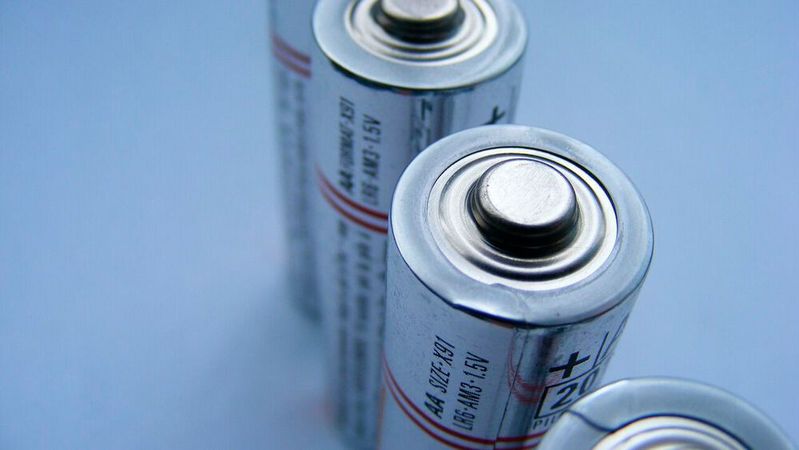
:quality(80)/p7i.vogel.de/wcms/11/d3/11d3a70fe0fb940efc3e2816441ea9e1/0125219861v2.jpeg "pH level is one of the most critical parameters influencing a battery’s performance (symbolic image). (Source: © salita2010 - stock.adobe.com)")
:quality(80)/p7i.vogel.de/wcms/e8/fd/e8fd1e12b5af4422ce01888f80cddafe/0127813191v1.jpeg "Microscope images and schematic illustrations of a lithium-aluminum alloy electrode with enhanced lithium diffusion pathways. (Source: Yuju Jeon)")