The new R21/Matrix-MTM malaria vaccine developed by the University of Oxford and the Serum Institute of India has received prequalification status by the World Health Organization. With this approval, the vaccine can now be accessed by affected patients.
The R21/Matrix-MTM malaria vaccine developed by the University of Oxford and the Serum Institute of India has been awarded prequalification status by the World Health Organization.
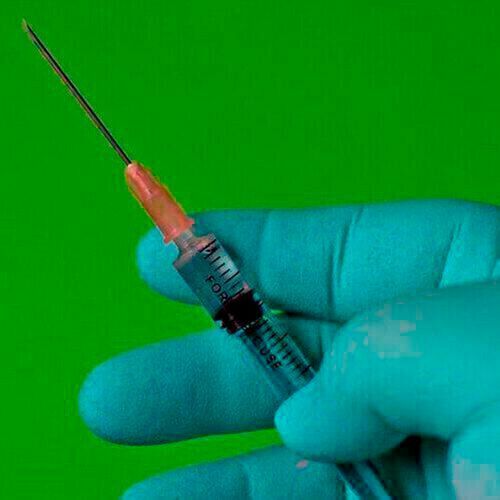
(Source: Pixabay)
UK/Oxford – The R21/Matrix-MTM malaria vaccine developed by the University of Oxford and the Serum Institute of India, leveraging Novavax’s adjuvant technology, has been awarded prequalification status by the World Health Organization (WHO). This milestone represents a key step in making the vaccine accessible to those who need it the most. It follows the conclusion of a rigorous regulatory process and clinical assessment, supporting the vaccine’s efficacy and safety.
The prequalification moment comes shortly after the vaccine has been recommended for use by the WHO’s independent advisory body, the Strategic Advisory Group of Experts (Sage) and the Malaria Policy Advisory Group (MPAG) in October 2023 for preventing malaria in children. The decision was based on pre-clinical and clinical trial data which showed good safety and high efficacy in four countries, at sites with both seasonal and perennial malaria transmission.
Professor Sir Adrian Hill, Director of The Jenner Institute, & Lakshmi Mittal and family Professor of Vaccinology, University of Oxford said: “Over 600,000 deaths mainly amongst children are caused by malaria each year. The disease presents a uniquely difficult scientific challenge: the complex composition of malaria parasites with shape-shifting pathogen that has learned how to evade our immune system, has made the development of an effective vaccine a formidable task. R21/Matrix-M represents the culmination of 30 years of collaborative research and development by the University of Oxford Jenner Institute and, since 2017 in partnership with the Serum Institute of India.”
The R21/Matrix-M vaccine is licensed to the Serum Institute of India, the world’s largest vaccine manufacturer as well as a long-term partner of Oxford University. SII’s production capability is critical because vaccinating those at high risk of malaria will be important in stemming the spread of disease, as well as protecting the vaccinated.
Adar Poonawalla, CEO of the Serum Institute of India, said: “Today's approval marks a triumph for science, collaboration, and our shared vision for a malaria-free world. This achievement inspires us to dream bigger, work harder, and strive towards a future where we can offer better solutions for the millions burdened by this disease. Together with Oxford, we envision a world where every individual, regardless of their circumstances, has access to the protection they deserve.
“This milestone is not just a validation of our efforts but a promise to those who have long awaited this news. The Serum Institute of India remains unwavering in its commitment to making this vaccine a global success, ensuring it reaches every corner where it may be needed. This is why we stand ready to produce up 100 million doses for the first year, which will be scaled up to 200 million doses (per annum) over the next two years.”
In clinical trials, the vaccine has reached the primary one-year endpoint in a pivotal large-scale Phase III clinical trial – funded mainly by the Serum Institute of India, with Oxford University as the regulatory sponsor – including 4,800 children across Burkina Faso, Kenya, Mali and Tanzania. The Phase III trial results are now accepted for publication. Results showed the vaccine was well tolerated with a good safety profile. The efficacy of the vaccine over 12 months in 5–36-month-old children was 75 % (95% CI 71-79; p<0.001) at sites with high seasonal malaria transmission and 68 % (61-74; p<0.001) at the sites with more perennial transmission using standard age-based administration, with higher efficacy in 5–17-month-olds.
John C. Jacobs, President, and Chief Executive Officer, Novavax said: “WHO prequalification for R21/Matrix-M demonstrates how strategic partnerships can come together to successfully protect global public health. Novavax celebrates this moment and is proud of the impact our Matrix-M adjuvant may have with this pediatric malaria vaccine in regions that need it most.”
Date: 08.12.2025
Naturally, we always handle your personal data responsibly. Any personal data we receive from you is processed in accordance with applicable data protection legislation. For detailed information please see our privacy policy.
Consent to the use of data for promotional purposes
I hereby consent to Vogel Communications Group GmbH & Co. KG, Max-Planck-Str. 7-9, 97082 Würzburg including any affiliated companies according to §§ 15 et seq. AktG (hereafter: Vogel Communications Group) using my e-mail address to send editorial newsletters. A list of all affiliated companies can be found here
Newsletter content may include all products and services of any companies mentioned above, including for example specialist journals and books, events and fairs as well as event-related products and services, print and digital media offers and services such as additional (editorial) newsletters, raffles, lead campaigns, market research both online and offline, specialist webportals and e-learning offers. In case my personal telephone number has also been collected, it may be used for offers of aforementioned products, for services of the companies mentioned above, and market research purposes.
Additionally, my consent also includes the processing of my email address and telephone number for data matching for marketing purposes with select advertising partners such as LinkedIn, Google, and Meta. For this, Vogel Communications Group may transmit said data in hashed form to the advertising partners who then use said data to determine whether I am also a member of the mentioned advertising partner portals. Vogel Communications Group uses this feature for the purposes of re-targeting (up-selling, cross-selling, and customer loyalty), generating so-called look-alike audiences for acquisition of new customers, and as basis for exclusion for on-going advertising campaigns. Further information can be found in section “data matching for marketing purposes”.
In case I access protected data on Internet portals of Vogel Communications Group including any affiliated companies according to §§ 15 et seq. AktG, I need to provide further data in order to register for the access to such content. In return for this free access to editorial content, my data may be used in accordance with this consent for the purposes stated here. This does not apply to data matching for marketing purposes.
Right of revocation
I understand that I can revoke my consent at will. My revocation does not change the lawfulness of data processing that was conducted based on my consent leading up to my revocation. One option to declare my revocation is to use the contact form found at https://contact.vogel.de. In case I no longer wish to receive certain newsletters, I have subscribed to, I can also click on the unsubscribe link included at the end of a newsletter. Further information regarding my right of revocation and the implementation of it as well as the consequences of my revocation can be found in the data protection declaration, section editorial newsletter.
The vaccine was developed by the Jenner Institute at Oxford University and Serum Institute of India with support from the European and Developing Countries Clinical Trials Partnership (‘EDCTP’), the Wellcome Trust, and the European Investment Bank (‘EIB’). To date, the R21/Matrix-MTM malaria vaccine has been licensed for use in Ghana, Nigeria and Burkina Faso.
In combination with public health measures such as the use of insecticide-treated bed nets, this vaccine can help save and improve the lives of millions of children and their families and the extraordinary journey behind it has recently been documented by Wingspan Productions in association with HHMI Tangled Bank Studios. Expected to be broadcasted on the BBC in 2024, “The Battle to Beat Malaria” tells the inside story of this historic breakthrough, detailing the culmination of a decade’s worth of scientific research as well as providing an intimate look at the scientists, medics, pharmaceutical engineers, and trial participants battling this deadly disease.




:quality(80)/p7i.vogel.de/wcms/66/7c/667c242f45cc06eb5bee090c7723ba0b/0130384415v2.jpeg "Inspired by arm-wrestling, the NUS team built a self-training platform (left) where two rings of muscle tissues continuously and autonomously pull against each other. Ostrabot (right), made from a single trained ring of muscle and two flexible tails, swims 3 times faster than counterparts with conventionally cultured muscle. (Source: National University of Singapore)")
:quality(80)/p7i.vogel.de/wcms/92/ad/92adbafb37924cea35ea3cf05b7a23e5/0130206318v2.jpeg "The world’s first fully functioning proof-of-concept quantum battery
(Source: Csiro)")
:quality(80)/p7i.vogel.de/wcms/9f/8b/9f8bc2b8491d7a514ca154e9588a07b7/0130205846v1.jpeg "The researchers’ new material, based on mineralised sawdust, is an excellent fire retardant. (Source: Dan Vivas Glaser / from Kürsteiner R et al. Chem Circularity 2026)")
:quality(80)/p7i.vogel.de/wcms/fd/73/fd73fcb3ceda89d1419de1083fcab7b4/0130081520v2.jpeg "The fingers at the heart of this technology were inspired by the fin-ray effect — a design principle derived from the natural structure of fish fins. (Source: University of Texas at Austin )")
:quality(80)/p7i.vogel.de/wcms/8f/b9/8fb98a958e4afe679865fbe52a473680/0129940982v2.jpeg "pH measurement in various nanoparticles using the Nine-Focus meter ensures precise stability and performance control. (Source: Mettler Toledo)")
:quality(80)/p7i.vogel.de/wcms/11/74/1174e5d4c8b07a64637dced8c9506b40/0129787561v2.jpeg "The Multicell Plus high-pressure reactor sets a new benchmark for operator safety, all-round accessibility and ease-of-use. (Source: Asynt)")
:quality(80)/p7i.vogel.de/wcms/ef/6e/ef6e96191183411973b77041fb6b1e16/0129785957v2.jpeg "Manufactured from high-quality crystal polystyrene - these new automation-ready plates are available in a choice of ANSI / SLAS standard (96-well and breakable 8-well strip) formats. (Source: Porvair Sciences)")
:quality(80)/p7i.vogel.de/wcms/ad/ca/adcaa20ef5ccaf7e3b325788b1e349c4/0129784872v2.jpeg "The high performance Degasi Flat Film in-line degasser. (Source: Biotech Fluidics)")
:quality(80)/p7i.vogel.de/wcms/21/9b/219b000051ab1ea14ab5f92e4fd0f9bb/0130384937v2.jpeg "Deforestation in the Appalachian mountains. (Source: Alex Diaz on Unsplash)")
:quality(80)/p7i.vogel.de/wcms/e9/9c/e99cb19231197af70c489cb4acc2ead0/0130293444v2.jpeg "A new global study, led by researchers at Kaust in Saudi Arabia, shows that forests are most effective for climate regulation when conserved or restored in their natural or native locations. (Source: Kaust )")
:quality(80)/p7i.vogel.de/wcms/af/40/af40b535eb65c287fbd22ed5483d1d0e/0130206243v2.jpeg "The researchers dug soil pits in order to measure the carbon storage in soil
(Source: Johanna Asch)")
:quality(80)/p7i.vogel.de/wcms/2d/45/2d45aba62f5042baa00f7fd4fa629839/0130036533v2.jpeg "The population of Pune, India, is expected to reach 11 million by 2050. (Source: free licensed)")
:quality(80)/p7i.vogel.de/wcms/6f/ba/6fba92196d0cbb1467334f8a2ecc520a/0130203021v2.jpeg "Low to moderate wine consumption shows lower risk compared with spirits, beer and cider (Source: free licensed)")
:quality(80)/p7i.vogel.de/wcms/a9/37/a9376f1d9a893570023d9aa97c085bc5/0129927485v2.jpeg "Examples of foods high in PUFAs include fatty fish and soybeans, while MUFAs include olive oil and avocadoes. (Source: free licensed)")
:quality(80)/p7i.vogel.de/wcms/ea/88/ea88ef8810e21cdd9bb852c70f385ba1/0129797385v2.jpeg "A team of NUS food scientists consisting of Assoc Prof Liu Shao Quan (centre), Dr Lu Yuyun (right) and Ms Geng Chenhan (left) pioneered a co-fermentation method that improves both the nutrient and flavor profile of kombu. (Source: NUS)")
:quality(80)/p7i.vogel.de/wcms/84/2c/842c7c1678ceeec7147ea3a36e238e75/0129356324v2.jpeg "Kaust and Nadec have signed a MOU that establishes a framework for long-term cooperation across agricultural research, technology development, and professional training. (Source: Kaust )")
:quality(80)/p7i.vogel.de/wcms/30/2e/302e195d532fc9aced73406b07642b57/0130384900v2.jpeg "Sleeping for 11 minutes more, doing an additional 4.5 minutes of moderate-to-vigorous physical activity, and eating additional quarter of a cup of vegetables were associated with a 10 % reduction in major cardiovascular events. (Source: Pixabay)")
:quality(80)/p7i.vogel.de/wcms/47/41/4741ee3c589369a09ab0e3a26b7143f0/0130384858v2.jpeg "A female, Aedes aegypti mosquito, after taking her blood meal. (Source: Lauren Bishop CDC)")
:quality(80)/p7i.vogel.de/wcms/66/a6/66a64c9dd7dbe84d2d7ea95a5e691bb1/0130361609v2.jpeg "Dr. Priya Freaney speaking to a patient at Bluhm Cardiovascular Institute at Northwestern Memorial Hospital in Chicago. (Source: Northwestern Medicine)")
:quality(80)/p7i.vogel.de/wcms/6e/d4/6ed479ad990b9ddc0f2eeadccccf62c7/0130359257v2.jpeg "Routine early measurement of neurofilament light chain could help improve prediction of cognitive impairment after out-of-hospital cardiac arrest, according to a study presented recently at ESC Acute Cardiovascular Care 2026. (Source: Pixabay)")
:quality(80)/images.vogel.de/vogelonline/bdb/1710600/1710675/original.jpg "Discover how to set yourself up for success when performing balance-based density determination of solids such as jewelry and precious metals. (Mettler Toledo)")
:quality(80)/images.vogel.de/vogelonline/bdb/1682500/1682579/original.jpg "The new XPR Analytical balance redesigned to meet the needs of laboratory technicians of working fast and lean. (Mettler Toledo)")
:quality(80)/images.vogel.de/vogelonline/bdb/1677000/1677080/original.jpg "Enhance your weighing accuracy, comfort and productivity with the redesigned XPR Analytical balance. (Mettler Toledo)")
:quality(80)/p7i.vogel.de/wcms/71/f1/71f16fbc2727b38b9eb0a3ced2cdbc7b/0126379723v2.jpeg "In 2015–2016, Zika virus emerged in the Americas and rapidly spread throughout the region and beyond, resulting in a devastating epidemic of infants born with small heads and other severe congenital malformations. (Source: Rawpixel/iStock)")
:quality(80)/p7i.vogel.de/wcms/e2/79/e27913edf41fddf3d1a4dc404d588621/0126377184v2.jpeg "The Vaccine Integrity Project is supported by an unrestricted gift from Alumbra, a foundation established by philanthropist Christy Walton. (Source: bymuratdeniz/Getty Images)")