Source:
Singapore University of Technology and Design
4 min Reading Time
As microplastics increasingly permeate our natural environment, understanding their complex relationship with harmful chemicals becomes crucial. Through state-of-the-art techniques, a team of scientists achieves groundbreaking insights, aiming to reshape our approach to pollution control and environmental preservation.
Microplastics make their way into the ocean and circulate back into our water supply.
Plastics dominates our household accessories due to their low cost and versatility. Unfortunately, the lack of proper disposal measures in many areas of the world has led to widespread proliferation of these non-biodegradables into the natural environment. Although plastics do not generally break down via biological processes, they age and disintegrate via chemical reactions. The resulting waste, dubbed microplastics for their size, make their way into the ocean and circulate back into our water supply. The long-term persistence of microplastics is harmful because they can adsorb — or bind — onto other waste products. In particular, chemical waste consumables can interact with microplastics in unforeseen and potentially harmful ways. Dubbed pharmaceuticals and personal care products (PPCPs), these emerging chemical contaminants are dangerous in their ability to present physiological effects in humans at low doses.
Professor Yang Hui Ying from the Engineering Product Development pillar at the Singapore University of Technology and Design (SUTD) has observed that the current literature on long-term ageing treatments of microplastics is inadequate. Most research only looks at short-term ageing, which may not fully reflect the environmental behaviour of microplastics.
She shared the difficulties involved in modelling the environmental dynamics: “Due to the various ageing processes experienced by microplastics and the complexity of adsorption processes and mechanisms of different PPCPs on microplastics, distinguishing these adsorption differences solely through experimental methods can be challenging.”
Together with collaborators from China, Prof Yang looked to utilising modern machine learning techniques to overcome this hurdle. They published their paper ‘Predicting adsorption capacity of pharmaceuticals and personal care products on long-term aged microplastics using machine learning’ in the Journal of Hazardous Materials.
Previous studies have developed techniques for predicting adsorption capacity between PPCPs and microplastics to varying levels of success, using quantum chemical descriptors. However, these studies are often impractical to carry out due to their limited accuracy and time-consuming nature. In particular, they neglect the surface effects of microplastics, which are important when modelling adsorption behaviours.
To address this limitation, Prof Yang used Fourier-transform infrared (FT-IR) spectroscopy. This technique allowed her to probe the surface of microplastics carefully, identifying different functional groups and how they influence interactions with surrounding chemicals. Linking the adsorption behaviour to the FT-IR of microplastics is important, but previous established models for studying interactions between microplastics and PPCPs had not incorporated this information. As such, Prof Yang decided to turn to machine learning.
“Machine learning can derive general conclusions, identify key roles, and discover potential patterns from complex data without relying on prior knowledge. This implies that we can gain a deeper understanding of the intricate interactions between microplastics and PPCPs, offering new insights and solutions to safeguard ecosystems,” said Prof Yang, highlighting the power of using the right tools.
The next step was to pick a suitable machine learning model to capture the multidimensional dynamics of the adsorption process. A strong algorithm for classification problems, the gradient-boosting decision tree (GBDT) is a popular choice for prediction tasks. However, applying it onto the intricate and subtle task of distinguishing various complex adsorption behaviours proved challenging. Prof Yang and team then considered the maximal information coefficient (MIC) to observe dependencies between variables, accounting for the affinity between the functional groups on microplastics and the contaminant PPCPs. Integrating the two approaches with FT-IR data became the ideal approach in predicting aged microplastics behaviour.
To collect data for their machine learning model, the researchers marinated microplastic particles in a blend of chemicals to simulate the ageing process. The concoction was periodically sampled during ageing to observe longitudinal effects. In the study, the team took samples up to nearly two years from their initial proposal to ensure that proper adsorption behaviours were observed.
Date: 08.12.2025
Naturally, we always handle your personal data responsibly. Any personal data we receive from you is processed in accordance with applicable data protection legislation. For detailed information please see our privacy policy.
Consent to the use of data for promotional purposes
I hereby consent to Vogel Communications Group GmbH & Co. KG, Max-Planck-Str. 7-9, 97082 Würzburg including any affiliated companies according to §§ 15 et seq. AktG (hereafter: Vogel Communications Group) using my e-mail address to send editorial newsletters. A list of all affiliated companies can be found here
Newsletter content may include all products and services of any companies mentioned above, including for example specialist journals and books, events and fairs as well as event-related products and services, print and digital media offers and services such as additional (editorial) newsletters, raffles, lead campaigns, market research both online and offline, specialist webportals and e-learning offers. In case my personal telephone number has also been collected, it may be used for offers of aforementioned products, for services of the companies mentioned above, and market research purposes.
Additionally, my consent also includes the processing of my email address and telephone number for data matching for marketing purposes with select advertising partners such as LinkedIn, Google, and Meta. For this, Vogel Communications Group may transmit said data in hashed form to the advertising partners who then use said data to determine whether I am also a member of the mentioned advertising partner portals. Vogel Communications Group uses this feature for the purposes of re-targeting (up-selling, cross-selling, and customer loyalty), generating so-called look-alike audiences for acquisition of new customers, and as basis for exclusion for on-going advertising campaigns. Further information can be found in section “data matching for marketing purposes”.
In case I access protected data on Internet portals of Vogel Communications Group including any affiliated companies according to §§ 15 et seq. AktG, I need to provide further data in order to register for the access to such content. In return for this free access to editorial content, my data may be used in accordance with this consent for the purposes stated here. This does not apply to data matching for marketing purposes.
Right of revocation
I understand that I can revoke my consent at will. My revocation does not change the lawfulness of data processing that was conducted based on my consent leading up to my revocation. One option to declare my revocation is to use the contact form found at https://contact.vogel.de. In case I no longer wish to receive certain newsletters, I have subscribed to, I can also click on the unsubscribe link included at the end of a newsletter. Further information regarding my right of revocation and the implementation of it as well as the consequences of my revocation can be found in the data protection declaration, section editorial newsletter.
The team was able to attribute various dynamics between the microplastics and PPCPs to various well-studied mechanisms from correlations to quantum chemistry models. The FT-IR data allowed the team to observe the most prominent functional groups involved in the adsorption. With these insights in hand, their machine learning model captured the complexity of the system with up to 98 % accuracy during training and 70 % on test data. “What amplifies its significance is our ability to forecast the adsorption quantities of various PPCPs on aged microplastics in real-world aquatic environments,” Prof Yang described.
This study shines an illuminating torch on the scene of microplastics, serving as a crucial reference for future assessments. Prof Yang is also hopeful in its potential to assist relevant authorities in identifying key pollutants for targeted pollution control strategies.
Looking ahead, the researchers plan to explore the next stage in the microplastic adsorption life cycle. A comprehensive evaluation in the release of organic substances from microplastics are in the works, to assess the long-term impact of the persistent plastic particulates. Prof Yang aspires to cast light on the complex dynamics between microplastics and pollutants, quantify their impact, and make substantial contributions to environmental awareness and policy formulation.
Reference: Predicting adsorption capacity of pharmaceuticals and personal care products on long-term aged microplastics using machine learning; Journal of Hazardous Materials; DOI:10.1016/j.jhazmat.2023.131963




:quality(80)/p7i.vogel.de/wcms/45/87/458714daead8bb6b83d5305ff764e8c1/0130386255v1.jpeg "Examples of drawings from each category, with the scores they received from humans, independent AI and the human-guided AI. (Source: Advanced Science)")
:quality(80)/p7i.vogel.de/wcms/66/7c/667c242f45cc06eb5bee090c7723ba0b/0130384415v2.jpeg "Inspired by arm-wrestling, the NUS team built a self-training platform (left) where two rings of muscle tissues continuously and autonomously pull against each other. Ostrabot (right), made from a single trained ring of muscle and two flexible tails, swims 3 times faster than counterparts with conventionally cultured muscle. (Source: National University of Singapore)")
:quality(80)/p7i.vogel.de/wcms/92/ad/92adbafb37924cea35ea3cf05b7a23e5/0130206318v2.jpeg "The world’s first fully functioning proof-of-concept quantum battery
(Source: Csiro)")
:quality(80)/p7i.vogel.de/wcms/9f/8b/9f8bc2b8491d7a514ca154e9588a07b7/0130205846v1.jpeg "The researchers’ new material, based on mineralised sawdust, is an excellent fire retardant. (Source: Dan Vivas Glaser / from Kürsteiner R et al. Chem Circularity 2026)")
:quality(80)/p7i.vogel.de/wcms/8f/b9/8fb98a958e4afe679865fbe52a473680/0129940982v2.jpeg "pH measurement in various nanoparticles using the Nine-Focus meter ensures precise stability and performance control. (Source: Mettler Toledo)")
:quality(80)/p7i.vogel.de/wcms/11/74/1174e5d4c8b07a64637dced8c9506b40/0129787561v2.jpeg "The Multicell Plus high-pressure reactor sets a new benchmark for operator safety, all-round accessibility and ease-of-use. (Source: Asynt)")
:quality(80)/p7i.vogel.de/wcms/ef/6e/ef6e96191183411973b77041fb6b1e16/0129785957v2.jpeg "Manufactured from high-quality crystal polystyrene - these new automation-ready plates are available in a choice of ANSI / SLAS standard (96-well and breakable 8-well strip) formats. (Source: Porvair Sciences)")
:quality(80)/p7i.vogel.de/wcms/ad/ca/adcaa20ef5ccaf7e3b325788b1e349c4/0129784872v2.jpeg "The high performance Degasi Flat Film in-line degasser. (Source: Biotech Fluidics)")
:quality(80)/p7i.vogel.de/wcms/5d/bb/5dbb962b09bae1c078a8ff996666bc8e/0130386229v2.jpeg "This image created using Gemini Pro, depicts an activated carbon fiber functionalized with amine groups (–NH2) at adjacent positions. This arrangement improves the energy efficacy of key interactions, enabling the desorption of captured carbon dioxide at lower temperatures. (Source: Gemini / Yasuhiro Yamada/ Chiba University / KI-generiert)")
:quality(80)/p7i.vogel.de/wcms/21/9b/219b000051ab1ea14ab5f92e4fd0f9bb/0130384937v2.jpeg "Deforestation in the Appalachian mountains. (Source: Alex Diaz on Unsplash)")
:quality(80)/p7i.vogel.de/wcms/e9/9c/e99cb19231197af70c489cb4acc2ead0/0130293444v2.jpeg "A new global study, led by researchers at Kaust in Saudi Arabia, shows that forests are most effective for climate regulation when conserved or restored in their natural or native locations. (Source: Kaust )")
:quality(80)/p7i.vogel.de/wcms/af/40/af40b535eb65c287fbd22ed5483d1d0e/0130206243v2.jpeg "The researchers dug soil pits in order to measure the carbon storage in soil
(Source: Johanna Asch)")
:quality(80)/p7i.vogel.de/wcms/2a/07/2a0737995810d504b318f8a0f9ac2c3d/0130386209v1.jpeg "Simple, repeatable eating habits may help people stick to diets, see better results, study says (Source: free licensed)")
:quality(80)/p7i.vogel.de/wcms/6f/ba/6fba92196d0cbb1467334f8a2ecc520a/0130203021v2.jpeg "Low to moderate wine consumption shows lower risk compared with spirits, beer and cider (Source: free licensed)")
:quality(80)/p7i.vogel.de/wcms/a9/37/a9376f1d9a893570023d9aa97c085bc5/0129927485v2.jpeg "Examples of foods high in PUFAs include fatty fish and soybeans, while MUFAs include olive oil and avocadoes. (Source: free licensed)")
:quality(80)/p7i.vogel.de/wcms/ea/88/ea88ef8810e21cdd9bb852c70f385ba1/0129797385v2.jpeg "A team of NUS food scientists consisting of Assoc Prof Liu Shao Quan (centre), Dr Lu Yuyun (right) and Ms Geng Chenhan (left) pioneered a co-fermentation method that improves both the nutrient and flavor profile of kombu. (Source: NUS)")
:quality(80)/p7i.vogel.de/wcms/40/c0/40c0c09c2bad7b925a069edbbac90621/0130385557v1.jpeg "When a stroke damages brain tissue (red) along an important movement pathway (yellow), the injured side of the brain may show faster aging (red), while parts of the opposite side may appear relatively “younger” (blue) as the brain tries to compensate. This pattern is linked to more severe movement problems and less recovery.
(Bild: Stevens INI)")
:quality(80)/p7i.vogel.de/wcms/32/14/3214c28a03f71ad067c5f27e5bd6772b/0130386218v1.jpeg "Antimicrobial-resistant Salmonella poses severe challenges to global food safety and public health. (Source: free licensed)")
:quality(80)/p7i.vogel.de/wcms/30/2e/302e195d532fc9aced73406b07642b57/0130384900v2.jpeg "Sleeping for 11 minutes more, doing an additional 4.5 minutes of moderate-to-vigorous physical activity, and eating additional quarter of a cup of vegetables were associated with a 10 % reduction in major cardiovascular events. (Source: Pixabay)")
:quality(80)/p7i.vogel.de/wcms/47/41/4741ee3c589369a09ab0e3a26b7143f0/0130384858v2.jpeg "A female, Aedes aegypti mosquito, after taking her blood meal. (Source: Lauren Bishop CDC)")
:quality(80)/images.vogel.de/vogelonline/bdb/1710600/1710675/original.jpg "Discover how to set yourself up for success when performing balance-based density determination of solids such as jewelry and precious metals. (Mettler Toledo)")
:quality(80)/images.vogel.de/vogelonline/bdb/1682500/1682579/original.jpg "The new XPR Analytical balance redesigned to meet the needs of laboratory technicians of working fast and lean. (Mettler Toledo)")
:quality(80)/images.vogel.de/vogelonline/bdb/1677000/1677080/original.jpg "Enhance your weighing accuracy, comfort and productivity with the redesigned XPR Analytical balance. (Mettler Toledo)")
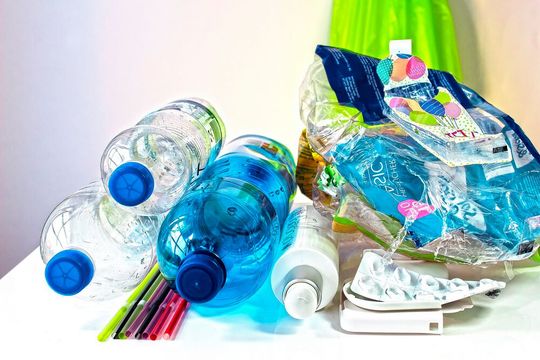
:quality(80)/p7i.vogel.de/wcms/48/2c/482ce755f18cd06fb10af9118ba6f23c/0113353901.jpeg "After surgery their average size of the plastic particles found in heart tissue decreased, and the particles came from more diverse types of plastics. (Source: free licensed)")
:quality(80)/p7i.vogel.de/wcms/f4/d1/f4d1f112a95d697f1a6060bdcdd1348b/0113093781.jpeg "Recent papers published in ACS journals report new insights into the origins of some microscopic plastic pieces. (Source: gradt - stock.adobe.com)")
:quality(80)/p7i.vogel.de/wcms/cf/f7/cff7b26a6dd79473dddf47809da425c9/0128811465v1.jpeg "Heavy metals, microplastics, and antibiotic resistance genes increasingly co-occur in greenhouse soils, creating a combined contamination risk that challenges sustainable food production in high-intensity facility agriculture. (Source: free licensed)")
:quality(80)/p7i.vogel.de/wcms/af/da/afda2d56648c492c16c97f9f069951f2/0124176341v2.jpeg "Dr Marcus Michelangeli conducting the field study in Sweden’s River Dal. (Source: Michael Bertram)")