Researchers have developed a porous material that has the capacity to maximize blood absorption and at the same time also activates clotting mechanisms. This material proves beneficial for patients on anticoagulation or antiplatelet medication.
The researchers are continuing to study the wound-healing process after application of the chitosan hemostat.
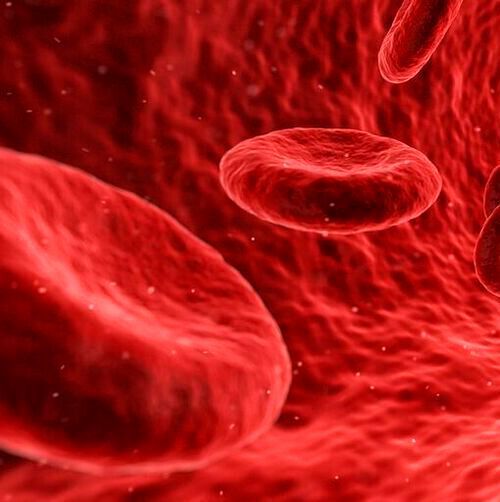
(Source: Pixabay)
Boston/USA – More than 11 million people in the United States take anticoagulation or antiplatelet medications, such as heparin or aspirin, to treat serious conditions like heart attack and stroke. However, these medications also put patients at risk of life-threatening bleeding in the case of injury or during surgery. To improve strategies for reducing blood loss, a team led by investigators from Brigham and Women’s Hospital, a founding member of the Mass General Brigham healthcare system, developed a porous material that maximizes blood absorption and effectively activates clotting mechanisms, even in patients on anticoagulation or antiplatelet medication. Findings, published in PNAS, show that the bleed-stopping material, or “hemostat,” halted bleeding within an average of about five minutes in patients on anticoagulants who underwent cardiac catheterization, a dramatic reduction from traditional compression methods that can take over two hours.
“This is a next-generation hemostat that effectively stops bleeding, even in patients who take anticoagulation or antiplatelet medications,” said corresponding author Hae Lin Jang, PhD, of the Center for Engineered Therapeutics. “We used an exciting, interdisciplinary approach that combines engineering principles, materials science, and understandings of molecular biology to overcome the limitations of existing therapies and address a real clinical need.”
Over 5 million people globally die each year due to trauma, with over a third of these deaths attributed to uncontrolled bleeding. The researchers used what is known as a “rational engineering” approach to develop a more effective hemostat. They began by simulating blood flow through pores to determine what microscopic design would optimize absorption. They drew inspiration from the architecture of the human lungs, which contain spherical “air sacs” called alveoli that enable a high interaction rate with blood within a short time. Alveoli have a large surface area based on their tortuous porous structure, which led the researchers to engineer a highly interconnected, spherical microporous structure in their material to rapidly absorb blood and accumulate clotting components like platelets in a highly concentrated manner, which facilitate blood clotting.
The researchers developed the alveoli-like structure using chitosan, which can be extracted from shellfish. Chitosan is already used in some hemostats: its positively charged surface is known to strongly attract negatively charged platelets and fibrinogen, the two major components of a blood clot. However, contrary to previous assumptions, the researchers discovered that chitosan also directly stimulates blood clotting by activating the TLR-2 clotting pathway, making it a viable mechanism for increasing blood clotting even in patients on anticoagulants.
The researchers demonstrated the efficacy of the material in 70 patients who underwent cardiovascular catheterization procedures while on the anticoagulant heparin, with bleeding observed to stop after a mean time of about five minutes for patients on low-dose heparin and in under about nine minutes in patients on heparin doses of up to 12,500 IU.
Other advantages of the hemostatic material included its easy application and removal. The chitosan pad eliminated the need for strong and prolonged compression, which can take several hours and requires extensive nursing. Furthermore, gauze removal can cause severe pain to patients and is frequently associated with a reoccurrence of bleeding; in contrast, the more absorptive chitosan hemostat was removed relatively cleanly from wounds and received high patient comfort scores.
The researchers are continuing to study the wound-healing process after application of the chitosan hemostat. Moreover, they are investigating other next-generation wound dressings, which may be able to deliver drugs or improve the cleanliness of the wound environment, thus reducing the need for frequent changes.
“This hemostat can save valuable time in emergency situations,” said first author Vivian K. Lee, PhD, of the Center for Engineered Therapeutics. “In emergencies, it can be extremely challenging to screen the prescription information of a patient to provide appropriate anticoagulation reversal therapy to patients on anticoagulants. If a hemostat can bypass a medication’s anticoagulating mechanisms, it can be used in a wide range of patients, saving time, and potentially saving lives.”
Date: 08.12.2025
Naturally, we always handle your personal data responsibly. Any personal data we receive from you is processed in accordance with applicable data protection legislation. For detailed information please see our privacy policy.
Consent to the use of data for promotional purposes
I hereby consent to Vogel Communications Group GmbH & Co. KG, Max-Planck-Str. 7-9, 97082 Würzburg including any affiliated companies according to §§ 15 et seq. AktG (hereafter: Vogel Communications Group) using my e-mail address to send editorial newsletters. A list of all affiliated companies can be found here
Newsletter content may include all products and services of any companies mentioned above, including for example specialist journals and books, events and fairs as well as event-related products and services, print and digital media offers and services such as additional (editorial) newsletters, raffles, lead campaigns, market research both online and offline, specialist webportals and e-learning offers. In case my personal telephone number has also been collected, it may be used for offers of aforementioned products, for services of the companies mentioned above, and market research purposes.
Additionally, my consent also includes the processing of my email address and telephone number for data matching for marketing purposes with select advertising partners such as LinkedIn, Google, and Meta. For this, Vogel Communications Group may transmit said data in hashed form to the advertising partners who then use said data to determine whether I am also a member of the mentioned advertising partner portals. Vogel Communications Group uses this feature for the purposes of re-targeting (up-selling, cross-selling, and customer loyalty), generating so-called look-alike audiences for acquisition of new customers, and as basis for exclusion for on-going advertising campaigns. Further information can be found in section “data matching for marketing purposes”.
In case I access protected data on Internet portals of Vogel Communications Group including any affiliated companies according to §§ 15 et seq. AktG, I need to provide further data in order to register for the access to such content. In return for this free access to editorial content, my data may be used in accordance with this consent for the purposes stated here. This does not apply to data matching for marketing purposes.
Right of revocation
I understand that I can revoke my consent at will. My revocation does not change the lawfulness of data processing that was conducted based on my consent leading up to my revocation. One option to declare my revocation is to use the contact form found at https://contact.vogel.de. In case I no longer wish to receive certain newsletters, I have subscribed to, I can also click on the unsubscribe link included at the end of a newsletter. Further information regarding my right of revocation and the implementation of it as well as the consequences of my revocation can be found in the data protection declaration, section editorial newsletter.
Authorship: Co-authors of the study include Taewoo Lee (BWH), Amrit Ghosh (BWH), Tanmoy Saha (BWH), Manish V. Bais (BWH), Kala Kumar Bharani, Milan Chag, Keyur Parikh, Parloop Bhatt, Bumseok Namgung (BWH), Geethapriya Venkataramanan (BWH), Animesh Agrawal, Kiran Sonaje, Leo Mavely, Shiladitya Sengupta (BWH), and Raghunath Anant Mashelkar.
Disclosures: Namgung is involved in consulting for Curer. Mavely is a founder and CEO and owns equity in Advamedica, and Axio Biosolutions. Agrawal and Sonaje own equity in Advamedica. Sengupta is a co-founder and owns equity in Akamara Therapeutics and Invictus Oncology and is a consultant and member of the scientific advisory board of Advamedica. Jang is a founder and has financial interest in Curer. Mavely owns equity in Axio. Mavely is listed as an inventor on patents describing the hemostat.
Funding: This work was funded by the National Institutes of Health, American Lung Association Discovery Grant, Department of Defense.
Paper cited: Lee, VK et al. “An architecturally rational hemostat for rapid stopping of massive bleeding on anticoagulation therapy” PNAS DOI: doi.org/10.1073/pnas.2316170121




:quality(80)/p7i.vogel.de/wcms/fd/73/fd73fcb3ceda89d1419de1083fcab7b4/0130081520v2.jpeg "The fingers at the heart of this technology were inspired by the fin-ray effect — a design principle derived from the natural structure of fish fins. (Source: University of Texas at Austin )")
:quality(80)/p7i.vogel.de/wcms/fe/64/fe649767c802d53ac63ee2c2a40b7e0d/0130060830v2.jpeg "Sample tube with light-active substance (Source: Elvira Eberhardt / Ulm University)")
:quality(80)/p7i.vogel.de/wcms/db/e2/dbe2ae4e02f702b30153a882ef705089/0129978032v1.jpeg "Each of the isolated indium atoms (in gold color) can catalyse the synthesis of methanol (top right). (Source: Constance Ko/ ETH Zurich)")
:quality(80)/p7i.vogel.de/wcms/c1/e6/c1e6ac26eb18993236c100e7f01a78f2/0129937639v1.jpeg "Dogs evolved from highly social ancestors and have been shaped by thousands of years of interacting with humans. (Source: free licensed)")
:quality(80)/p7i.vogel.de/wcms/8f/b9/8fb98a958e4afe679865fbe52a473680/0129940982v2.jpeg "pH measurement in various nanoparticles using the Nine-Focus meter ensures precise stability and performance control. (Source: Mettler Toledo)")
:quality(80)/p7i.vogel.de/wcms/11/74/1174e5d4c8b07a64637dced8c9506b40/0129787561v2.jpeg "The Multicell Plus high-pressure reactor sets a new benchmark for operator safety, all-round accessibility and ease-of-use. (Source: Asynt)")
:quality(80)/p7i.vogel.de/wcms/ef/6e/ef6e96191183411973b77041fb6b1e16/0129785957v2.jpeg "Manufactured from high-quality crystal polystyrene - these new automation-ready plates are available in a choice of ANSI / SLAS standard (96-well and breakable 8-well strip) formats. (Source: Porvair Sciences)")
:quality(80)/p7i.vogel.de/wcms/ad/ca/adcaa20ef5ccaf7e3b325788b1e349c4/0129784872v2.jpeg "The high performance Degasi Flat Film in-line degasser. (Source: Biotech Fluidics)")
:quality(80)/p7i.vogel.de/wcms/2d/45/2d45aba62f5042baa00f7fd4fa629839/0130036533v2.jpeg "The population of Pune, India, is expected to reach 11 million by 2050. (Source: free licensed)")
:quality(80)/p7i.vogel.de/wcms/52/f8/52f8d5521fdab07ed0a865ec0d8919fd/0130009438v2.jpeg "Drylands support around half of global livestock production and sustain the livelihoods of close to a billion people, while also underpinning soil stability and carbon storage. (Source: Kaust )")
:quality(80)/p7i.vogel.de/wcms/fe/49/fe494ada322615b6e6f6ff0f5bb7c5cf/0129926008v2.jpeg "A mandrill eating fruit. (Source: University of Bristol )")
:quality(80)/p7i.vogel.de/wcms/af/4e/af4ea968647ee9cae82b39800c611819/0129865630v2.jpeg "Map of a simulated risk of water stress in 2050 where hydrogen is used in transport and industry. Baseline risk (regardless of hydrogen use) is represented by the background color in each area. Dashed areas show water use exceeding available resources due to hydrogen production. Blue dots show areas where the risk of water stress increases by more than 50 percent in the simulation. (Source: Chalmers University of Technology / Joel Löfving)")
:quality(80)/p7i.vogel.de/wcms/6f/ba/6fba92196d0cbb1467334f8a2ecc520a/0130203021v2.jpeg "Low to moderate wine consumption shows lower risk compared with spirits, beer and cider (Source: free licensed)")
:quality(80)/p7i.vogel.de/wcms/a9/37/a9376f1d9a893570023d9aa97c085bc5/0129927485v2.jpeg "Examples of foods high in PUFAs include fatty fish and soybeans, while MUFAs include olive oil and avocadoes. (Source: free licensed)")
:quality(80)/p7i.vogel.de/wcms/ea/88/ea88ef8810e21cdd9bb852c70f385ba1/0129797385v2.jpeg "A team of NUS food scientists consisting of Assoc Prof Liu Shao Quan (centre), Dr Lu Yuyun (right) and Ms Geng Chenhan (left) pioneered a co-fermentation method that improves both the nutrient and flavor profile of kombu. (Source: NUS)")
:quality(80)/p7i.vogel.de/wcms/84/2c/842c7c1678ceeec7147ea3a36e238e75/0129356324v2.jpeg "Kaust and Nadec have signed a MOU that establishes a framework for long-term cooperation across agricultural research, technology development, and professional training. (Source: Kaust )")
:quality(80)/p7i.vogel.de/wcms/ed/c0/edc0c1a86229b11efd17c5e3f94d14da/0130081211v2.jpeg "A new study finds that virtual visits did not make it easier for psychiatrists, psychologists and therapists to reach significantly more people in areas where access to care has long been limited. (Source: Pixabay)")
:quality(80)/p7i.vogel.de/wcms/9c/52/9c52318bc94be17e6662dfceffa4a0c0/0130060546v2.jpeg "Domestic cat ‘Lanni’ from co-author of the study, Latasha Ludwig, Assistant Clinical Professor at Cornell University, USA. (Source: © Latasha Ludwig)")
:quality(80)/p7i.vogel.de/wcms/4b/f4/4bf4cc9e28e65e11a27dd41da2d1a7f5/0130038185v2.jpeg "The biomarker p-tau217 could help identify women at elevated dementia risk decades before clinical symptoms begin. (Source: free licensed)")
:quality(80)/p7i.vogel.de/wcms/4f/29/4f292f402b157e2ab8c57e9f2a3e3199/0130036120v2.jpeg "The chemistry is powered by an LED lamp that triggers a self-sustaining chain reaction, forging new carbon–carbon bonds under mild conditions without toxic or expensive chemicals. (Source: Nordin Ćatić/ St John’s College, Cambridge)")
:quality(80)/images.vogel.de/vogelonline/bdb/1710600/1710675/original.jpg "Discover how to set yourself up for success when performing balance-based density determination of solids such as jewelry and precious metals. (Mettler Toledo)")
:quality(80)/images.vogel.de/vogelonline/bdb/1682500/1682579/original.jpg "The new XPR Analytical balance redesigned to meet the needs of laboratory technicians of working fast and lean. (Mettler Toledo)")
:quality(80)/images.vogel.de/vogelonline/bdb/1677000/1677080/original.jpg "Enhance your weighing accuracy, comfort and productivity with the redesigned XPR Analytical balance. (Mettler Toledo)")
:fill(fff,0)/p7i.vogel.de/companies/5f/3f/5f3f63ceedc78/knf-logo.jpg "KNF_Logo.jpg (www.knf.com)")
:quality(80)/p7i.vogel.de/wcms/68/1a/681a2e5e01ff30296e9bc9d2ba3bd7be/0125490738v2.jpeg "Using a new type of microscope and AI, the study shows how platelet clumping can be tracked in patients with coronary artery disease, opening the door to safer, more personalized treatment. (Source: University of Tokyo)")
:quality(80)/p7i.vogel.de/wcms/7c/62/7c6248fd173656b269aa62c06d6a0c61/0123895457v2.jpeg "The microneedles were fabricated from poly lactic-co-glycolic acid (PLGA), an FDA-approved class of biodegradable polymers that are biocompatible and can be used in the sustained delivery of drugs and other molecules. The sponge-like PLGA microneedles, made using the moulds shown above, can help to alleviate inflammatory skin disorders. (Source: NUS)")