NeurologySleep Patterns may Reveal Comatose Patients with Hidden Consciousness
Source:
Columbia University Irving Medical Cente
4 min Reading Time
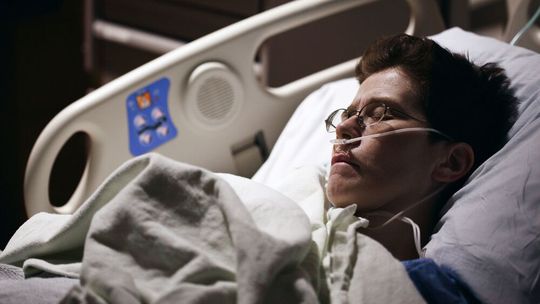
Several studies in the past decade have revealed that up to a quarter of unresponsive patients with recent brain injuries may possess a degree of consciousness that’s normally hidden from their families and physicians.
Patients with sleep spindles and cognitive motor dissociation were more likely to recover consciousness and functional independence.
New research from Columbia University and NewYork-Presbyterian may soon help physicians identify unresponsive brain-injury patients with hidden consciousness who are likely to achieve long-term recovery by looking for brain waves that are indicative of normal sleep patterns.
“We’re at an exciting crossroad in neurocritical care where we know that many patients appear to be unconscious, but some are recovering without our knowledge. We're starting to lift the lid a little bit and find some signs of recovery as it's happening,” says Jan Claassen, associate professor of neurology at Columbia University Vagelos College of Physicians and Surgeons, who led the study.
“Families of my patients ask me all the time, will my mother wake up? How is my mother going to look in three, six, or 12 months? Very often we cannot guide them very precisely, and it’s crucial that we improve our predictions to guide their decision making.”
Sleep and Consciousness
Claassen, who is also chief of critical care and hospitalist neurology at New York-Presbyterian/ Columbia University Irving Medical Center, has previously developed sophisticated techniques to identify patients with hidden consciousness by analyzing a patient’s EEG recordings as they are presented with a command in the neurocritical care unit. The techniques detect EEG brain wave activity indicating that the patient can hear and understand their physicians’ instructions (to open and close their hand, for example) even though the patients do not physically respond.
But the techniques can be difficult to implement and can yield false-negative results.
Claassen decided to focus on sleep, as brain circuits that are fundamental for consciousness, including cognitive motor dissociation, are also critical to control sleep.
“I’m always thinking about how my work can be best implemented and used in the real world, and looking at sleep made sense practically and scientifically,” Claassen says. “Sleep brain waves are easy to record and do not require intervention from the care team.”
Sleep Spindles Predict Recovery
In the new study, the researchers looked through EEG recordings of overnight brain activity in 226 comatose patients who also underwent the more complex testing for cognitive motor dissociation.
“The electrical activity during sleep looks relatively chaotic, and then occasionally in some patients, these very organized, fast frequencies appear,” Claassen says.
These bursts — called sleep spindles — often preceded the detection of cognitive motor dissociation with the more complex method, the return of consciousness, and long-term recovery.
“Spindles happen normally during sleep and they’re showing some level of organization in the brain, suggesting circuits between the thalamus and cortex needed for consciousness are intact.”
About one-third of patients had well-defined sleep spindles, including about half of patients with cognitive motor dissociation.
Patients with sleep spindles and cognitive motor dissociation were more likely to recover consciousness and functional independence. Among those with sleep spindles and cognitive motor dissociation, 76 % of patients showed evidence of consciousness by the time they were discharged from the hospital. A year later, 41 % of these patients had recovered neurological function, with either minor deficits or a moderate disability, and were able to care for themselves during the day. Only 29 % of patients with neither sleep spindles nor cognitive motor dissociation showed signs of consciousness by the time they were discharged and just 7 % regained neurological function a year later.
Even though these findings don’t prove that inducing sleep spindles would translate to better outcomes, they raise the possibility that improving a patient’s sleep — possibly by changing their environment — may promote their recovery. “If you think about the ICU environment, it is rather disruptive for a good night’s sleep. There is noise everywhere, alarms going off, clinicians touching them, 24/7. This is all for a good reason, but it’s hard to sleep in that environment,” Claassen says.
Date: 08.12.2025
Naturally, we always handle your personal data responsibly. Any personal data we receive from you is processed in accordance with applicable data protection legislation. For detailed information please see our privacy policy.
Consent to the use of data for promotional purposes
I hereby consent to Vogel Communications Group GmbH & Co. KG, Max-Planck-Str. 7-9, 97082 Würzburg including any affiliated companies according to §§ 15 et seq. AktG (hereafter: Vogel Communications Group) using my e-mail address to send editorial newsletters. A list of all affiliated companies can be found here
Newsletter content may include all products and services of any companies mentioned above, including for example specialist journals and books, events and fairs as well as event-related products and services, print and digital media offers and services such as additional (editorial) newsletters, raffles, lead campaigns, market research both online and offline, specialist webportals and e-learning offers. In case my personal telephone number has also been collected, it may be used for offers of aforementioned products, for services of the companies mentioned above, and market research purposes.
Additionally, my consent also includes the processing of my email address and telephone number for data matching for marketing purposes with select advertising partners such as LinkedIn, Google, and Meta. For this, Vogel Communications Group may transmit said data in hashed form to the advertising partners who then use said data to determine whether I am also a member of the mentioned advertising partner portals. Vogel Communications Group uses this feature for the purposes of re-targeting (up-selling, cross-selling, and customer loyalty), generating so-called look-alike audiences for acquisition of new customers, and as basis for exclusion for on-going advertising campaigns. Further information can be found in section “data matching for marketing purposes”.
In case I access protected data on Internet portals of Vogel Communications Group including any affiliated companies according to §§ 15 et seq. AktG, I need to provide further data in order to register for the access to such content. In return for this free access to editorial content, my data may be used in accordance with this consent for the purposes stated here. This does not apply to data matching for marketing purposes.
Right of revocation
I understand that I can revoke my consent at will. My revocation does not change the lawfulness of data processing that was conducted based on my consent leading up to my revocation. One option to declare my revocation is to use the contact form found at https://contact.vogel.de. In case I no longer wish to receive certain newsletters, I have subscribed to, I can also click on the unsubscribe link included at the end of a newsletter. Further information regarding my right of revocation and the implementation of it as well as the consequences of my revocation can be found in the data protection declaration, section editorial newsletter.
Moving Toward Clinical Practice
Claassen cautions that the findings only apply to patients with recent injuries, not those with long-term disorders of consciousness. For most patients in the current study, normal sleep spindles appeared within days of the initial injury.
And the predictors were not perfect: 19 of 139 patients who did not show sleep spindles or signs of cognitive motor dissociation did recover consciousness. Other data will likely be needed to make more accurate predictions.
“I see these spindles as a way to direct more sophisticated testing to the patients most likely to benefit,” Claassen says. “The techniques are not ready for use in clinical practice yet, but this is something that we’re actively working on right now.”
Original Article: Sleep spindles as a predictor of cognitive motor dissociation and recovery of consciousness after acute brain injury; Nature Medicine




:quality(80)/p7i.vogel.de/wcms/06/a1/06a11f1d752afb35854aa9e1afb62e98/0129209625v2.jpeg "“Unsinkable\" metal tube made from chemically-etched aluminum floats in distilled water at the lab of University of Rochester professor Chunlei Guo. (Source: J. Adam Fenster / University of Rochester)")
:quality(80)/p7i.vogel.de/wcms/6d/df/6ddf023361ec7f8fbfb6c56521577960/0129056554v2.jpeg "The evolution of carburization (depicted by the spheres) under kinetic control (illustrated by the surface contours). The molecular beams represent gas evolution under synthesis conditions while the fiery sphere highlights the formation of the pure tungsten semi-carbide phase with additional molecular beams at the top to illustrate its catalytic performance. (Source: Sinhara M. H. D. Perera)")
:quality(80)/p7i.vogel.de/wcms/26/3d/263d97f8f2797267ecf2781b56882758/0129056451v1.jpeg "A study by the Complexity Science Hub finds that AI systems are already involved in nearly one-third of newly written software code, with rapid adoption in the United States and Europe and measurable productivity gains mainly for experienced developers. (Source: free licensed)")
:quality(80)/p7i.vogel.de/wcms/63/0c/630cf9ab0cafdcdd9b33802d53c5b943/0128938770v1.jpeg "A microscopic close-up of the bubbles in foam, whose movements mathematically mirror the process of deep learning, used to train modern AI systems. (Source: Crocker Lab)")
:quality(80)/p7i.vogel.de/wcms/21/03/21030cc2541c455da0769decca8d1f82/0129146048v2.jpeg "Vyon porous plastics from Porvair Sciences are the perfect material for filtration applications in the healthcare and medical device market. (Source: Porvair Sciences)")
:quality(80)/p7i.vogel.de/wcms/bd/aa/bdaae5b9d381e2471ab37f479ad43d79/0129143884v2.jpeg "The Solvent Line Monitor from Testa Analytical is a true plug-and-play addition to any HPLC system designed to detect when one or more of its pump solvent reservoirs are empty and automatically shut-off the system. (Source: Testa Analytical)")
:quality(80)/p7i.vogel.de/wcms/8f/66/8f66b8acbb3037ca8e6b320bcad1c817/0129118043v2.jpeg "The Plasmaquant 9200 series is ideal for applications in research, trace analysis and quality control. (Source: Analytik Jena )")
:quality(80)/p7i.vogel.de/wcms/66/82/66825163ab842baded640db1a484e729/0129117548v2.jpeg "Biotech Fluidics has announced the Smartsaver solvent recycling unit which is designed to recover up to 90 % of your mobile phase by redirection of the pure solvent to the solvent reservoir during isocratic HPLC. (Source: Biotech Fluidics )")
:quality(80)/p7i.vogel.de/wcms/90/f8/90f8c3152a59205a7cac1cc182eb186b/0129209634v2.jpeg "Nitrate in drinking water linked to increased dementia risk while nitrate from vegetables is linked to a lower risk, researchers find . (Source: free licensed)")
:quality(80)/p7i.vogel.de/wcms/53/ac/53acd3796c0d43ad0f7cfd80dd7ab82e/0129209615v1.jpeg "Prenatal exposure to NO2, black carbon, and PM2.5 may reduce recognition memory in newborns, with effects more pronounced in boys than in girls. (Source: free licensed)")
:quality(80)/p7i.vogel.de/wcms/a3/cd/a3cdc440f6f0f426b85042082678018f/0129165252v2.jpeg "People exposed to wildfire smoke have a higher risk of suffering a stroke, according to research published in the European Heart Journal recently. (Source: Pixabay)")
:quality(80)/p7i.vogel.de/wcms/6c/15/6c15f7685b6076b906f2d572f6c71bb8/0129103298v2.jpeg "Although only 2 % of U.S. homes rely on wood as their primary heating source, residential wood burning accounts for more than one-fifth of Americans’ wintertime exposure to outdoor fine particulate matter (PM2.5), the new study found. (Source: Pixabay)")
:quality(80)/p7i.vogel.de/wcms/d1/3c/d13c2ad34af600dbd360c0bb0990b922/0129045715v2.jpeg "Replacing animal products with plant-based foods helps reduce the risk of heart disease and type 2 diabetes, finds a new review by the Physicians Committee for Responsible Medicine. (Source: Pixabay)")
:quality(80)/p7i.vogel.de/wcms/e1/b3/e1b3e26d03101ba93b76b304da150c9a/0129025388v2.jpeg "The research reanalyzed data from a seminal clinical trial, led by US National Institutes of Health veteran Dr Kevin Hall, which first exposed how eating exclusively UPFs results in excessive calorie consumption and weight gain. (Source: Pixabay)")
:quality(80)/p7i.vogel.de/wcms/75/db/75db8afe45607bee750df705e22b60e9/0128938816v1.jpeg "A new academic review suggests that bamboo shoots could offer significant health benefits, including improved blood sugar control, gut health and antioxidant activity. (Source: free licensed)")
:quality(80)/p7i.vogel.de/wcms/85/42/85423f3382c25d1ae0ac5645e969cd36/0128898289v2.jpeg "Dr Arya Gopinath Madathil Pulikkal (left) and Asst Prof Andy Tay (right) in front of a small greenhouse containing Choy Sum plants. (Source: NUS)")
:quality(80)/p7i.vogel.de/wcms/f1/ea/f1eac0379480f4aa25ab2db9e0a396ed/0129209654v2.jpeg "Roe deer in study plot (Source: Walter Di Nicola)")
:quality(80)/p7i.vogel.de/wcms/34/a4/34a44fab2ba6af4b5f7cb8c3ecfc6362/0129207768v1.jpeg "AI generated image of the New Zealand cave (Source: P Scofield, Canterbury Museum)")
:quality(80)/p7i.vogel.de/wcms/a4/12/a412474313fc7d83bc51a4b99ef0af73/0129189645v2.jpeg "Around age 35, men’s risk for cardiovascular risk began to rise faster and stayed higher through midlife. (Source: Pixabay)")
:quality(80)/images.vogel.de/vogelonline/bdb/1710600/1710675/original.jpg "Discover how to set yourself up for success when performing balance-based density determination of solids such as jewelry and precious metals. (Mettler Toledo)")
:quality(80)/images.vogel.de/vogelonline/bdb/1682500/1682579/original.jpg "The new XPR Analytical balance redesigned to meet the needs of laboratory technicians of working fast and lean. (Mettler Toledo)")
:quality(80)/images.vogel.de/vogelonline/bdb/1677000/1677080/original.jpg "Enhance your weighing accuracy, comfort and productivity with the redesigned XPR Analytical balance. (Mettler Toledo)")
:quality(80)/p7i.vogel.de/wcms/08/e8/08e864dd4bf587e8ff1651654985ea1b/0127670343v2.jpeg "MIT researchers discovered that lapses in attention during sleep deprivation coincide with waves of cerebrospinal fluid flushing in and out of the brain. (Source: free licensed)")
:quality(80)/p7i.vogel.de/wcms/7c/ad/7cad9f6e24173d03be0ce5b66579e4d7/0129134543v2.jpeg "Northwestern University scientists have developed an injectable regenerative nanomaterial that helps protect the brain during this vulnerable window. (Source: Pixabay)")