University of Utah biologists have uncovered intriguing differences in heart regeneration between zebrafish, which can heal its own heart, and medaka, which cannot. Their research reveals unique immune responses and cellular interactions that could inform future treatments for human heart patients.
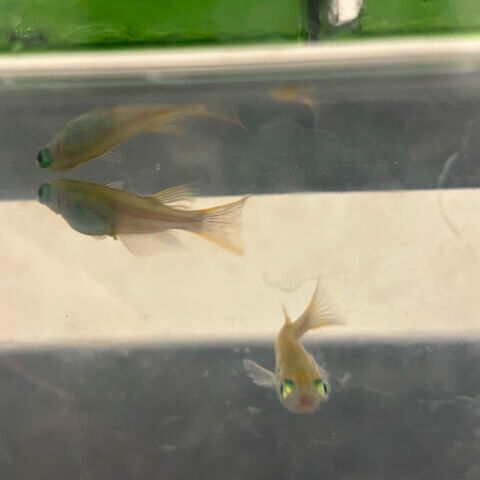
Medaka, a small freshwater fish from Japan, is used in evolutionary research in the lab of University of Utah biologist Jamie Gagnon.
(Source: Brian Maffly)
A heart attack will leave a permanent scar on a human heart, yet other animals, including some fish and amphibians, can clear cardiac scar tissue and regrow damaged muscle as adults. Scientists have sought to figure out how special power works in hopes of advancing medical treatments for human cardiac patients, but the great physiological differences between fish and mammals make such inquiries difficult.
So University of Utah biologists, led by assistant professor Jamie Gagnon, tackled the problem by comparing two fish species: zebrafish, which can regenerate its heart, and medaka, which cannot. The team identified a few possible explanations, mostly associated with the immune system, for how zebrafish fix cardiac tissue, according to newly published research.
Gallery
“We thought by comparing these two fish that have similar heart morphology and live in similar habitats, we could have a better chance of actually finding what the main differences are,” said Clayton Carey, a postdoctoral researcher in the Gagnon lab and lead author on the new study.
Gagnon’s team wasn’t able to solve the mystery — yet — but their study shed new light on the molecular and cellular mechanisms at play in zebrafish’s heart regeneration. “It told us these two hearts that look very similar are actually very different,” Gagnon said.
Both members of the teleost family of ray-finned fish, zebrafish (Danio rerio) and medaka (Oryzias latipes) descended from a common ancestor that lived millions of years ago. Both are about 1.5 inches long, inhabit freshwater and are equipped with two-chamber hearts. Medaka are native to Japan and zebrafish are native to the Ganges River basin.
My hunch is the ancestor of all animals could regenerate its heart after an injury, and then that’s been repeatedly lost in different types of animals.
Jamie Gagnon; University of Utah
According to the study, the existence of non-regenerating fish presents an opportunity to contrast the differing responses to injury to identify the cellular features unique to regenerating species. Gagnon suspects heart regeneration is an ancestral trait common to all teleosts.
Understanding the evolutionary path that led to the loss of this ability in some teleost species could offer parallel insights into why mammals cannot regenerate as adults.
With their distinctive horizontal stripes, zebrafish have long been popular as pets in the United States. In the 1970s zebrafish were embraced by biologists as a model organism for studying embryonic development of vertebrates.
Scientists like zebrafish because they can be propagated by the thousands quickly in labs, are easy to study and proved to be extremely hardy.
Cold Shock to the Heart
To conduct their experiments, the Gagnon lab used a device called a cryoprobe to injure the fish hearts in ways that mimic heart attacks in humans, then extracted the hearts after certain time frames to learn how the two species responded differently.
Carey made the cryoprobe from a piece of copper wire, which was cooled in liquid nitrogen to about minus 170°C. Team members cut tiny incisions in the fish’s bellies to expose their hearts, then applied the probe for 23 seconds to the edge of the heart.
In 95 % of the cases, the fish survived the procedure, although not for long. After three days or 14 days, their hearts were extracted and dissolved into a single-cell solution, which was then subjected to RNA sequencing in search of markers indicating how the fish responded to the injury.
“Zebrafish have this immune response that is typical of what you might see during a viral infection, called an interferon response,” Carey said. “That response is completely absent in medaka.”
The study documented differences in immune cell recruitment and behavior, epicardial and endothelial cell signaling, and alterations in the structure and makeup of the heart. For example, medaka lack a certain type of muscle cells that are present in zebrafish.
“My hunch is the ancestor of all animals could regenerate its heart after an injury, and then that’s been repeatedly lost in different types of animals,” Gagnon said. “I would like to understand why. Why would you lose this great feature that allows you to regenerate your heart after an injury?”
The study indicates the zebrafish’s ability to regenerate has something to do with its immune system, but understanding exactly how would take more research. For example, far more macrophages, specialized immune cells, migrated into the wound site in zebrafish than in medaka. Unlike medaka, the zebrafish form a transient scar that doesn’t calcify into rigid tissue.
Date: 08.12.2025
Naturally, we always handle your personal data responsibly. Any personal data we receive from you is processed in accordance with applicable data protection legislation. For detailed information please see our privacy policy.
Consent to the use of data for promotional purposes
I hereby consent to Vogel Communications Group GmbH & Co. KG, Max-Planck-Str. 7-9, 97082 Würzburg including any affiliated companies according to §§ 15 et seq. AktG (hereafter: Vogel Communications Group) using my e-mail address to send editorial newsletters. A list of all affiliated companies can be found here
Newsletter content may include all products and services of any companies mentioned above, including for example specialist journals and books, events and fairs as well as event-related products and services, print and digital media offers and services such as additional (editorial) newsletters, raffles, lead campaigns, market research both online and offline, specialist webportals and e-learning offers. In case my personal telephone number has also been collected, it may be used for offers of aforementioned products, for services of the companies mentioned above, and market research purposes.
Additionally, my consent also includes the processing of my email address and telephone number for data matching for marketing purposes with select advertising partners such as LinkedIn, Google, and Meta. For this, Vogel Communications Group may transmit said data in hashed form to the advertising partners who then use said data to determine whether I am also a member of the mentioned advertising partner portals. Vogel Communications Group uses this feature for the purposes of re-targeting (up-selling, cross-selling, and customer loyalty), generating so-called look-alike audiences for acquisition of new customers, and as basis for exclusion for on-going advertising campaigns. Further information can be found in section “data matching for marketing purposes”.
In case I access protected data on Internet portals of Vogel Communications Group including any affiliated companies according to §§ 15 et seq. AktG, I need to provide further data in order to register for the access to such content. In return for this free access to editorial content, my data may be used in accordance with this consent for the purposes stated here. This does not apply to data matching for marketing purposes.
Right of revocation
I understand that I can revoke my consent at will. My revocation does not change the lawfulness of data processing that was conducted based on my consent leading up to my revocation. One option to declare my revocation is to use the contact form found at https://contact.vogel.de. In case I no longer wish to receive certain newsletters, I have subscribed to, I can also click on the unsubscribe link included at the end of a newsletter. Further information regarding my right of revocation and the implementation of it as well as the consequences of my revocation can be found in the data protection declaration, section editorial newsletter.
“What you do with that scar is what matters,” Gagnon said. “We think that the interferon response causes these specialized macrophage cells to come into that wound site and start to promote the growth of new blood vessels.”
Over time new muscle replaces the damaged cardiac tissue and the heart heals. “The more we learn about how animals can regenerate tissues, how those features have been lost in us and other animals, that’s going to help us think about our limitations and how we might engineer strategies to help us overcome those,” Gagnon said. “Our hope is that we build this knowledge base in animals that are really accessible and can be studied in incredible detail, then use that knowledge to generate more focused experiments in mammals, and then maybe someday in human patients.”
Original Article: Distinct features of the regenerating heart uncovered through comparative single-cell profiling; Biology Open; DOI:10.1242/bio.060156




:quality(80)/p7i.vogel.de/wcms/92/ad/92adbafb37924cea35ea3cf05b7a23e5/0130206318v2.jpeg "The world’s first fully functioning proof-of-concept quantum battery
(Source: Csiro)")
:quality(80)/p7i.vogel.de/wcms/9f/8b/9f8bc2b8491d7a514ca154e9588a07b7/0130205846v1.jpeg "The researchers’ new material, based on mineralised sawdust, is an excellent fire retardant. (Source: Dan Vivas Glaser / from Kürsteiner R et al. Chem Circularity 2026)")
:quality(80)/p7i.vogel.de/wcms/fd/73/fd73fcb3ceda89d1419de1083fcab7b4/0130081520v2.jpeg "The fingers at the heart of this technology were inspired by the fin-ray effect — a design principle derived from the natural structure of fish fins. (Source: University of Texas at Austin )")
:quality(80)/p7i.vogel.de/wcms/fe/64/fe649767c802d53ac63ee2c2a40b7e0d/0130060830v2.jpeg "Sample tube with light-active substance (Source: Elvira Eberhardt / Ulm University)")
:quality(80)/p7i.vogel.de/wcms/8f/b9/8fb98a958e4afe679865fbe52a473680/0129940982v2.jpeg "pH measurement in various nanoparticles using the Nine-Focus meter ensures precise stability and performance control. (Source: Mettler Toledo)")
:quality(80)/p7i.vogel.de/wcms/11/74/1174e5d4c8b07a64637dced8c9506b40/0129787561v2.jpeg "The Multicell Plus high-pressure reactor sets a new benchmark for operator safety, all-round accessibility and ease-of-use. (Source: Asynt)")
:quality(80)/p7i.vogel.de/wcms/ef/6e/ef6e96191183411973b77041fb6b1e16/0129785957v2.jpeg "Manufactured from high-quality crystal polystyrene - these new automation-ready plates are available in a choice of ANSI / SLAS standard (96-well and breakable 8-well strip) formats. (Source: Porvair Sciences)")
:quality(80)/p7i.vogel.de/wcms/ad/ca/adcaa20ef5ccaf7e3b325788b1e349c4/0129784872v2.jpeg "The high performance Degasi Flat Film in-line degasser. (Source: Biotech Fluidics)")
:quality(80)/p7i.vogel.de/wcms/af/40/af40b535eb65c287fbd22ed5483d1d0e/0130206243v2.jpeg "The researchers dug soil pits in order to measure the carbon storage in soil
(Source: Johanna Asch)")
:quality(80)/p7i.vogel.de/wcms/2d/45/2d45aba62f5042baa00f7fd4fa629839/0130036533v2.jpeg "The population of Pune, India, is expected to reach 11 million by 2050. (Source: free licensed)")
:quality(80)/p7i.vogel.de/wcms/52/f8/52f8d5521fdab07ed0a865ec0d8919fd/0130009438v2.jpeg "Drylands support around half of global livestock production and sustain the livelihoods of close to a billion people, while also underpinning soil stability and carbon storage. (Source: Kaust )")
:quality(80)/p7i.vogel.de/wcms/fe/49/fe494ada322615b6e6f6ff0f5bb7c5cf/0129926008v2.jpeg "A mandrill eating fruit. (Source: University of Bristol )")
:quality(80)/p7i.vogel.de/wcms/6f/ba/6fba92196d0cbb1467334f8a2ecc520a/0130203021v2.jpeg "Low to moderate wine consumption shows lower risk compared with spirits, beer and cider (Source: free licensed)")
:quality(80)/p7i.vogel.de/wcms/a9/37/a9376f1d9a893570023d9aa97c085bc5/0129927485v2.jpeg "Examples of foods high in PUFAs include fatty fish and soybeans, while MUFAs include olive oil and avocadoes. (Source: free licensed)")
:quality(80)/p7i.vogel.de/wcms/ea/88/ea88ef8810e21cdd9bb852c70f385ba1/0129797385v2.jpeg "A team of NUS food scientists consisting of Assoc Prof Liu Shao Quan (centre), Dr Lu Yuyun (right) and Ms Geng Chenhan (left) pioneered a co-fermentation method that improves both the nutrient and flavor profile of kombu. (Source: NUS)")
:quality(80)/p7i.vogel.de/wcms/84/2c/842c7c1678ceeec7147ea3a36e238e75/0129356324v2.jpeg "Kaust and Nadec have signed a MOU that establishes a framework for long-term cooperation across agricultural research, technology development, and professional training. (Source: Kaust )")
:quality(80)/p7i.vogel.de/wcms/e9/73/e9732473361377610267347df55071a1/0130205830v2.jpeg "Sleep EEG signals may reveal whether the brain is aging faster than the body — and help identify elevated dementia risk earlier. (Source: free licensed)")
:quality(80)/p7i.vogel.de/wcms/ed/c0/edc0c1a86229b11efd17c5e3f94d14da/0130081211v2.jpeg "A new study finds that virtual visits did not make it easier for psychiatrists, psychologists and therapists to reach significantly more people in areas where access to care has long been limited. (Source: Pixabay)")
:quality(80)/p7i.vogel.de/wcms/9c/52/9c52318bc94be17e6662dfceffa4a0c0/0130060546v2.jpeg "Domestic cat ‘Lanni’ from co-author of the study, Latasha Ludwig, Assistant Clinical Professor at Cornell University, USA. (Source: © Latasha Ludwig)")
:quality(80)/p7i.vogel.de/wcms/4b/f4/4bf4cc9e28e65e11a27dd41da2d1a7f5/0130038185v2.jpeg "The biomarker p-tau217 could help identify women at elevated dementia risk decades before clinical symptoms begin. (Source: free licensed)")
:quality(80)/images.vogel.de/vogelonline/bdb/1710600/1710675/original.jpg "Discover how to set yourself up for success when performing balance-based density determination of solids such as jewelry and precious metals. (Mettler Toledo)")
:quality(80)/images.vogel.de/vogelonline/bdb/1682500/1682579/original.jpg "The new XPR Analytical balance redesigned to meet the needs of laboratory technicians of working fast and lean. (Mettler Toledo)")
:quality(80)/images.vogel.de/vogelonline/bdb/1677000/1677080/original.jpg "Enhance your weighing accuracy, comfort and productivity with the redesigned XPR Analytical balance. (Mettler Toledo)")
:quality(80)/p7i.vogel.de/wcms/2d/0a/2d0a7a7661f4b9e242e6fc95319dd9b3/0117959622.jpeg "U biology professor James Gagnon works with genetically altered zebrafish. His latest research explores how female zebrafish produce a sunblocking compound called gadusol and secrete it on their eggs.(Source: Matt Crawley)")
:quality(80)/p7i.vogel.de/wcms/10/dd/10dd4f451bc43e862bc5fdcdb3f3a294/0117959617.jpeg "Clayton Carey handles a tank containing medaka fish in the Gagnon lab.(Source: Biran Maffly)")
:quality(80)/p7i.vogel.de/wcms/2e/13/2e1390973c4422ca4f961e3d0eb39af9/0117959618.jpeg "Zebrafish used in research at the University of Utah.(Source: Brian Maffly, University of Utah)")
:quality(80)/p7i.vogel.de/wcms/69/d0/69d0a662dd3b487bb1ce9c438dcef54e/0117959616.jpeg "Medaka, a small freshwater fish from Japan, is used in evolutionary research in the lab of University of Utah biologist Jamie Gagnon.(Source: Brian Maffly)")
:quality(80)/p7i.vogel.de/wcms/50/36/5036eaf29fdb8a12927d904314830577/0115105284.jpeg "The chain catshark (Scyliorhinus retifer) is one of four elasmobranch species (sharks, skates, rays and sawfish) known to be biofluorescent. (Source: Jakob Wikström and Etty Bachar-Wikström)")
:quality(80)/p7i.vogel.de/wcms/3b/3e/3b3e62a1a8821d50e85ca88e33684251/0124387950v2.jpeg "Samples of heart tissue from the study. The sample on the right, which was treated with the PLP therapy, shows decreased scarring (in blue) compared to the untreated sample on the left. (Source: Nathan Gianneschi/Northwestern University)")
:quality(80)/p7i.vogel.de/wcms/15/d1/15d1ab97d1834050b8d828a4c0f9dabf/0124014294v2.jpeg "Tiny pacemaker on a fingertip, between a sesame seed and single grain of rice for scale. (Source: John A. Rogers/Northwestern University)")