Source: Press release
Ahlam Rais
3 min Reading Time
Researchers have revealed that people who drink coffee in the morning have a lower risk of cardiovascular disease as well as lower overall mortality risk compared to people that drink coffee all-day.
Compared with people who did not drink coffee, morning coffee drinkers were 16 % less likely to die of any cause and 31 % less likely to die of cardiovascular disease.
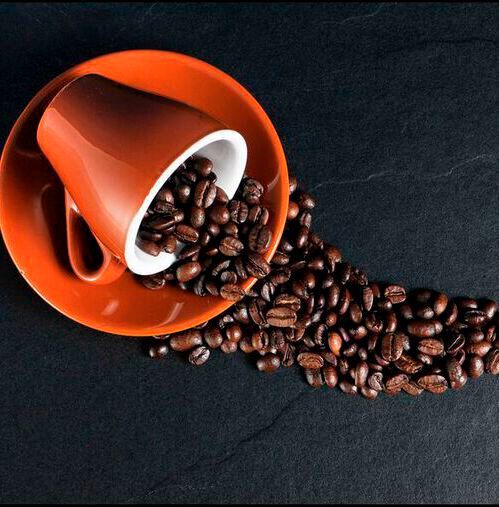
(Source: Pixabay)
Sophia Antipolis/France – People who drink coffee in the morning have a lower risk of dying from cardiovascular disease and a lower overall mortality risk compared to all-day coffee drinkers, according to research published in the European Heart Journal recently. The research was led by Dr Lu Qi, from Tulane University, New Orleans, USA. He said: “Research so far suggests that drinking coffee doesn’t raise the risk of cardiovascular disease, and it seems to lower the risk of some chronic diseases, such as type 2 diabetes. Given the effects that caffeine has on our bodies, we wanted to see if the time of day when you drink coffee has any impact on heart health.”
The study included 40,725 adults taking part in the US National Health and Nutrition Examination Survey (Nhanes) between 1999 and 2018. As part of this study, participants were asked about all the food and drink they consumed on at least one day, including whether they drank coffee, how much and when. It also included a sub-group of 1,463 people who were asked to complete a detailed food and drink diary for a full week.
Researchers were able to link this information with records of deaths and cause of death over a period of nine to ten years. Around 36 % of people in the study were morning coffee drinkers (they primarily drank coffee before midday), 16 % of people drank coffee throughout the day (morning, afternoon and evening) and 48 % were not coffee drinkers.
Compared with people who did not drink coffee, morning coffee drinkers were 16 % less likely to die of any cause and 31 % less likely to die of cardiovascular disease. However, there was no reduction in risk for all-day coffee drinkers compared to non-coffee drinkers.
Morning coffee drinkers benefitted from the lower risks whether they were moderate drinkers (two to three cups) or heavy drinkers (more than three cups). Light morning drinkers (one cup or less) benefitted from a smaller decrease in risk.
Dr Qi said: “This is the first study testing coffee drinking timing patterns and health outcomes. Our findings indicate that it’s not just whether you drink coffee or how much you drink, but the time of day when you drink coffee that’s important. We don’t typically give advice about timing in our dietary guidance, but perhaps we should be thinking about this in the future.
“This study doesn’t tell us why drinking coffee in the morning reduces the risk of death from cardiovascular disease. A possible explanation is that consuming coffee in the afternoon or evening may disrupt circadian rhythms and levels of hormones such as melatonin. This, in turn, leads to changes in cardiovascular risk factors such as inflammation and blood pressure.
“Further studies are needed to validate our findings in other populations, and we need clinical trials to test the potential impact of changing the time of day when people drink coffee.”
In an accompanying editorial, Professor Thomas F. Lüscher from Royal Brompton and Harefield Hospitals, London, UK said: “In their study published in this issue of the European Heart Journal, Wang et al analysed the time of the day when coffee is consumed in 40,725 adults from the Nhanes and of 1463 adults from the Women’s and Men’s Lifestyle Validation Study.
“During a median follow-up of almost a decade, and after adjustment for caffeinated and decaffeinated coffee intake, the amounts of cups per day, sleep hours, and other confounders, the morning-type, rather than the all-day-type pattern, was significantly associated with lower risks of all-cause mortality with a hazard ratio of 0.84 and of cardiovascular mortality of even 0.69 as compared with non-coffee drinkers.
“Why would time of the day matter? In the morning hours there is commonly a marked increase in sympathetic activity as we wake up and get out of bed, an effect that fades away during the day and reaches its lowest level during sleep. Thus, it is possible, as the authors point out, that coffee drinking in the afternoon or evening disrupts the circadian rhythm of sympathetic activity. Indeed, many all-day drinkers suffer from sleep disturbances. In this context, it is of interest that coffee seems to suppress melatonin, an important sleep-inducing mediator in the brain.
Date: 08.12.2025
Naturally, we always handle your personal data responsibly. Any personal data we receive from you is processed in accordance with applicable data protection legislation. For detailed information please see our privacy policy.
Consent to the use of data for promotional purposes
I hereby consent to Vogel Communications Group GmbH & Co. KG, Max-Planck-Str. 7-9, 97082 Würzburg including any affiliated companies according to §§ 15 et seq. AktG (hereafter: Vogel Communications Group) using my e-mail address to send editorial newsletters. A list of all affiliated companies can be found here
Newsletter content may include all products and services of any companies mentioned above, including for example specialist journals and books, events and fairs as well as event-related products and services, print and digital media offers and services such as additional (editorial) newsletters, raffles, lead campaigns, market research both online and offline, specialist webportals and e-learning offers. In case my personal telephone number has also been collected, it may be used for offers of aforementioned products, for services of the companies mentioned above, and market research purposes.
Additionally, my consent also includes the processing of my email address and telephone number for data matching for marketing purposes with select advertising partners such as LinkedIn, Google, and Meta. For this, Vogel Communications Group may transmit said data in hashed form to the advertising partners who then use said data to determine whether I am also a member of the mentioned advertising partner portals. Vogel Communications Group uses this feature for the purposes of re-targeting (up-selling, cross-selling, and customer loyalty), generating so-called look-alike audiences for acquisition of new customers, and as basis for exclusion for on-going advertising campaigns. Further information can be found in section “data matching for marketing purposes”.
In case I access protected data on Internet portals of Vogel Communications Group including any affiliated companies according to §§ 15 et seq. AktG, I need to provide further data in order to register for the access to such content. In return for this free access to editorial content, my data may be used in accordance with this consent for the purposes stated here. This does not apply to data matching for marketing purposes.
Right of revocation
I understand that I can revoke my consent at will. My revocation does not change the lawfulness of data processing that was conducted based on my consent leading up to my revocation. One option to declare my revocation is to use the contact form found at https://contact.vogel.de. In case I no longer wish to receive certain newsletters, I have subscribed to, I can also click on the unsubscribe link included at the end of a newsletter. Further information regarding my right of revocation and the implementation of it as well as the consequences of my revocation can be found in the data protection declaration, section editorial newsletter.
“Overall, we must accept the now substantial evidence that coffee drinking, particularly in the morning hours, is likely to be healthy. Thus, drink your coffee, but do so in the morning!”




:quality(80)/p7i.vogel.de/wcms/fd/73/fd73fcb3ceda89d1419de1083fcab7b4/0130081520v2.jpeg "The fingers at the heart of this technology were inspired by the fin-ray effect — a design principle derived from the natural structure of fish fins. (Source: University of Texas at Austin )")
:quality(80)/p7i.vogel.de/wcms/fe/64/fe649767c802d53ac63ee2c2a40b7e0d/0130060830v2.jpeg "Sample tube with light-active substance (Source: Elvira Eberhardt / Ulm University)")
:quality(80)/p7i.vogel.de/wcms/db/e2/dbe2ae4e02f702b30153a882ef705089/0129978032v1.jpeg "Each of the isolated indium atoms (in gold color) can catalyse the synthesis of methanol (top right). (Source: Constance Ko/ ETH Zurich)")
:quality(80)/p7i.vogel.de/wcms/c1/e6/c1e6ac26eb18993236c100e7f01a78f2/0129937639v1.jpeg "Dogs evolved from highly social ancestors and have been shaped by thousands of years of interacting with humans. (Source: free licensed)")
:quality(80)/p7i.vogel.de/wcms/8f/b9/8fb98a958e4afe679865fbe52a473680/0129940982v2.jpeg "pH measurement in various nanoparticles using the Nine-Focus meter ensures precise stability and performance control. (Source: Mettler Toledo)")
:quality(80)/p7i.vogel.de/wcms/11/74/1174e5d4c8b07a64637dced8c9506b40/0129787561v2.jpeg "The Multicell Plus high-pressure reactor sets a new benchmark for operator safety, all-round accessibility and ease-of-use. (Source: Asynt)")
:quality(80)/p7i.vogel.de/wcms/ef/6e/ef6e96191183411973b77041fb6b1e16/0129785957v2.jpeg "Manufactured from high-quality crystal polystyrene - these new automation-ready plates are available in a choice of ANSI / SLAS standard (96-well and breakable 8-well strip) formats. (Source: Porvair Sciences)")
:quality(80)/p7i.vogel.de/wcms/ad/ca/adcaa20ef5ccaf7e3b325788b1e349c4/0129784872v2.jpeg "The high performance Degasi Flat Film in-line degasser. (Source: Biotech Fluidics)")
:quality(80)/p7i.vogel.de/wcms/2d/45/2d45aba62f5042baa00f7fd4fa629839/0130036533v2.jpeg "The population of Pune, India, is expected to reach 11 million by 2050. (Source: free licensed)")
:quality(80)/p7i.vogel.de/wcms/52/f8/52f8d5521fdab07ed0a865ec0d8919fd/0130009438v2.jpeg "Drylands support around half of global livestock production and sustain the livelihoods of close to a billion people, while also underpinning soil stability and carbon storage. (Source: Kaust )")
:quality(80)/p7i.vogel.de/wcms/fe/49/fe494ada322615b6e6f6ff0f5bb7c5cf/0129926008v2.jpeg "A mandrill eating fruit. (Source: University of Bristol )")
:quality(80)/p7i.vogel.de/wcms/af/4e/af4ea968647ee9cae82b39800c611819/0129865630v2.jpeg "Map of a simulated risk of water stress in 2050 where hydrogen is used in transport and industry. Baseline risk (regardless of hydrogen use) is represented by the background color in each area. Dashed areas show water use exceeding available resources due to hydrogen production. Blue dots show areas where the risk of water stress increases by more than 50 percent in the simulation. (Source: Chalmers University of Technology / Joel Löfving)")
:quality(80)/p7i.vogel.de/wcms/6f/ba/6fba92196d0cbb1467334f8a2ecc520a/0130203021v2.jpeg "Low to moderate wine consumption shows lower risk compared with spirits, beer and cider (Source: free licensed)")
:quality(80)/p7i.vogel.de/wcms/a9/37/a9376f1d9a893570023d9aa97c085bc5/0129927485v2.jpeg "Examples of foods high in PUFAs include fatty fish and soybeans, while MUFAs include olive oil and avocadoes. (Source: free licensed)")
:quality(80)/p7i.vogel.de/wcms/ea/88/ea88ef8810e21cdd9bb852c70f385ba1/0129797385v2.jpeg "A team of NUS food scientists consisting of Assoc Prof Liu Shao Quan (centre), Dr Lu Yuyun (right) and Ms Geng Chenhan (left) pioneered a co-fermentation method that improves both the nutrient and flavor profile of kombu. (Source: NUS)")
:quality(80)/p7i.vogel.de/wcms/84/2c/842c7c1678ceeec7147ea3a36e238e75/0129356324v2.jpeg "Kaust and Nadec have signed a MOU that establishes a framework for long-term cooperation across agricultural research, technology development, and professional training. (Source: Kaust )")
:quality(80)/p7i.vogel.de/wcms/ed/c0/edc0c1a86229b11efd17c5e3f94d14da/0130081211v2.jpeg "A new study finds that virtual visits did not make it easier for psychiatrists, psychologists and therapists to reach significantly more people in areas where access to care has long been limited. (Source: Pixabay)")
:quality(80)/p7i.vogel.de/wcms/9c/52/9c52318bc94be17e6662dfceffa4a0c0/0130060546v2.jpeg "Domestic cat ‘Lanni’ from co-author of the study, Latasha Ludwig, Assistant Clinical Professor at Cornell University, USA. (Source: © Latasha Ludwig)")
:quality(80)/p7i.vogel.de/wcms/4b/f4/4bf4cc9e28e65e11a27dd41da2d1a7f5/0130038185v2.jpeg "The biomarker p-tau217 could help identify women at elevated dementia risk decades before clinical symptoms begin. (Source: free licensed)")
:quality(80)/p7i.vogel.de/wcms/4f/29/4f292f402b157e2ab8c57e9f2a3e3199/0130036120v2.jpeg "The chemistry is powered by an LED lamp that triggers a self-sustaining chain reaction, forging new carbon–carbon bonds under mild conditions without toxic or expensive chemicals. (Source: Nordin Ćatić/ St John’s College, Cambridge)")
:quality(80)/images.vogel.de/vogelonline/bdb/1710600/1710675/original.jpg "Discover how to set yourself up for success when performing balance-based density determination of solids such as jewelry and precious metals. (Mettler Toledo)")
:quality(80)/images.vogel.de/vogelonline/bdb/1682500/1682579/original.jpg "The new XPR Analytical balance redesigned to meet the needs of laboratory technicians of working fast and lean. (Mettler Toledo)")
:quality(80)/images.vogel.de/vogelonline/bdb/1677000/1677080/original.jpg "Enhance your weighing accuracy, comfort and productivity with the redesigned XPR Analytical balance. (Mettler Toledo)")
:quality(80)/p7i.vogel.de/wcms/6f/ba/6fba92196d0cbb1467334f8a2ecc520a/0130203021v2.jpeg "Low to moderate wine consumption shows lower risk compared with spirits, beer and cider (Source: free licensed)")
:quality(80)/p7i.vogel.de/wcms/33/b7/33b71955d001dd7b7f18db12db33c851/0126190920v2.jpeg "Coffee for a good mood — in a new study, regular caffeine consumers confirm its mood-lifting effect. (Source: free licensed)")