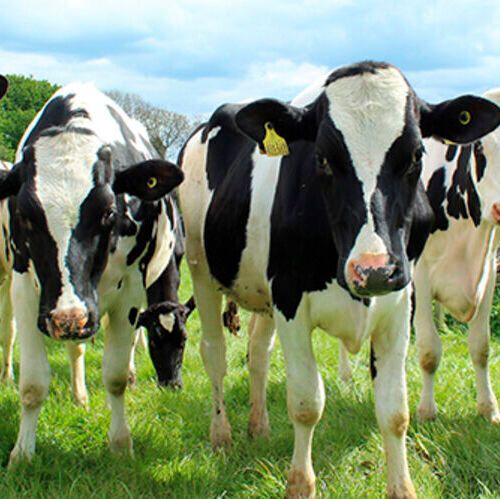
New research has revealed that greater openness about complementary and alternative medicines (CAM) use in dairy farming can strengthen farmer-vet relationships, prevent potential unintended harm to animals, reduce antibiotic use and also enhance herd health management.
Most vets consider Cam to be counter to evidence-based practice.
(Source: Cally Lawson from Pixabay)
Bristol/UK – Cam are used by some dairy farmers in the UK but there is limited evidence about their use and which products and practices farmers consider to be Cam. The study found that dairy farmers think of a wide range of treatments and practices as Cam and vary in how and why they use Cam.
Most vets consider Cam to be counter to evidence-based practice. The Royal College of Veterinary Surgeons does not endorse Cam use where there is no scientific evidence of efficacy (RCVS, 2017) and the British Veterinary Association defines Cam as “treatments that fall outside of mainstream veterinary care” (BVA, 2018). This exploratory research aimed to step aside from the debate around Cam efficacy to understand what underpins Cam use in dairy herd health management and how that might influence antibiotic use.
Twenty-four farmers were interviewed from 20 farms, 16 of which were visited to collect observational data such as photographs and fieldnotes. The participating farms represented a range of management systems (15 organic; 9 conventional) and herd sizes, and supplied milk to a range of processors under different certification standards.
What farmers think of as Cam
What farmers thought of as Cam varied and included a wide range of products and practices, the use of which was motivated mainly by their desire to provide care for their animals. These included herbal remedies (such as commonly used topical udder creams, including Uddermint) homoeopathy, distant healing, environmental enrichment, observation methods, food products used for ingestion or external rubs, and shop-bought products. Not all participating farmers considered all of these products or approaches to be Cam. Some farmers used multiple approaches or products which they viewed as Cam whilst others just used Uddermint, and did not regard this as Cam at all.
Conceptualizations of Cam
Cam was often seen as part of a wider ethos which encompassed a range of practices to manage animal health on dairy farms, rather than as one particular product, medicine or therapy. Cam was thought of by some as a natural and holistic system approach, with products made with natural ingredients that supported animals’ natural healing processes. It also formed part of a wider philosophy regarding holistic farming more broadly with regards to land use and avoiding overuse of antibiotics. Farmers’ main motivation for using Cam was a desire to do something to support the health of their animals when other approaches were not available or appropriate.
Farming approaches associated with Cam use
The use of Cam was linked to organic farming and production without antibiotics (PWAB) contracts as both restrict antibiotic use, which meant that some farmers were trying different approaches to support herd health. Farmers consulted a range of advisors and resources to guide their Cam use, including veterinary support specifically relating to Cam and antibiotic use.
Dr Kayleigh Crouch, lead author who conducted the research for her PhD at the University of Bristol, said: “This is the first study to explore Cam use on dairy farms in a UK context. It is important for vets and advisors to acknowledge and discuss what herd health management approaches are used and explored by farmers. More open discussion surrounding the use of specific Cam practices and products on dairy farms would support better collaboration between dairy farmers, vets and other advisors in support of animal health. This would enable further study and work towards co-produced herd health plans that are farm specific and acknowledge farmers’ own goals and values. Further research in this area would be useful to gain a wider breadth of views and practices.
“The discussion about Cam in the veterinary literature often focuses on homeopathy but this does not acknowledge the widely used products such as udder creams/oils or broader approaches such as animal observations or environmental enrichment, which some farmers consider Cam. This study suggests that it may be more helpful to refer to specific products and practices by name, rather than using the term Cam more broadly, to avoid any confusion or negative associations with the term Cam.
Date: 08.12.2025
Naturally, we always handle your personal data responsibly. Any personal data we receive from you is processed in accordance with applicable data protection legislation. For detailed information please see our privacy policy.
Consent to the use of data for promotional purposes
I hereby consent to Vogel Communications Group GmbH & Co. KG, Max-Planck-Str. 7-9, 97082 Würzburg including any affiliated companies according to §§ 15 et seq. AktG (hereafter: Vogel Communications Group) using my e-mail address to send editorial newsletters. A list of all affiliated companies can be found here
Newsletter content may include all products and services of any companies mentioned above, including for example specialist journals and books, events and fairs as well as event-related products and services, print and digital media offers and services such as additional (editorial) newsletters, raffles, lead campaigns, market research both online and offline, specialist webportals and e-learning offers. In case my personal telephone number has also been collected, it may be used for offers of aforementioned products, for services of the companies mentioned above, and market research purposes.
Additionally, my consent also includes the processing of my email address and telephone number for data matching for marketing purposes with select advertising partners such as LinkedIn, Google, and Meta. For this, Vogel Communications Group may transmit said data in hashed form to the advertising partners who then use said data to determine whether I am also a member of the mentioned advertising partner portals. Vogel Communications Group uses this feature for the purposes of re-targeting (up-selling, cross-selling, and customer loyalty), generating so-called look-alike audiences for acquisition of new customers, and as basis for exclusion for on-going advertising campaigns. Further information can be found in section “data matching for marketing purposes”.
In case I access protected data on Internet portals of Vogel Communications Group including any affiliated companies according to §§ 15 et seq. AktG, I need to provide further data in order to register for the access to such content. In return for this free access to editorial content, my data may be used in accordance with this consent for the purposes stated here. This does not apply to data matching for marketing purposes.
Right of revocation
I understand that I can revoke my consent at will. My revocation does not change the lawfulness of data processing that was conducted based on my consent leading up to my revocation. One option to declare my revocation is to use the contact form found at https://contact.vogel.de. In case I no longer wish to receive certain newsletters, I have subscribed to, I can also click on the unsubscribe link included at the end of a newsletter. Further information regarding my right of revocation and the implementation of it as well as the consequences of my revocation can be found in the data protection declaration, section editorial newsletter.
“It is also important to acknowledge the potentially positive impacts of these products and practices, for example where they support reduced use of antibiotics. Research should be conducted into how Cam practices contribute to the One Health approach for antimicrobial resistance impact reduction and how they influence animal housing, management, and interactions to identify potential positive practices.”
David Barrett, Professor of Bovine Medicine, Production and Reproduction from the Bristol Veterinary School at the University of Bristol and a European Veterinary Specialist in Bovine Health Management, added: “The veterinary profession constantly strives to optimize animal health and welfare through the application of evidence-based veterinary medicine and the pursuit of best practice. Vets have a vital role to play in safeguarding both animal and public health, and through the One Health approach have significantly reduced antibiotic use in the dairy production chain in recent years. However, it has become apparent that many dairy producers are using Cam products and practices without consultation with their vets. While some of these practices might be considered simply good animal husbandry, others are controversial to those seeking an evidence base and, because of this, are not being openly discussed.
“This study does not seek to establish, or question, the efficacy of all the products and practices considered to be Cam by farmers, but to draw attention to the need for farmers, vets and others to work more closely together to ensure transparency around all the animal health related activities undertaken on a farm.”
Paper: What do complementary and alternative medicines mean to UK dairy farmers and how do they use them?’ by Kayleigh M. Crouch, Helen Cramer, Gwen M. Rees, Debbie Sharp, David C. Barrett and Christie Cabral in Frontiers in Veterinary Science.




:quality(80)/p7i.vogel.de/wcms/92/ad/92adbafb37924cea35ea3cf05b7a23e5/0130206318v2.jpeg "The world’s first fully functioning proof-of-concept quantum battery
(Source: Csiro)")
:quality(80)/p7i.vogel.de/wcms/9f/8b/9f8bc2b8491d7a514ca154e9588a07b7/0130205846v1.jpeg "The researchers’ new material, based on mineralised sawdust, is an excellent fire retardant. (Source: Dan Vivas Glaser / from Kürsteiner R et al. Chem Circularity 2026)")
:quality(80)/p7i.vogel.de/wcms/fd/73/fd73fcb3ceda89d1419de1083fcab7b4/0130081520v2.jpeg "The fingers at the heart of this technology were inspired by the fin-ray effect — a design principle derived from the natural structure of fish fins. (Source: University of Texas at Austin )")
:quality(80)/p7i.vogel.de/wcms/fe/64/fe649767c802d53ac63ee2c2a40b7e0d/0130060830v2.jpeg "Sample tube with light-active substance (Source: Elvira Eberhardt / Ulm University)")
:quality(80)/p7i.vogel.de/wcms/8f/b9/8fb98a958e4afe679865fbe52a473680/0129940982v2.jpeg "pH measurement in various nanoparticles using the Nine-Focus meter ensures precise stability and performance control. (Source: Mettler Toledo)")
:quality(80)/p7i.vogel.de/wcms/11/74/1174e5d4c8b07a64637dced8c9506b40/0129787561v2.jpeg "The Multicell Plus high-pressure reactor sets a new benchmark for operator safety, all-round accessibility and ease-of-use. (Source: Asynt)")
:quality(80)/p7i.vogel.de/wcms/ef/6e/ef6e96191183411973b77041fb6b1e16/0129785957v2.jpeg "Manufactured from high-quality crystal polystyrene - these new automation-ready plates are available in a choice of ANSI / SLAS standard (96-well and breakable 8-well strip) formats. (Source: Porvair Sciences)")
:quality(80)/p7i.vogel.de/wcms/ad/ca/adcaa20ef5ccaf7e3b325788b1e349c4/0129784872v2.jpeg "The high performance Degasi Flat Film in-line degasser. (Source: Biotech Fluidics)")
:quality(80)/p7i.vogel.de/wcms/af/40/af40b535eb65c287fbd22ed5483d1d0e/0130206243v2.jpeg "The researchers dug soil pits in order to measure the carbon storage in soil
(Source: Johanna Asch)")
:quality(80)/p7i.vogel.de/wcms/2d/45/2d45aba62f5042baa00f7fd4fa629839/0130036533v2.jpeg "The population of Pune, India, is expected to reach 11 million by 2050. (Source: free licensed)")
:quality(80)/p7i.vogel.de/wcms/52/f8/52f8d5521fdab07ed0a865ec0d8919fd/0130009438v2.jpeg "Drylands support around half of global livestock production and sustain the livelihoods of close to a billion people, while also underpinning soil stability and carbon storage. (Source: Kaust )")
:quality(80)/p7i.vogel.de/wcms/fe/49/fe494ada322615b6e6f6ff0f5bb7c5cf/0129926008v2.jpeg "A mandrill eating fruit. (Source: University of Bristol )")
:quality(80)/p7i.vogel.de/wcms/6f/ba/6fba92196d0cbb1467334f8a2ecc520a/0130203021v2.jpeg "Low to moderate wine consumption shows lower risk compared with spirits, beer and cider (Source: free licensed)")
:quality(80)/p7i.vogel.de/wcms/a9/37/a9376f1d9a893570023d9aa97c085bc5/0129927485v2.jpeg "Examples of foods high in PUFAs include fatty fish and soybeans, while MUFAs include olive oil and avocadoes. (Source: free licensed)")
:quality(80)/p7i.vogel.de/wcms/ea/88/ea88ef8810e21cdd9bb852c70f385ba1/0129797385v2.jpeg "A team of NUS food scientists consisting of Assoc Prof Liu Shao Quan (centre), Dr Lu Yuyun (right) and Ms Geng Chenhan (left) pioneered a co-fermentation method that improves both the nutrient and flavor profile of kombu. (Source: NUS)")
:quality(80)/p7i.vogel.de/wcms/84/2c/842c7c1678ceeec7147ea3a36e238e75/0129356324v2.jpeg "Kaust and Nadec have signed a MOU that establishes a framework for long-term cooperation across agricultural research, technology development, and professional training. (Source: Kaust )")
:quality(80)/p7i.vogel.de/wcms/e9/73/e9732473361377610267347df55071a1/0130205830v2.jpeg "Sleep EEG signals may reveal whether the brain is aging faster than the body — and help identify elevated dementia risk earlier. (Source: free licensed)")
:quality(80)/p7i.vogel.de/wcms/ed/c0/edc0c1a86229b11efd17c5e3f94d14da/0130081211v2.jpeg "A new study finds that virtual visits did not make it easier for psychiatrists, psychologists and therapists to reach significantly more people in areas where access to care has long been limited. (Source: Pixabay)")
:quality(80)/p7i.vogel.de/wcms/9c/52/9c52318bc94be17e6662dfceffa4a0c0/0130060546v2.jpeg "Domestic cat ‘Lanni’ from co-author of the study, Latasha Ludwig, Assistant Clinical Professor at Cornell University, USA. (Source: © Latasha Ludwig)")
:quality(80)/p7i.vogel.de/wcms/4b/f4/4bf4cc9e28e65e11a27dd41da2d1a7f5/0130038185v2.jpeg "The biomarker p-tau217 could help identify women at elevated dementia risk decades before clinical symptoms begin. (Source: free licensed)")
:quality(80)/images.vogel.de/vogelonline/bdb/1710600/1710675/original.jpg "Discover how to set yourself up for success when performing balance-based density determination of solids such as jewelry and precious metals. (Mettler Toledo)")
:quality(80)/images.vogel.de/vogelonline/bdb/1682500/1682579/original.jpg "The new XPR Analytical balance redesigned to meet the needs of laboratory technicians of working fast and lean. (Mettler Toledo)")
:quality(80)/images.vogel.de/vogelonline/bdb/1677000/1677080/original.jpg "Enhance your weighing accuracy, comfort and productivity with the redesigned XPR Analytical balance. (Mettler Toledo)")
:quality(80)/p7i.vogel.de/wcms/86/ba/86ba77bab58b845b5f550e66811e032c/0126378266v2.jpeg "The presence of bird flu in U.S. dairy cattle was first confirmed in early 2024, renewing urgent concerns for animal and farm worker health and the dairy supply chain. (Source: Storyblocks)")
:quality(80)/p7i.vogel.de/wcms/18/88/1888c1aee1aa6becb8fa071dc2b30db7/0128296216v2.jpeg "The Physicians Committee for Responsible Medicine says that the leading health risks for Americans are meat and dairy products. (Source: Pixabay)")