Smart Drug DeliveryBubble Bots: Simple Biocompatible Microrobots Autonomously Target Tumors
Source:
California Institute of Technology
4 min Reading Time
Tiny bubbles, big ambition: Researchers have developed ultra-simple, biocompatible microrobots that can autonomously navigate the body, home in on tumors, and release cancer drugs on demand. Powered by enzymes and guided by the tumor’s own chemical signals, the so-called “bubble bots” mark a major step toward smart, clinically viable drug delivery systems.
A Caltech-led team has developed a way of making bubble bots with simple protein shells that can be modified by enzymes or magnetic nanoparticles for efficient drug delivery. One version the researchers has made is "smart" enough to direct itself to direct itself to a tumor target.
(Source: Gao Lab/ Caltech)
The potential of microrobots is enormous. These miniature objects can be designed to carry out actions within the body, such as sensing biomarkers, manipulating objects like blood clots, or delivering drug therapies to tumor sites. But working out how to make the tiny bots effective, biocompatible, and cost effective is challenging. Now a Caltech-led team has taken a huge step toward making the next generation of microrobots for drug delivery. They have simplified both the structure of the microrobots and their production method, while making the bots highly effective and “smart” enough to direct themselves to a tumor.
The team of Caltech and USC scientists describe the bubble bots and their successful application in treating bladder tumors in mice in a paper that appears in the February 2 issue of the journal Nature Nanotechnology.
Gallery
The team, led by Wei Gao, professor of medical engineering at Caltech and a Heritage Medical Research Institute Investigator, previously used ultrasound imaging and magnetic guidance in an animal model to deliver miniature 3D-printed robots to a tumor where they could biodegrade and release their cargo: cancer fighting drugs. Those microrobots were fabricated in a cleanroom with specialized equipment and featured a hydrogel shell made from a jellylike polymer surrounding a microbubble. This shell helped propel the bots and provided excellent imaging contrast to allow researchers to keep track of them within the body.
“We thought, what if we make this even simpler, and just make the bubble itself a robot?” says Gao. “We can make bubbles easily and already know they are very biocompatible. And if you want to burst them, you can do so immediately.”
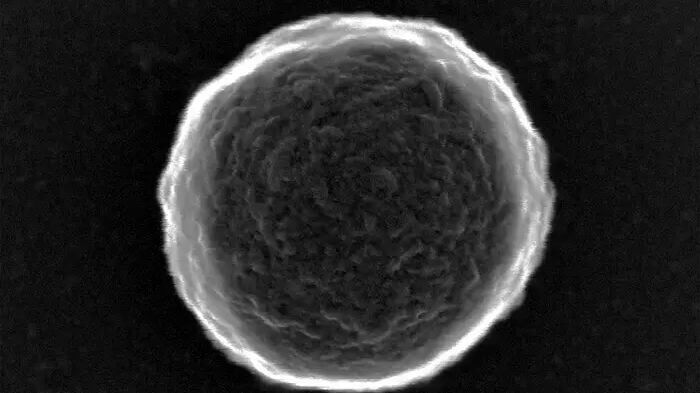
The team developed a method for creating such simple bubble bots. Using an ultrasound probe, they agitated a solution consisting of BSA (bovine serum albumin, a standard animal protein often used in lab experiments) to make thousands of microbubbles with protein shells.
Next, the scientists took advantage of another feature of the protein shell, the abundant amine groups available on the surface. Amine groups are a collection of atoms featuring a carbon-nitrogen bond, that can easily be chemically modified. By binding to these amine groups, the researchers created two types of microrobots with different ways to control their movements. And anti-cancer drugs such as doxorubicin can successfully bind to the surface of both versions.
Enzyme-Powered Motion Uses Urea as a Biological Fuel
The scientists attached the enzyme urease to the surface of both versions of the bubble bots. Urease acts like a tiny engine to get the robots moving. The enzyme catalyzes a reaction with urea, an abundant waste product found throughout the body that serves as a kind of biofuel for the robots, yielding ammonia and carbon dioxide. Because urease is not uniformly distributed on the surface of the bubbles, over time, more of these products will build up on one side versus the other. That imbalance creates an asymmetric chemical environment around the bubble, generating a net “push” that propels the microrobots forward.
In the first version, the team attached magnetic nanoparticles to the surface of the bubble bots, making them magnetically responsive. With help from ultrasound imaging of the bots' interior microbubbles, the bubble bots could be steered with exterior magnets to head toward a target within the body.
But the researchers wanted to go a step further. “We wanted to make the robots more intelligent,” Gao says. Knowing that tumors and inflammation produce high concentrations of hydrogen peroxide compared to normal cells, the team decided to bind an additional enzyme called catalase to the surface of a second version of the microrobots. Catalase drives a reaction with hydrogen peroxide, creating water and oxygen. Through what is known as chemotactic behavior, the catalase-bound bubbles automatically move toward higher concentrations of hydrogen peroxide, steering them toward tumors.
Date: 08.12.2025
Naturally, we always handle your personal data responsibly. Any personal data we receive from you is processed in accordance with applicable data protection legislation. For detailed information please see our privacy policy.
Consent to the use of data for promotional purposes
I hereby consent to Vogel Communications Group GmbH & Co. KG, Max-Planck-Str. 7-9, 97082 Würzburg including any affiliated companies according to §§ 15 et seq. AktG (hereafter: Vogel Communications Group) using my e-mail address to send editorial newsletters. A list of all affiliated companies can be found here
Newsletter content may include all products and services of any companies mentioned above, including for example specialist journals and books, events and fairs as well as event-related products and services, print and digital media offers and services such as additional (editorial) newsletters, raffles, lead campaigns, market research both online and offline, specialist webportals and e-learning offers. In case my personal telephone number has also been collected, it may be used for offers of aforementioned products, for services of the companies mentioned above, and market research purposes.
Additionally, my consent also includes the processing of my email address and telephone number for data matching for marketing purposes with select advertising partners such as LinkedIn, Google, and Meta. For this, Vogel Communications Group may transmit said data in hashed form to the advertising partners who then use said data to determine whether I am also a member of the mentioned advertising partner portals. Vogel Communications Group uses this feature for the purposes of re-targeting (up-selling, cross-selling, and customer loyalty), generating so-called look-alike audiences for acquisition of new customers, and as basis for exclusion for on-going advertising campaigns. Further information can be found in section “data matching for marketing purposes”.
In case I access protected data on Internet portals of Vogel Communications Group including any affiliated companies according to §§ 15 et seq. AktG, I need to provide further data in order to register for the access to such content. In return for this free access to editorial content, my data may be used in accordance with this consent for the purposes stated here. This does not apply to data matching for marketing purposes.
Right of revocation
I understand that I can revoke my consent at will. My revocation does not change the lawfulness of data processing that was conducted based on my consent leading up to my revocation. One option to declare my revocation is to use the contact form found at https://contact.vogel.de. In case I no longer wish to receive certain newsletters, I have subscribed to, I can also click on the unsubscribe link included at the end of a newsletter. Further information regarding my right of revocation and the implementation of it as well as the consequences of my revocation can be found in the data protection declaration, section editorial newsletter.
“In this case, you don’t need any imaging; you don’t need any external control. The robot is smart enough to find the tumor,” Gao explains. “The bubble robot’s autonomous motion, together with its ability to sense the hydrogen peroxide gradient leads to this targeting, which we call chemotactic tumor targeting.”
Once the bubble bots arrive at their target, the scientists can apply focused ultrasound to burst the bubbles, releasing their therapeutic cargo. That strong bursting action enhances the drug's penetration into the tumor as compared to the slowly degrading hydrogel robots previously used by the team.
When the scientists injected mice with bubble bots to deliver anti-tumor therapeutics, they observed a roughly 60 percent decrease in the weight of bladder tumors over a span of 21 days, as compared to mice given the drug alone.
“This bubble robot platform is simple, but it integrates what you need for therapy: biocompatibility, controllable motion, imaging guidance, and an on-demand trigger that helps the drug penetrate deeper into the tumor. Our goal has always been to move microrobots closer to real clinical use, and this robotic design is a big step in that direction,” says the paper's lead author, Songsong Tang, who completed the work during his time as a postdoctoral scholar in Gao’s lab at Caltech; Tang is set to join the University of Science and Technology of China as a professor.
Original Article: The paper is titled “Enzymatic microbubble robots.” Additional Caltech authors are Hong Han (MS '23); Xiaotian Ma (MS '24); Payal N. Patel (BS '25); Ernesto Criado-Hidalgo; Jounghyun Yoo; Jiahong Li (MS '23); Gwangmook Kim; Shukun Yin; Di Wu (PhD '21); and Mikhail G. Shapiro, the Max Delbrück Professor of Chemical Engineering and Medical Engineering and a Howard Hughes Medical Institute Investigator. Authors from USC include Chen Gong, Junhang Zhang, and Qifa Zhou. The work was funded by the National Science Foundation and the Heritage Medical Research Institute.




:quality(80)/p7i.vogel.de/wcms/92/ad/92adbafb37924cea35ea3cf05b7a23e5/0130206318v2.jpeg "The world’s first fully functioning proof-of-concept quantum battery
(Source: Csiro)")
:quality(80)/p7i.vogel.de/wcms/9f/8b/9f8bc2b8491d7a514ca154e9588a07b7/0130205846v1.jpeg "The researchers’ new material, based on mineralised sawdust, is an excellent fire retardant. (Source: Dan Vivas Glaser / from Kürsteiner R et al. Chem Circularity 2026)")
:quality(80)/p7i.vogel.de/wcms/fd/73/fd73fcb3ceda89d1419de1083fcab7b4/0130081520v2.jpeg "The fingers at the heart of this technology were inspired by the fin-ray effect — a design principle derived from the natural structure of fish fins. (Source: University of Texas at Austin )")
:quality(80)/p7i.vogel.de/wcms/fe/64/fe649767c802d53ac63ee2c2a40b7e0d/0130060830v2.jpeg "Sample tube with light-active substance (Source: Elvira Eberhardt / Ulm University)")
:quality(80)/p7i.vogel.de/wcms/8f/b9/8fb98a958e4afe679865fbe52a473680/0129940982v2.jpeg "pH measurement in various nanoparticles using the Nine-Focus meter ensures precise stability and performance control. (Source: Mettler Toledo)")
:quality(80)/p7i.vogel.de/wcms/11/74/1174e5d4c8b07a64637dced8c9506b40/0129787561v2.jpeg "The Multicell Plus high-pressure reactor sets a new benchmark for operator safety, all-round accessibility and ease-of-use. (Source: Asynt)")
:quality(80)/p7i.vogel.de/wcms/ef/6e/ef6e96191183411973b77041fb6b1e16/0129785957v2.jpeg "Manufactured from high-quality crystal polystyrene - these new automation-ready plates are available in a choice of ANSI / SLAS standard (96-well and breakable 8-well strip) formats. (Source: Porvair Sciences)")
:quality(80)/p7i.vogel.de/wcms/ad/ca/adcaa20ef5ccaf7e3b325788b1e349c4/0129784872v2.jpeg "The high performance Degasi Flat Film in-line degasser. (Source: Biotech Fluidics)")
:quality(80)/p7i.vogel.de/wcms/af/40/af40b535eb65c287fbd22ed5483d1d0e/0130206243v2.jpeg "The researchers dug soil pits in order to measure the carbon storage in soil
(Source: Johanna Asch)")
:quality(80)/p7i.vogel.de/wcms/2d/45/2d45aba62f5042baa00f7fd4fa629839/0130036533v2.jpeg "The population of Pune, India, is expected to reach 11 million by 2050. (Source: free licensed)")
:quality(80)/p7i.vogel.de/wcms/52/f8/52f8d5521fdab07ed0a865ec0d8919fd/0130009438v2.jpeg "Drylands support around half of global livestock production and sustain the livelihoods of close to a billion people, while also underpinning soil stability and carbon storage. (Source: Kaust )")
:quality(80)/p7i.vogel.de/wcms/fe/49/fe494ada322615b6e6f6ff0f5bb7c5cf/0129926008v2.jpeg "A mandrill eating fruit. (Source: University of Bristol )")
:quality(80)/p7i.vogel.de/wcms/6f/ba/6fba92196d0cbb1467334f8a2ecc520a/0130203021v2.jpeg "Low to moderate wine consumption shows lower risk compared with spirits, beer and cider (Source: free licensed)")
:quality(80)/p7i.vogel.de/wcms/a9/37/a9376f1d9a893570023d9aa97c085bc5/0129927485v2.jpeg "Examples of foods high in PUFAs include fatty fish and soybeans, while MUFAs include olive oil and avocadoes. (Source: free licensed)")
:quality(80)/p7i.vogel.de/wcms/ea/88/ea88ef8810e21cdd9bb852c70f385ba1/0129797385v2.jpeg "A team of NUS food scientists consisting of Assoc Prof Liu Shao Quan (centre), Dr Lu Yuyun (right) and Ms Geng Chenhan (left) pioneered a co-fermentation method that improves both the nutrient and flavor profile of kombu. (Source: NUS)")
:quality(80)/p7i.vogel.de/wcms/84/2c/842c7c1678ceeec7147ea3a36e238e75/0129356324v2.jpeg "Kaust and Nadec have signed a MOU that establishes a framework for long-term cooperation across agricultural research, technology development, and professional training. (Source: Kaust )")
:quality(80)/p7i.vogel.de/wcms/e9/73/e9732473361377610267347df55071a1/0130205830v2.jpeg "Sleep EEG signals may reveal whether the brain is aging faster than the body — and help identify elevated dementia risk earlier. (Source: free licensed)")
:quality(80)/p7i.vogel.de/wcms/ed/c0/edc0c1a86229b11efd17c5e3f94d14da/0130081211v2.jpeg "A new study finds that virtual visits did not make it easier for psychiatrists, psychologists and therapists to reach significantly more people in areas where access to care has long been limited. (Source: Pixabay)")
:quality(80)/p7i.vogel.de/wcms/9c/52/9c52318bc94be17e6662dfceffa4a0c0/0130060546v2.jpeg "Domestic cat ‘Lanni’ from co-author of the study, Latasha Ludwig, Assistant Clinical Professor at Cornell University, USA. (Source: © Latasha Ludwig)")
:quality(80)/p7i.vogel.de/wcms/4b/f4/4bf4cc9e28e65e11a27dd41da2d1a7f5/0130038185v2.jpeg "The biomarker p-tau217 could help identify women at elevated dementia risk decades before clinical symptoms begin. (Source: free licensed)")
:quality(80)/images.vogel.de/vogelonline/bdb/1710600/1710675/original.jpg "Discover how to set yourself up for success when performing balance-based density determination of solids such as jewelry and precious metals. (Mettler Toledo)")
:quality(80)/images.vogel.de/vogelonline/bdb/1682500/1682579/original.jpg "The new XPR Analytical balance redesigned to meet the needs of laboratory technicians of working fast and lean. (Mettler Toledo)")
:quality(80)/images.vogel.de/vogelonline/bdb/1677000/1677080/original.jpg "Enhance your weighing accuracy, comfort and productivity with the redesigned XPR Analytical balance. (Mettler Toledo)")
:quality(80)/p7i.vogel.de/wcms/33/f8/33f82d900f43c5a86a42067e2d3b7971/0129350972v1.jpeg "A Caltech-led team has developed a way of making bubble bots with simple protein shells that can be modified by enzymes or magnetic nanoparticles for efficient drug delivery. One version the researchers has made is \"smart\" enough to direct itself to direct itself to a tumor target.(Source: Gao Lab/ Caltech)")
:quality(80)/p7i.vogel.de/wcms/00/a8/00a80eec2e6e960f9564101646e479b4/0129350969v1.jpeg "The scientists created two different types of bubble bots. Those illustrated at the top of this image are modified with magnetic nanoparticles and directed toward a tumor target with external magnets. The bots illustrated at the bottom have different enzymes bonded to the surface and follow a chemical gradient to locate the tumor target independently.(Source: Gao Lab/ Caltech)")
:quality(80)/p7i.vogel.de/wcms/2c/f8/2cf83f7d61d770f3e2ebc869b960a6ad/0129350971v1.jpeg "A scanning electron microscope image of mass-produced microbubbles produced by simply using an ultrasound probe to agitate a BSA solution.(Source: Gao Lab/ Caltech)")
:quality(80)/p7i.vogel.de/wcms/6c/ee/6ceeef9923ca251987b66cd87644d62b/0107226630.jpeg "Colored SEM image of a pneumonia-fighting microrobot made of an algae cell (green) covered with biodegradable polymer nanoparticles (brown). The nanoparticles contain antibiotics and are coated with neutrophil cell membranes. (Source: Fangyu Zhang and Zhengxing Li)")
:quality(80)/p7i.vogel.de/wcms/06/a1/06a11f1d752afb35854aa9e1afb62e98/0129209625v2.jpeg "“Unsinkable\" metal tube made from chemically-etched aluminum floats in distilled water at the lab of University of Rochester professor Chunlei Guo. (Source: J. Adam Fenster / University of Rochester)")
:quality(80)/p7i.vogel.de/wcms/8f/b9/8fb98a958e4afe679865fbe52a473680/0129940982v2.jpeg "pH measurement in various nanoparticles using the Nine-Focus meter ensures precise stability and performance control. (Source: Mettler Toledo)")
:quality(80)/p7i.vogel.de/wcms/35/e6/35e63695cb0a5e15894b0e30f1280cc9/0124380908v1.jpeg "Researchers control the metabot’s shape and motion using a magnetic field. (Source: Aaron Nathans)")