In the UK, 20,000 adults will be screened for type 1 diabetes. This study is claimed to be the world’s first study to identify adults at high risk of developing the disease. Recruitment for this study is currently ongoing.
The UK is now the first country to offer general population type 1 diabetes screening for both children and adults, in a research setting.
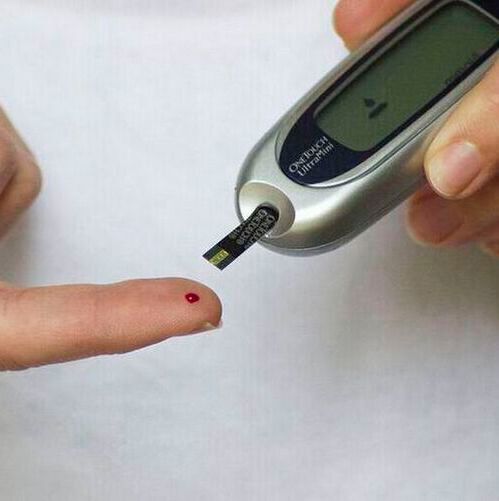
(Source: Pixabay)
Bristol/UK – With a similar study for children – Elsa – launched last year, it means the UK is now the first country to offer general population type 1 diabetes screening for both children and adults, in a research setting.
Funded by The Leona M. and Harry B. Helmsley Charitable Trust and drawing on the UK’s longest running study of type 1 diabetes, the Diabetes UK-funded Bart's Oxford Family study, T1DRA will answer critical questions about the development of adult-onset type 1 diabetes. It will also give those identified as high risk the opportunity for type 1 diabetes education and monitoring, and access to clinical trials testing the newest innovations in type 1 diabetes treatment, which could prevent or delay the condition.
Type 1 diabetes is a serious, lifelong autoimmune condition affecting up to 400,000 people in the UK. It occurs when the immune system destroys insulin-producing cells in the pancreas, meaning people can no longer make their own insulin and their blood sugar levels become dangerously high. More than half of type 1 diabetes diagnoses are in adults, but its development has mostly been studied in children and adult-onset type 1 is not well understood.
T1DRA will be open to those with no close family members with type 1 diabetes, who make up about 90 % of those with the condition. The research team, led by Professor Kathleen Gillespie at the University of Bristol, will send participants test kits in the post, involving a finger prick blood test. They will examine the blood samples for markers of type 1 diabetes, called islet autoantibodies – proteins used by the immune system to earmark insulin-producing cells for destruction. Islet autoantibodies are linked with the development of type 1 diabetes, and can appear in the blood years, or sometimes decades, before people begin to experience any symptoms.
People identified as high risk will be followed up by the research team to examine how many develop type 1 diabetes, how quickly they progress to a clinical diagnosis and to identify which genetic, biological, and environmental factors can be linked with symptoms developing quickly. High risk participants will be offered access to information about the symptoms of type 1 diabetes, its management, and clinical trials testing new type 1 therapies.
While insulin therapy is required to manage type 1 diabetes, there are new immunotherapies on the horizon that could prevent or delay the condition. One such treatment, teplizumab, which has been found to delay a diagnosis of type 1 diabetes by on average three years, was approved for use in the US in 2022 and is currently being reviewed for approval in the UK. Several other immunotherapies for people at high risk of developing type 1 diabetes are currently being tested in clinical trials.
T1DRA joins the Elsa (Early Surveillance for Autoimmune diabetes) study, a type 1 screening trial for children currently running nationwide. Funded by Diabetes UK and JDRF and led by Professor Parth Narendran at the University of Birmingham, Elsa is aiming to screen 20,000 children, aged 3-13 years.
One year since the launch of Elsa on World Diabetes Day 2022, 10,000 children have been recruited into the study and the team are aiming to recruit a further 10,000 over the coming 18 months.
Kathleen Gillespie, Professor of Molecular Medicine at Bristol Medical School: Translational Health Sciences (THS), and lead researcher on T1DRA, said: "This research will help us get a much clearer idea of how many adults in the UK are at risk of type 1 diabetes by screening for markers in blood samples. We will follow up those individuals with islet autoantibodies to better understand how type 1 diabetes occurs in adults and offer participants the opportunity to participate in clinical trials to prevent the condition."
Maryaline Coffre, PhD, Program Officer at Helmsley Charitable Trust, said: "At Helmsley, we are committed to supporting people with and at risk of developing type 1 diabetes. This study will provide important insight into disease development in adults, potentially paving the way for new therapeutic strategies for the disease."
Dr. Elizabeth Robertson, Director of Research at Diabetes UK, said: "We're delighted that the pioneering T1DRA programme is now recruiting and hope it will offer a better future for adults at high risk of developing type 1 diabetes. With the Elsa type 1 diabetes screening study actively recruiting children, the UK is at the forefront of research that will bring us closer to the day when risk of type 1 diabetes can be spotted early, and a diagnosis prevented."
Date: 08.12.2025
Naturally, we always handle your personal data responsibly. Any personal data we receive from you is processed in accordance with applicable data protection legislation. For detailed information please see our privacy policy.
Consent to the use of data for promotional purposes
I hereby consent to Vogel Communications Group GmbH & Co. KG, Max-Planck-Str. 7-9, 97082 Würzburg including any affiliated companies according to §§ 15 et seq. AktG (hereafter: Vogel Communications Group) using my e-mail address to send editorial newsletters. A list of all affiliated companies can be found here
Newsletter content may include all products and services of any companies mentioned above, including for example specialist journals and books, events and fairs as well as event-related products and services, print and digital media offers and services such as additional (editorial) newsletters, raffles, lead campaigns, market research both online and offline, specialist webportals and e-learning offers. In case my personal telephone number has also been collected, it may be used for offers of aforementioned products, for services of the companies mentioned above, and market research purposes.
Additionally, my consent also includes the processing of my email address and telephone number for data matching for marketing purposes with select advertising partners such as LinkedIn, Google, and Meta. For this, Vogel Communications Group may transmit said data in hashed form to the advertising partners who then use said data to determine whether I am also a member of the mentioned advertising partner portals. Vogel Communications Group uses this feature for the purposes of re-targeting (up-selling, cross-selling, and customer loyalty), generating so-called look-alike audiences for acquisition of new customers, and as basis for exclusion for on-going advertising campaigns. Further information can be found in section “data matching for marketing purposes”.
In case I access protected data on Internet portals of Vogel Communications Group including any affiliated companies according to §§ 15 et seq. AktG, I need to provide further data in order to register for the access to such content. In return for this free access to editorial content, my data may be used in accordance with this consent for the purposes stated here. This does not apply to data matching for marketing purposes.
Right of revocation
I understand that I can revoke my consent at will. My revocation does not change the lawfulness of data processing that was conducted based on my consent leading up to my revocation. One option to declare my revocation is to use the contact form found at https://contact.vogel.de. In case I no longer wish to receive certain newsletters, I have subscribed to, I can also click on the unsubscribe link included at the end of a newsletter. Further information regarding my right of revocation and the implementation of it as well as the consequences of my revocation can be found in the data protection declaration, section editorial newsletter.




:quality(80)/p7i.vogel.de/wcms/92/ad/92adbafb37924cea35ea3cf05b7a23e5/0130206318v2.jpeg "The world’s first fully functioning proof-of-concept quantum battery
(Source: Csiro)")
:quality(80)/p7i.vogel.de/wcms/9f/8b/9f8bc2b8491d7a514ca154e9588a07b7/0130205846v1.jpeg "The researchers’ new material, based on mineralised sawdust, is an excellent fire retardant. (Source: Dan Vivas Glaser / from Kürsteiner R et al. Chem Circularity 2026)")
:quality(80)/p7i.vogel.de/wcms/fd/73/fd73fcb3ceda89d1419de1083fcab7b4/0130081520v2.jpeg "The fingers at the heart of this technology were inspired by the fin-ray effect — a design principle derived from the natural structure of fish fins. (Source: University of Texas at Austin )")
:quality(80)/p7i.vogel.de/wcms/fe/64/fe649767c802d53ac63ee2c2a40b7e0d/0130060830v2.jpeg "Sample tube with light-active substance (Source: Elvira Eberhardt / Ulm University)")
:quality(80)/p7i.vogel.de/wcms/8f/b9/8fb98a958e4afe679865fbe52a473680/0129940982v2.jpeg "pH measurement in various nanoparticles using the Nine-Focus meter ensures precise stability and performance control. (Source: Mettler Toledo)")
:quality(80)/p7i.vogel.de/wcms/11/74/1174e5d4c8b07a64637dced8c9506b40/0129787561v2.jpeg "The Multicell Plus high-pressure reactor sets a new benchmark for operator safety, all-round accessibility and ease-of-use. (Source: Asynt)")
:quality(80)/p7i.vogel.de/wcms/ef/6e/ef6e96191183411973b77041fb6b1e16/0129785957v2.jpeg "Manufactured from high-quality crystal polystyrene - these new automation-ready plates are available in a choice of ANSI / SLAS standard (96-well and breakable 8-well strip) formats. (Source: Porvair Sciences)")
:quality(80)/p7i.vogel.de/wcms/ad/ca/adcaa20ef5ccaf7e3b325788b1e349c4/0129784872v2.jpeg "The high performance Degasi Flat Film in-line degasser. (Source: Biotech Fluidics)")
:quality(80)/p7i.vogel.de/wcms/e9/9c/e99cb19231197af70c489cb4acc2ead0/0130293444v2.jpeg "A new global study, led by researchers at Kaust in Saudi Arabia, shows that forests are most effective for climate regulation when conserved or restored in their natural or native locations. (Source: Kaust )")
:quality(80)/p7i.vogel.de/wcms/af/40/af40b535eb65c287fbd22ed5483d1d0e/0130206243v2.jpeg "The researchers dug soil pits in order to measure the carbon storage in soil
(Source: Johanna Asch)")
:quality(80)/p7i.vogel.de/wcms/2d/45/2d45aba62f5042baa00f7fd4fa629839/0130036533v2.jpeg "The population of Pune, India, is expected to reach 11 million by 2050. (Source: free licensed)")
:quality(80)/p7i.vogel.de/wcms/52/f8/52f8d5521fdab07ed0a865ec0d8919fd/0130009438v2.jpeg "Drylands support around half of global livestock production and sustain the livelihoods of close to a billion people, while also underpinning soil stability and carbon storage. (Source: Kaust )")
:quality(80)/p7i.vogel.de/wcms/6f/ba/6fba92196d0cbb1467334f8a2ecc520a/0130203021v2.jpeg "Low to moderate wine consumption shows lower risk compared with spirits, beer and cider (Source: free licensed)")
:quality(80)/p7i.vogel.de/wcms/a9/37/a9376f1d9a893570023d9aa97c085bc5/0129927485v2.jpeg "Examples of foods high in PUFAs include fatty fish and soybeans, while MUFAs include olive oil and avocadoes. (Source: free licensed)")
:quality(80)/p7i.vogel.de/wcms/ea/88/ea88ef8810e21cdd9bb852c70f385ba1/0129797385v2.jpeg "A team of NUS food scientists consisting of Assoc Prof Liu Shao Quan (centre), Dr Lu Yuyun (right) and Ms Geng Chenhan (left) pioneered a co-fermentation method that improves both the nutrient and flavor profile of kombu. (Source: NUS)")
:quality(80)/p7i.vogel.de/wcms/84/2c/842c7c1678ceeec7147ea3a36e238e75/0129356324v2.jpeg "Kaust and Nadec have signed a MOU that establishes a framework for long-term cooperation across agricultural research, technology development, and professional training. (Source: Kaust )")
:quality(80)/p7i.vogel.de/wcms/66/a6/66a64c9dd7dbe84d2d7ea95a5e691bb1/0130361609v2.jpeg "Dr. Priya Freaney speaking to a patient at Bluhm Cardiovascular Institute at Northwestern Memorial Hospital in Chicago. (Source: Northwestern Medicine)")
:quality(80)/p7i.vogel.de/wcms/6e/d4/6ed479ad990b9ddc0f2eeadccccf62c7/0130359257v2.jpeg "Routine early measurement of neurofilament light chain could help improve prediction of cognitive impairment after out-of-hospital cardiac arrest, according to a study presented recently at ESC Acute Cardiovascular Care 2026. (Source: Pixabay)")
:quality(80)/p7i.vogel.de/wcms/6e/b9/6eb95805568aa78dc2ed57f829cf33d4/0130300421v2.jpeg "A 10-minute digital program co-developed by a University of Texas psychologist significantly reduced symptoms of depression four weeks after use, according to results from one of the largest randomized controlled trials of single-session mental health interventions. (Source: University of Texas at Austin )")
:quality(80)/p7i.vogel.de/wcms/6f/e9/6fe9d920eca2c0b3bdeb55cbe9f01908/0130299237v2.jpeg "Study authors Jason Miska and Leah Billingham reading out enzymatic activity of microglia in cell cultures. (Source: Northwestern University.)")
:quality(80)/images.vogel.de/vogelonline/bdb/1710600/1710675/original.jpg "Discover how to set yourself up for success when performing balance-based density determination of solids such as jewelry and precious metals. (Mettler Toledo)")
:quality(80)/images.vogel.de/vogelonline/bdb/1682500/1682579/original.jpg "The new XPR Analytical balance redesigned to meet the needs of laboratory technicians of working fast and lean. (Mettler Toledo)")
:quality(80)/images.vogel.de/vogelonline/bdb/1677000/1677080/original.jpg "Enhance your weighing accuracy, comfort and productivity with the redesigned XPR Analytical balance. (Mettler Toledo)")
:quality(80)/p7i.vogel.de/wcms/b2/01/b20171a75f51f4c280b3b7e2ec3298fc/0126678060v2.jpeg "John Stennard, a healthy volunteer, taking the Fastball test in his home, with Dr George Stohart. (Source: University of Bath)")
:quality(80)/p7i.vogel.de/wcms/8b/df/8bdf706e2b446f26f4a092b29064cbb1/0128110079v2.jpeg "The researchers assessed the accuracy of a widely used tool, ASCVD risk score, and of a newer measure, called Prevent, which adds variables and is intended to provide a more comprehensive estimate of cardiovascular risk along with symptomatic screening. (Source: Pixabay)")